Wellbeing Talk Podcast
Welcome to Wellbeing Talk, the interview series that brings real conversations about mental health at work to the forefront.
Each episode features honest, evidence-informed discussions with experts, leaders, and lived experience voices who are reshaping how we think about wellbeing in modern workplaces.

Whether you're an HR professional, team leader, business owner, or simply someone navigating their own mental health journey, Wellbeing Talk gives you practical insights, emerging research, and actionable ideas to create healthier, more compassionate work environments.
Tune in for deep dives on topics like burnout, psychological safety, neurodiversity, leadership, and what the latest science really means for the way we work and live.
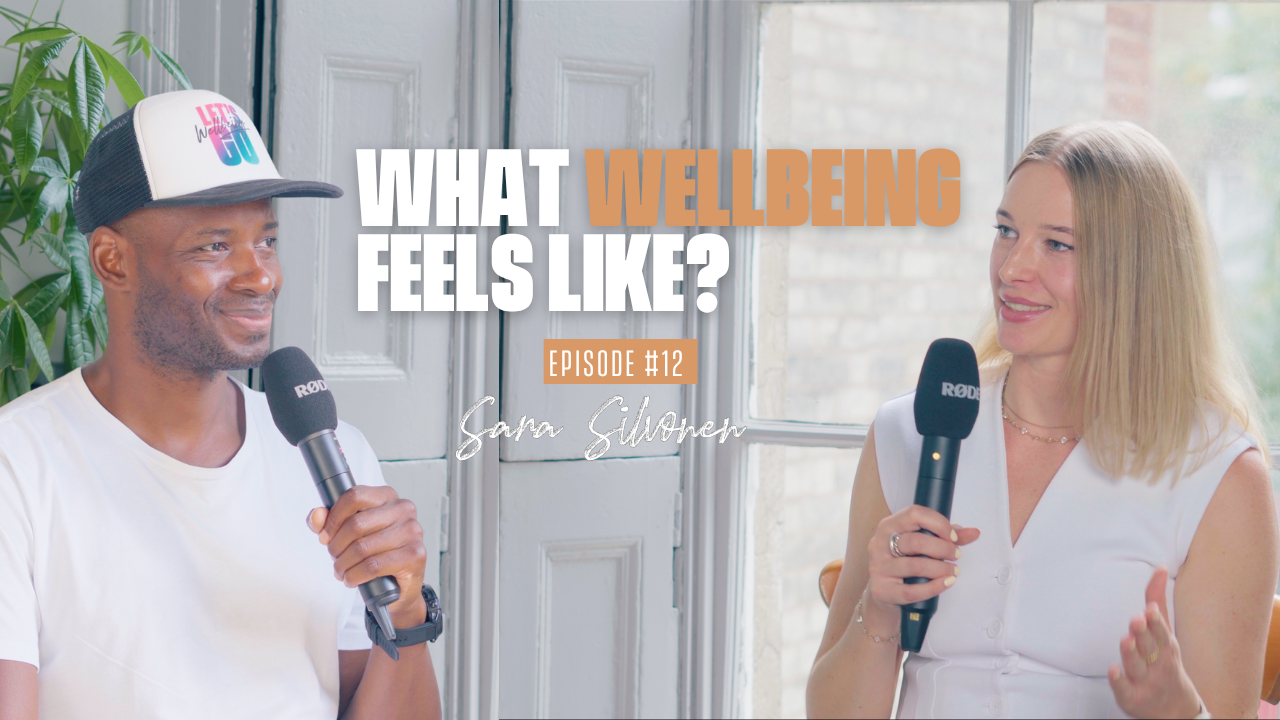
Episode:12
What Does Workplace Wellbeing Actually Feel Like? | Sara Silvonen | Great Place To Work UK
Can employee benefits ever compensate for a culture people don’t trust? In this episode of Wellbeing Talk I’m joined by Sara Silvonen, Senior Consultant and Wellbeing Lead at Great Place To Work UK, the global authority on workplace culture to discuss what millions of employee experiences reveal about trust, leadership and healthy workplace culture.
An evidence-led conversation for HR leaders, people professionals and managers seeking to understand what effective workplace wellbeing looks and feels like beyond policies, benefits and survey scores.
-
What Does Workplace Wellbeing Actually Feel Like? | Sara Silvonen | Great Place To Work UK
Wellbeing Talk with Matt Balfour
Matt Balfour speaks with Sara Silvonen, Senior Consultant and Wellbeing Lead at Great Place To Work UK, about workplace wellbeing, trust, leadership, employee experience and what organisations can learn from their people.
0:00 Introduction
Matt Balfour (voiceover): An organisation can offer wellbeing benefits, support services and all the right policies. But does that necessarily mean its employees experience a healthy workplace? And what happens when two people working for the same organisation experience very different levels of trust, care and psychological safety?
In this episode of Wellbeing Talk, we’re asking what workplace wellbeing actually feels like, and how organisations can tell whether it is genuinely embedded in their culture.
Sara Silvonen (voiceover): The most fundamental things are integrated into workflows, relationships, processes and systems. They don’t seem like wellbeing initiatives at all. They’re simply part of the fabric of the organisation, not a detractor from your overall wellbeing or life satisfaction. You’re not a weekend warrior, waiting for five o’clock or living for the weekends. Work is a fundamental contributor to your overall life satisfaction.
Matt Balfour (voiceover): To explore these questions, I’m joined by Sara Silvonen, Senior Consultant and Wellbeing Lead at Great Place To Work UK. Drawing on the experiences of millions of employees, Sara’s work explores the links between trust, leadership, wellbeing and organisational performance.
Together, we’ll discuss the difference between providing support and creating a culture of wellbeing, what trust looks like during an ordinary working day, why employee experiences can vary within the same organisation, and what the evidence can tell us about wellbeing, retention and productivity.
My name’s Matt Balfour, founder of Let’s Go Wellbeing, and this is Wellbeing Talk.
Matt Balfour: Sara, thank you for joining the show. It’s really nice to meet you.
Sara Silvonen: Likewise. Thank you for having me.
1:47 Sara Silvonen’s Path Into Workplace Wellbeing
Matt Balfour: You’re currently Senior Consultant and Wellbeing Lead at Great Place To Work UK. Before we get into the research, I’d like to understand a little about the person behind the data. What first led you to become interested in how people experience the workplace?
Sara Silvonen: I can’t point to one pivotal moment. It was more of a gradual evolution. My first love was psychology, probably the abnormal and clinical side, but also social psychology. Over time, I applied that more to organisations.
I felt I could reach more people that way. Most people work, and many experience some kind of job stress, so it felt like a universal way to have an impact on people’s day-to-day lives.
Another influence was growing up with a workaholic dad. I saw the long hours and the stress, but also his real dedication to his job as a civil servant in the European system. It was interesting to see how that dedication could almost make up for, or justify, the sacrifices. Whether that’s good or bad is a different question, but I found it interesting.
Matt Balfour: Were you trying to find a balance between the self-sacrifice you saw and the impact your dad’s work had?
Sara Silvonen: I probably wasn’t consciously trying to solve a problem at the time. From a young age, though, I was witnessing the power of purpose at work. I think that still applies today, but it can’t become detrimental to other parts of your life. It’s about finding a happy middle ground and retaining that sense of purpose in a sustainable way.
3:54 What Makes a Healthy Workplace?
Matt Balfour: When you first began working in this area, what did you believe made a healthy workplace, and how has your thinking evolved?
Sara Silvonen: I’d just come from a degree in the field, so I believed the academic theories about workplace wellbeing. They focused on positive affect, meaning positive feelings at work; eudaimonic wellbeing, such as purpose and fulfilment; and social wellbeing, including relationships.
I was naive and had a lot to learn about what actually happens in organisations and what matters to people. I remember seeing my first Great Place To Work contract and reading that the organisation had core hours but worked flexibly. I had no idea what “working flexibly” meant, so I had to ask the HR contact.
I’ve learned a lot about the real world over the last ten years. In some ways, I’ve also come full circle to that simpler, more holistic academic view. Those original ideas still ring true. The corporate wellness industry can sometimes convolute our thinking and confuse what wellbeing is actually about.
Matt Balfour: You mentioned flexibility, positive feelings, purpose and fulfilment. What was the biggest disconnect between those ideas and corporate reality?
Sara Silvonen: The relationships and social wellbeing part was always immediately obvious: having a sense of community, connecting with peers, and the role of line managers and leaders.
The other things are less visible in day-to-day working life. When we ask people what’s best or unusual about working somewhere, very few talk about the special meaning their role gives them. Purpose can be obscured in the real world, and people may think more transactionally. Flexible working was new to me at the time; now it’s so widespread that it can be a problem if you don’t offer it. Some things only become clear when you experience them first-hand.
6:30 What Great Place to Work Measures
Matt Balfour: Great Place To Work draws on the experiences of millions of employees across organisations, industries and countries. What does it measure that a list of standalone benefits or interventions might not reveal?
Sara Silvonen: Definitions matter. This is a muddled field with many interrelated concepts, and you can make different claims depending on how you define and measure things.
Whether we’re measuring how far an organisation is a great place to work, employee wellbeing or employee engagement, we’re looking at the consistency of employee experiences. We ask how often people feel something to be true in their day-to-day working lives: their relationships with leaders, opportunities to develop, and the way they’re recognised and appreciated, among other things.
We look at those subjective experiences, not just the objective offering of initiatives and perks. An organisation can tick all the wellbeing boxes, with an EAP and initiatives across mental, financial, physical and social wellbeing, without people necessarily having a good wellbeing experience. We need to connect what an organisation offers with what people actually experience, and show leaders where the gaps are.
8:27 Wellbeing Support vs a Wellbeing Culture
Matt Balfour: How would you describe the difference between providing wellbeing support and creating a culture of wellbeing?
Sara Silvonen: It follows the difference between the objective offering and the subjective experience. The corporate wellness industry can encourage us to think they’re the same thing, and the same organisations often do both. But wellbeing support is often reactive or passive. At one end, it may be outsourced to an EAP or occupational health. It can also be more internal and integrated, through wellbeing champions, mental health first aiders, awareness programmes and initiatives that people can opt into.
Those initiatives may mean a lot to some people, while meaningful engagement across the organisation is less certain. A culture of wellbeing is embedded in the fabric of the business and is interchangeable with the way people work every day: the tasks they do, how they do them, and their interactions with managers and leaders. People aren’t opting in or out of it. They wouldn’t think of it as a wellbeing initiative. It’s simply the way things are done around here.
Matt Balfour: So it’s proactive, consistent, based on trust, and subjectively true for most people, most of the time.
Sara Silvonen: Exactly.
10:35 Surprising Employee Experience Findings
Matt Balfour: Across your years of studying employee experiences at Great Place To Work, have any of the findings surprised you?
Sara Silvonen: Some results are what you might expect. Perceptions of fair pay and rewards tend to score lower, as does financial wellbeing support. Our Best Workplaces lists are an aspirational benchmark, not a nationally representative group. We also run a population survey every few years, which gives us a national benchmark for comparison.
That’s where the differences are interesting. On our holistic wellbeing index, more than 80% of employees at Best Workplaces report a consistent positive wellbeing experience, compared with around 16% in nationally representative workplaces. One of the biggest gaps is whether management shows a sincere interest in people as individuals, not just employees: there’s a 33-point difference between the two groups.
What surprised me most was where even the Best Workplaces score lower and the gap is smallest: job stress. Around 40% of people at Best Workplaces say their job demands sometimes cause excessive stress, if not often or almost always. It’s close to half at nationally representative workplaces, an eight-point gap. That suggests job stress is widespread in this country. Even otherwise high-performing, high-wellbeing organisations aren’t insulated from it.
Matt Balfour: If stress is common even in the best workplaces, perhaps it’s not only about the drivers of stress, such as autonomy, job design or workload. It may also be about how we navigate and lead people through those pressures. That brings me to trust as a foundation for workplace wellbeing.
13:23 How Trust Drives Workplace Performance
Matt Balfour: The Great Place To Work effect argues that outcomes aren’t created principally by isolated initiatives. They emerge from the everyday culture around people, with trust as the foundation. Trust can sound intangible, while performance is measurable. What do organisations most commonly misunderstand about the relationship between trust and performance?
Sara Silvonen: The Great Place To Work effect is the idea that everyday leadership behaviours, such as how leaders speak, listen and inspire, shape employee experiences. Those experiences shape culture, which drives performance.
Trust can seem abstract or wishy-washy, while performance is the bottom line. Trust involves many things. Our Trust Index includes 60 statements measuring different parts of the employee experience, but ultimately it’s about people’s relationship with their leaders. Do people find their leaders credible? Do they trust them to steer the organisation and make the right decisions, including difficult or unpopular ones? Do leaders speak openly, listen, treat people respectfully and fairly, empower them and involve them in decisions where appropriate? Do people believe leaders will follow through on what they promise?
That is how trust with leadership feels in day-to-day working life. We also directly measure integrity and follow-through, including whether management delivers on its promises and whether its actions match its words.
16:34 The Nine High-Trust Leadership Behaviours
Matt Balfour: The Great Place To Work effect describes nine repeated leadership behaviours: listening, speaking, developing, inspiring, thanking, sharing, celebrating, hiring, welcoming and caring. Trust isn’t created by a statement of values; it accumulates through the way leaders behave over time. If a senior leadership team were starting from scratch, which behaviours should it begin with, and how would it know?
Sara Silvonen: It’s less about what you start with and more about setting the tone and delegating to other levels of management, as well as understanding what you’re principally responsible for.
Although we don’t weight the behaviours, I think the first two you mentioned, listening and speaking, are the most fundamental. It’s difficult to do most of the others without them. You inspire people about the organisation’s strategic vision by speaking to them. You show care and understanding of their personal experiences by listening actively. Very little of leadership comes to life without listening and speaking. Authentic two-way communication is everything, and those behaviours help unlock many of the others.
19:00 Early Warning Signs of Low Trust
Matt Balfour: What are the earliest signs that trust or wellbeing in a team is starting to deteriorate, before it shows up in performance figures?
Sara Silvonen: People may assume it looks dramatic, with conflict, microaggressions, politics or backstabbing. That can happen, but more often it may look like the opposite: people withdrawing into their roles and doing the bare minimum. It can resemble “quiet quitting”. People stop going above and beyond, stop challenging ideas or innovating, and retreat into their private lives.
In positive survey comments, the words that stand out are things like authentic, genuine, consistent and proactive, often referring to leadership and management. When trust or wellbeing may be waning, comments might focus more on a specific benefit, such as flexibility, or an isolated initiative or perk, rather than the fundamentals.
21:00 The Workplace Wellbeing Consistency Gap
Matt Balfour: Organisations may have a strong wellbeing strategy, but employees experience the organisation through individual managers, teams and day-to-day decisions. Two people at the same employer can experience very different workplaces. How should an organisation respond when its overall score looks healthy, but one or more groups are having a poor experience?
Sara Silvonen: That’s a common finding. We take differences across groups very seriously. A fundamental part of our philosophy is the “For All” approach: a great place to work should be great for everyone, regardless of seniority, role, demographic characteristics or background. One privileged group shouldn’t experience it positively while others don’t.
That’s why we measure core demographics in every survey, and clients can add departmental breakdowns. We also factor consistency into our Best Workplaces lists. It isn’t just about the highest scores; we look for a positive experience across the employee population.
Overall averages can hide serious fluctuations. We look at demographics, departments, tenure groups and management levels. Where there are gaps, organisations need a more granular, bottom-up approach. They might focus on one team. Sometimes the cause is clear: a restructure, a leaver who wasn’t replaced, excessive workloads or a specific conflict. Sometimes it’s less clear, so we encourage a listening session or one-to-ones to understand the root cause in that particular part of the organisation.
Only once you understand the root cause should you start action planning. Leaders can be tempted to jump to solutions too early and end up treating symptoms, or something unrelated. Don’t rush the process. Reflect, dig deeper and listen; then action plan.
24:52 How Organisations Improve Employee Experience
Matt Balfour: What have you learned from organisations that have significantly improved their employee experience after going through that process?
Sara Silvonen: It’s encouraging when organisations act on what they heard the previous year and see improvements. If you take the data at face value, even when it’s damning, put in the work, listen to people’s experiences and make changes, you can see improvements in the following year.
Some of my most humbling and inspiring sessions have been with executives who receive poor results, take them seriously and don’t get defensive or make excuses. When a chief executive says, “We didn’t get it right this time. We have work to do, so let’s roll up our sleeves,” that’s a strong place to start. If leaders have that attitude, I have faith that things can improve.
Matt Balfour: What happens when the attitude isn’t so positive, and leaders don’t want to accept the data?
Sara Silvonen: There’s no golden solution. You can lead a horse to water, but you can’t make it drink. It isn’t our job to make the changes; they have to come from the organisation.
We can present ourselves as impartial third-party messengers of what employees are trying to say. We can explain that we aren’t making up the data; we’re showing leaders how their people feel. We can offer our view on where to focus and guide the discussion, but leaders have to take ownership. You can’t outsource the process to an external party. Sometimes you leave a session thinking you understand why the scores are what they are, but you’re not sure anything will change next year.
Matt Balfour: Consistency matters morally, because people should be able to expect a healthy experience whatever their role, identity or manager. There’s also a commercial argument that people in high-trust, high-wellbeing environments may be more likely to stay, adapt and perform. What evidence do you find most convincing in connecting wellbeing with retention and productivity?
28:25 Wellbeing, Retention and Productivity
Sara Silvonen: There’s a lot of evidence, from our own work and external research, using different methodologies and study designs. The design matters when deciding what you can and can’t claim. That brings us to correlation versus causation.
Our data is cross-sectional survey data. Through regression models, we see that a good wellbeing experience, measured by our holistic wellbeing index, underpins what we call human capacity to perform. That includes adapting to changes needed for the organisation’s success and putting in discretionary effort. Those outcomes are more than twice as high in organisations with high wellbeing scores.
We don’t directly measure bottom-line performance, so we can’t map how people feel about their wellbeing directly to profitability or productivity. But independent researchers have studied our Best Workplaces over time. Economist Alex Edmans compared them with the FTSE All-Share Index from 2001 to 2023 and found that a portfolio of Best Workplaces delivered more than four times the benchmark return. A researcher at the University of Istanbul studied Best Workplaces from 2001 to 2020 and found they outperformed their benchmark, with an annualised alpha of 3.86%.
Those two longitudinal studies corroborate each other. They show that high-trust, high-wellbeing cultures are associated with stronger stock-market performance over time.
There are also compelling external studies from places such as the Wellbeing Research Centre at the University of Oxford and Harvard. Some link self-reported wellbeing with stock-market performance. A meta-analysis of around 340 independent studies found a strong positive relationship between job satisfaction and business-unit profitability. Taken together, the different studies and designs are compelling.
32:27 Workplace Wellbeing: Correlation vs Causation
Matt Balfour: Where should we be cautious about claiming causation from the research?
Sara Silvonen: Methodology and study design are all-important. We value survey data, but it can’t make claims about cause and effect. It’s cross-sectional: it looks at things at one point in time. We can say that things are associated or correlated, such as wellbeing and discretionary effort or adaptability to change. We can’t say that one causes the other. There may be a mutual feedback loop or other variables involved.
Longitudinal studies, such as the stock-market studies I mentioned, can support causal arguments because they follow change over time. But even they can’t strictly establish causation. For that, you need an experimental or quasi-experimental framework in which variables are manipulated.
That’s difficult in real workplaces. It may not be natural to manipulate conditions without changing how people behave. I recently came across a study from researchers at Oxford’s Wellbeing Research Centre that looked at telesales workers at British Telecom. They examined whether mood, influenced by visual exposure to weather, affected sales conversion rates.
Matt Balfour: Were they showing some people sunny weather on their screens?
Sara Silvonen: No, it was actual weather and how close people were to it. I’m not familiar with every detail, but the researchers looked at conditions such as sunny, rainy or grey weather and found a significant relationship with sales conversion.
That’s interesting, but it was a call centre and a very structured task. We need to be careful about how far we extrapolate it. It was the first quasi-experimental research I’d seen in this area that suggested happiness or affect could drive individual performance.
35:12 The Risk of Reducing Wellbeing to ROI
Matt Balfour: I wanted to explore research and causality because one of the bottlenecks I see when organisations try to get wellbeing strategies approved is translating the outcomes in a way that lands in the boardroom, with a finance director, for example. Could pressure to demonstrate return on investment cause employers to value wellbeing only when they can prove it improves performance?
Sara Silvonen: Of course it could, and I think that’s happening in some industries and cost-cutting contexts. Profitability and ROI aren’t bad things; businesses have to consider them. But it shouldn’t become a hard-line focus where people are treated well only if the numbers prove it. There’s such a thing as a duty of care.
It may be difficult to demonstrate the ROI of training mental health first aiders, launching a wellbeing subscription, introducing an EAP or offering flexible benefits. But if people are having those conversations and worrying about ROI, perhaps the organisation isn’t doing the right things around wellbeing in the first place.
The most fundamental things are already integrated into workflows, relationships, processes and systems. They’re part of the organisation’s fabric, rather than wellbeing initiatives in themselves. If you’re doing those things well, you’re probably not thinking about the ROI of a single initiative on its own.
37:30 Why Wellbeing Initiatives Struggle for Sign-Off
Matt Balfour: I’ve been an MHFA instructor for several years and have trained hundreds, if not thousands, of managers and employees across the UK. What’s the biggest challenge when an organisation is trying to get something like mental health first aid training signed off?
Sara Silvonen: I want to clarify that there’s nothing wrong with those initiatives. I’m a mental health first aider myself, and I value the wellbeing benefits Great Place To Work UK offers. These initiatives can provide great value.
The problem is when they exist in isolation and there isn’t an underlying culture to support them. They’re valuable when they’re a further way to show commitment to mental health and wellbeing, and leadership already buys in and has thought about job design, resourcing and other basics.
The problem comes when initiatives are used as plasters to compensate for deeper issues. They can feel gimmicky or like token gestures. For example, an organisation might bring in stress-awareness training or an inspirational speaker while people are stretched too thin because basic resourcing hasn’t been addressed. Attending the workshop then adds to their workload and may frustrate them.
Matt Balfour: So if people are already overloaded, a workshop can add to the stress it’s meant to address.
Sara Silvonen: Exactly. If an initiative doesn’t match what the organisation says or the values its leaders demonstrate, it can feel like an easy fix. In reality, it may have the opposite effect.
40:55 What to Assess Before Adding Another Initiative
Matt Balfour: Before commissioning another wellbeing initiative, what should an employer examine within its existing culture?
Sara Silvonen: Everything we’ve spoken about. Nine times out of ten, if there’s a wellbeing issue or challenge, the answer is likely to involve job design, resourcing, processes and systems. It may also be the work environment, culture, relationships or psychological safety.
If you’ve looked at those things and you’re doing them well, then it may be the right time to consider a new initiative, especially if data or employee feedback points to a specific need. Perhaps people want more help with physical activity, mental health or financial wellbeing. Then an initiative can show leadership’s commitment to something the organisation is already supporting in more fundamental ways.
Those initiatives can support personal health and wellbeing, but they don’t replace an employer’s first responsibility: the wellbeing of people doing their jobs.
Matt Balfour: So you’d look at the working environment, psychological safety, employee voice and leadership buy-in before bringing in an external trainer, running a workshop or commissioning an app.
Sara Silvonen: Definitely. You need to consider people’s individual jobs and their sense of purpose, as well as the wider work environment, leadership, communication, relationships and line-manager relationships.
Beyond that, if there’s a specific need or demand, address it. Don’t take shots in the dark. Don’t pick a random initiative and hope it works, or do something only because it’s an awareness day on the calendar. That can feel like a tick-box exercise or a PR campaign.
44:05 What Good Workplace Wellbeing Feels Like
Matt Balfour: We began by asking what workplace wellbeing actually feels like. If an organisation were getting it right in people’s everyday experience, what would you hope employees say about their work?
Sara Silvonen: The answer is partly in your question: it’s about what work feels like, not what wellbeing feels like, because they’re indistinguishable. It wouldn’t make sense for someone to say, “The job is whatever, but they do wellbeing really well. That’s why I stay.” They’re probably thinking about flexible working or individual initiatives, but the job and its purpose are a big part of wellbeing.
I’d hope people feel their work is meaningful and challenging, but that they’re well supported to meet those challenges and job demands. It should feel collaborative and empowering, and probably most importantly, enjoyable. Work shouldn’t detract from your overall wellbeing or life satisfaction. You shouldn’t be a weekend warrior, waiting for five o’clock or living for the weekends. Work should be a fundamental contributor to your overall life satisfaction.
Matt Balfour: Well said. Sara, it’s been an absolute pleasure.
Sara Silvonen: Likewise.
Matt Balfour: Thanks for joining the show.
Sara Silvonen: Thank you so much for having me.
45:42 Outro
Matt Balfour (voiceover): This has been Wellbeing Talk with me, Matt Balfour, your guide to all things mental health in the workplace. Be sure to subscribe to the Let’s Go Wellbeing YouTube channel, and we’ll connect on the next episode.
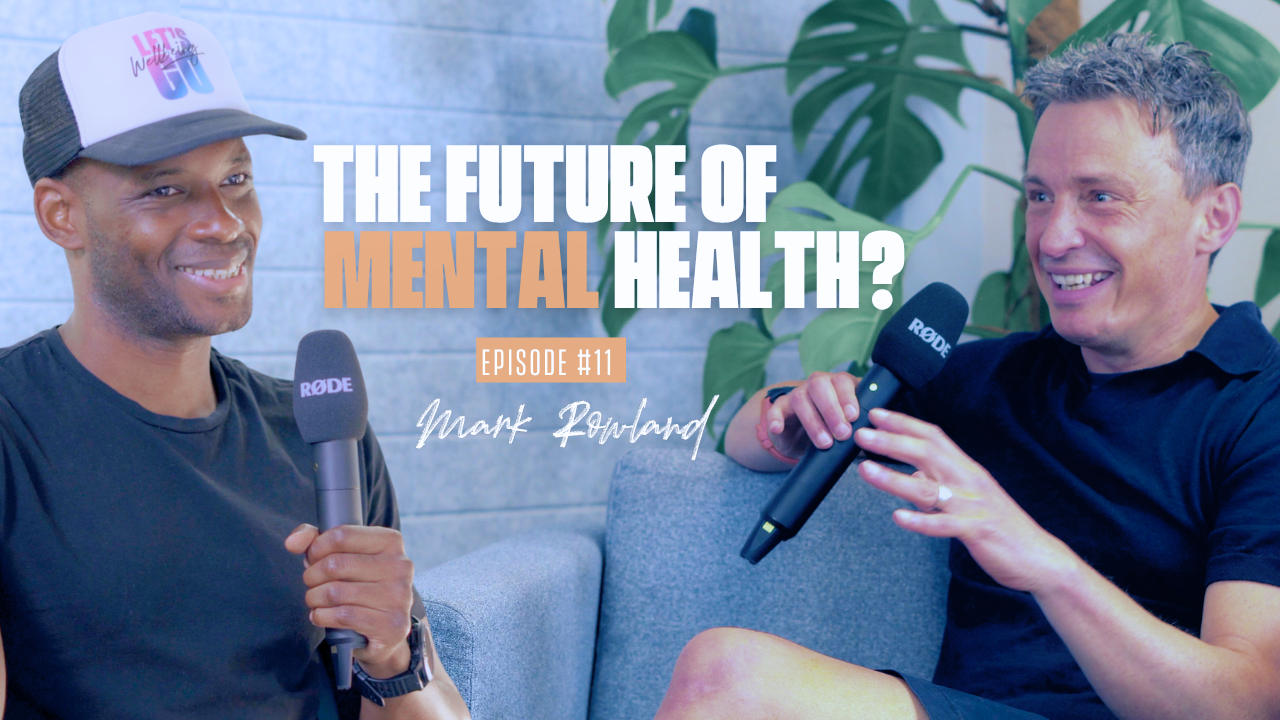
Episode:11
Where Does Employer Responsibility End? | Mark Rowland, Mental Health Foundation
As governments invest record levels into mental health services and organisations continue expanding workplace wellbeing initiatives, expectations around leaders have never been higher.
But where should responsibility begin and where should it end? In this episode of Wellbeing Talk, I'm joined by Mark Rowland, current CEO of the Mental Health Foundation, to explore the future of workplace mental health, leadership and prevention.
-
Where Does Employer Responsibility End? | Mark Rowland, Mental Health Foundation
Wellbeing Talk with Matt Balfour
Matt Balfour speaks with Mark Rowland, Chief Executive of the Mental Health Foundation, about workplace mental health, employer and employee responsibility, evidence-based support, leadership, running and AI.
0:00 Intro
Matt Balfour (voiceover): NHS mental health spending is forecast to reach £16.1 billion in 2026. Alongside hiring an additional 8,500 mental health workers three years ahead of schedule, the UK government plans to make an extra £473 million available over the next four years for community-based mental health support.
In a system that has been described as fragmented, reactive and inconsistent, these developments signal growing recognition that mental health support cannot be confined to clinical settings. The voluntary sector, workplaces and schools all have a part to play in promoting positive mental health.
What could this mean for the future of mental health support at work? Where does employer responsibility end and employee responsibility begin? Which aspects of support could benefit from AI? And what lessons come from more than ten years leading one of the UK’s oldest mental health charities?
Mark Rowland (voiceover): If you’re living next to a volcano and it’s erupting a lot, you can take two options. You can learn to dance and avoid the lava, or you can move further away from the volcano.
Mark Rowland (voiceover): AI is helping us solve problems that are difficult for us to think through on our own.
Mark Rowland (voiceover): I’m really passionate about preventing people from feeling ashamed of their own distress.
Matt Balfour (voiceover): To explore these questions, I’m joined by Mark Rowland, Chief Executive of the Mental Health Foundation. Since 1949, the Foundation has been at the forefront of research, policy and prevention, helping shape the conversation around mental health and leading Mental Health Awareness Week across the UK.
Matt Balfour: Mark, good to see you, and thank you for joining the show.
Mark Rowland: Great to be here, Matt. Thanks for setting this all up.
1:36 How Losing His Brother Changed Mark Rowland's View of Mental Health
Matt Balfour: We’re here to talk about mental health in and outside the workplace. I’d like to understand more about your personal journey. You’ve spoken openly about losing your brother to suicide. What was your understanding of mental health before you became Chief Executive of the Mental Health Foundation?
Mark Rowland: I had an older brother, Daniel, who was two and a half years older than me. I also have a twin brother who is a psychiatrist and works in mental health. About thirteen years ago, I got a call to say Daniel had attempted to take his life and had been taken to hospital. He was struggling with depression. He had made previous attempts, but he didn’t recover. It was devastating.
I often say that a complex, sudden or shocking bereavement is like a mirror shattering on the floor. Your job is to pick up the pieces as best you can and make sense of what has happened. That was my experience, and it took a long time.
Before then, I don’t think I had thought clearly about how important mental health is or about what helps and what doesn’t. Negative patterns of thinking and toxic self-talk can compound over many years, like compound interest, and have a devastating impact.
4:18 Looking Back: What Changed After Losing His Brother?
Matt Balfour: What stands out most when you look back at that period now?
Mark Rowland: It was the definition of tragedy. Suicide is a permanent response to a temporary problem. There was a way through and there were answers, but my brother had reached a point where he didn’t believe things could get better. He felt trapped, as if there were no other options than continuing to experience that level of pain. Feeling there are no options is a key risk for suicide.
There were other options for him. There was nothing wrong with him; there were things he needed to work through. I was fortunate to have a loving family and to be able to make sense of what had happened to him and to me. Making sense of an experience is vital if you can draw something positive from it.
Matt Balfour: Was it a sense of acceptance?
Mark Rowland: Acceptance, but also growth. I didn’t know post-traumatic growth was possible. Some of the most defining and difficult experiences in our lives can help us become ourselves more fully and use our gifts to their greatest potential.
Matt Balfour: I remember feeling that this was a moment when I had to become an adult. Life had thrown something at me that I would have to manage, and I had choices about how I did that. I’ve also lost a close family member to suicide, and running now plays an active role in both our lives. What role has fitness played for you since then?
6:43 Can Running and Exercise Improve Mental Health?
Mark Rowland: I’ve had two traumatic events. One was getting divorced. My wife told me she no longer thought the relationship was working and didn’t want to be with me. That was a big shock, two or three years before my brother died.
I started running after the divorce and separation as a way of processing things. I knew I was safe. I could be by myself, and it wasn’t complicated. Since then, running has been a source of consolation and has helped me process my thinking and emotions constructively. It’s also brought adventure, fun and camaraderie. Some of the peak experiences of my life have come through running. It has been there at both the lowest and highest moments.
Matt Balfour: What would you say has been the crowning moment in your running career?
Mark Rowland: The peak experience that stands out is the Paddy Buckley Round, which covers 47 peaks in Snowdonia. It’s usually a 24-hour challenge, but we did it over three days, self-supported and carrying our own water. It was very hot, with bogs and poorly established trails. It was a fight.
After the second day, I was done. My feet were in terrible condition, and I’d given up. The next morning I told myself I’d do the first hour, then get to lunch, then see how I felt in the afternoon. In the end, I made it through the third day. We’d climbed more than 10,000 feet and walked around 25 miles each day. As we came down the last hill at sunset, I felt an incredible inner warmth, fulfilment, satisfaction and joy.
Matt Balfour: There’s an analogy there with running, especially trail running. When life gets hard, sometimes you have to take it one moment, one hour or one mile at a time.
Mark Rowland: I was right on the edge of what I could endure. One of our group had to drop out because he was injured, and another had to help push me up the mountain. We had very little food and water. There were many lessons in that experience.
Running gives you self-esteem. Setting challenges and meeting them gives you a backstory that says, “I can manage difficult things.” It doesn’t mean you’re superhuman or impervious. It reminds you how much of a struggle it was and how close you came to your limits. I love running for that.
11:37 What Changed Mark Rowland's Mind About Mental Health?
Matt Balfour: You’ve spent ten years leading the Mental Health Foundation and seen countless reports, campaigns and conversations about mental health. What is something you believed about mental health ten years ago that has since changed?
Mark Rowland: So much has changed. Ten years ago, when the Royal Family first spoke about their experiences of mental health in 2016, I remember being asked by CNN and the BBC why we needed to talk about mental health problems. Wasn’t it just a minority or niche issue?
There wasn’t a mental health minister or someone in government responsible for mental health or suicide prevention. A lot has changed in terms of mental health being prioritised. We didn’t fully recognise how many people struggle psychologically. We thought there was a small group of people who were mentally ill and everyone else was fine. In reality, almost one in two of us will experience a period of poor mental health in our lifetime, and all of us will struggle at some point.
I don’t think I realised that when I started. I probably thought I was one of the people with good mental health. Listening to people with lived experience has echoed my own experience. It has helped me make sense of who I am and my own inner life, and has helped me feel less shame and more acceptance about what I struggle with day to day. I’ve come to understand that mental health exists on a spectrum, and difficult experiences are more common than we first thought.
I also underestimated the importance of big societal shifts. In 2016, we were before Brexit, the pandemic and Trump, and before we had fully reckoned with social media’s impact on young people. I didn’t realise how much political, social and global issues affect mental health. I was thinking more about how individuals dealt with their own issues, rather than looking through a societal lens.
Matt Balfour: Workplace wellbeing has moved from the margins into the mainstream, which is positive. But not every popular idea delivers the outcomes people hope for. What workplace wellbeing trend concerns you now?
16:00 Which Workplace Wellbeing Trends Concern Mark Rowland?
Mark Rowland: The focus on individual wellbeing activities before addressing structural things that affect people’s mental health is frustrating. I’ve worked with large transport companies that offered staff yoga in the evenings but hadn’t addressed safety concerns, long shift patterns or reasonable adjustments for people struggling with their mental health.
Organisations can pick the easy options without dealing with pay, transparency and fairness. You can’t make work easy, risk-free or a utopia, but organisations that do this well think about wellbeing from the start and use the evidence. Organisational approaches work better than individual interventions such as mindfulness, yoga or a wellbeing room.
One common mistake is offering wellbeing activities while failing to notice or work with employees who are struggling early. Absence may not be managed well. People leave with no plan to prevent them leaving and no proactive plan to bring them back. People may think, “I’ll leave it; they probably just need space.” But the evidence shows that trust, thoughtful engagement while someone is off work, and making every effort to support their return when it’s right for them can be better for the person and the organisation.
Matt Balfour: If there were three evidence-based actions that could most improve mental health in workplaces, what would they be?
19:46 Three Evidence-Based Ways to Improve Mental Health at Work
Mark Rowland: First, have a clear, effective approach to acting early, preventing absence and managing it proactively. Last year, the UK lost 22 million days to mental health-related absence. Mental health is the leading cause of long-term sickness absence lasting four weeks or more. Since 2015, about a million more people have taken leave from work.
That tells us there isn’t enough action before people leave: not enough engagement to understand what is happening, where the pressure points are, or what reasonable adjustments would help someone stay in work. There’s also not enough action after someone has left to support a compassionate and sensitive return. The longer people are off, the less likely they are to return, and the worse the mental health outcomes can be. We need a system that is preventative and proactive.
Second, provide good line-manager support. Managers need to be human, compassionate, clear, honest and able to challenge. Some wellbeing approaches are paternalistic, like a parent-child relationship, rather than adult to adult. A workplace should be an adult environment where people feel cared for and someone will tell them the truth.
Managers also need to think about the wider team, not only the individual. They need to understand the impact on colleagues and weigh difficult trade-offs. Third, have policies that support psychological safety and create belonging and active engagement. Policies on bullying and harassment matter, as do proactive environments where people participate at work.
Those three things — effective absence management, strong line-manager support and policies that create psychological safety and belonging — are evidence-based ways employers can improve mental health. They can also improve productivity, which is a bonus.
Matt Balfour: There’s a gap in the market. CIPD figures show that only 29% of organisations surveyed last year actively train managers to have supportive conversations about mental health.
Being proactive doesn’t have to be complicated. When someone leaves, there’s often an exit interview. I recently heard of an organisation using “stay interviews” to ask people why they stay and how the employer could do more of what works, before they are struggling or off sick.
Mark Rowland: Stay-in-work plans matter, not just return-to-work plans. Reasonable adjustments are an entitlement under the Equality Act, and those conversations need trust.
We’ve also looked at GPs issuing fit notes when people present with mental health problems at work. Around 93% of the time, the note says not to go to work. We think a “may be fit for work” approach could sometimes be better: perhaps tasks need to change, hours could be condensed or adjustments made. Instead of immediately assuming the best option is to leave work, it may be possible to support someone to stay. Sometimes rest and recovery are necessary, but we should ask whether absence can be prevented, because the outcomes of mental health-related absence can be poor.
Matt Balfour: The government’s new mental health strategy, announced in May, looks beyond clinical settings to consider the roles of schools, the voluntary sector and workplaces. What could this mean for the future of mental health support at work?
26:20 Will the UK's New Mental Health Strategy Change Workplace Support?
Mark Rowland: It’s positive. I came into this work through human rights and international development. My first job was campaigning to get a human-rights campaigner released from prison in Burma. After about 18 months of campaigning and lobbying, we succeeded. It was satisfying to see that change happen.
For the last few years, one of our main calls to government has been that we need more than clinical resources for people once they become unwell. We’re facing a serious societal issue in the quality of people’s mental health. Over the last ten years, the number of young people experiencing poor mental health has risen from about 15% to 25%, with a significant impact on participation in education and work.
A key focus of our next strategy is helping young people transition into their first year of working life and making sure it’s a positive experience. A good first year can improve life outcomes; a bad one can have a significant scarring effect. We need to equip employers and young people and open up opportunities.
We’re seeing more psychological distress, including severe and enduring anxiety, self-harm and sleep problems. Society can respond by telling young people to “pull their socks up”, or recognise that there are real risks and challenges. Inequality, global shocks and technology have come together during a period of economic and financial uncertainty for young people, with a serious impact on their mental health.
The cross-government mental health plan is a campaign win and an opportunity to create environments across society that protect and support mental health, act early and prevent problems. We call it task shifting: involving people in communities, schools and workplaces in supporting mental health. They don’t need to be psychiatrists or counsellors, but they do need to be active in creating the conditions for people to live with good mental health.
Matt Balfour: That raises the question of what’s expected of workplaces and leaders, and what a reasonable social contract looks like. Employers are being asked to do more than ever, often with good intentions. What are the risks and unintended consequences of unchecked expectations around leadership and mental health?
32:35 Are We Expecting Too Much From Leaders on Mental Health?
Mark Rowland: As a public-health organisation, we know that some of the biggest gains in population mental health come from changing environments and experiences. It isn’t just about equipping individuals to practise mindfulness or change their behaviour.
If you’re living next to a volcano that keeps erupting, you have two options: learn to dance and avoid the lava, or move further away. In mental health, changing the environment and moving away from harmful things can make a big difference, even if you don’t gain more insight or change the way you think.
Individuals also have a role. One way to miss the mark is to dismiss, ignore, hide or suppress mental health struggles. That approach doesn’t have a good track record of leading to healthy outcomes. Another is to be engaged with your mental health but choose coping behaviours that cause more harm than good. Being open about mental health doesn’t automatically make coping strategies healthy.
People have a responsibility to understand how to manage a struggle in a way that is as healthy as possible and doesn’t cause harm to themselves or others. These responses are common; people don’t need to feel ashamed of them. The responsibility is about managing the struggle in a healthy way.
Matt Balfour: So, being more open about mental health can be a good place to start, but it isn’t automatically the same as achieving healthier outcomes. Have we become uncomfortable talking about personal responsibility, particularly at work?
37:10 Have We Stopped Talking About Personal Responsibility?
Mark Rowland: The problem is that personal responsibility can be weaponised and used to shame people. If the message blames or shames, it won’t have positive outcomes.
But if we say mental health is only about political and societal issues, with nothing to do with individual choice, we treat people like victims. It’s important, especially for young people, to be empowered and know there are things they can do. That mattered for my brother. He concluded there was nothing he could do and felt trapped and hopeless.
There is a role for responsibility in giving people agency and hope, but it mustn’t gaslight them or say, “You should think and feel differently,” or make them feel inadequate because they can’t cope. It’s possible to be compassionate and to recognise that healing involves being understood and validated, as well as taking a courageous journey of change and exploration.
Sometimes the easiest response doesn’t help. We may need someone who loves us and is on our side to challenge a habit or response and help us find a different way. Sensitive challenge is part of healing. If we only offer support and sympathy without the trust and space to talk about what needs to change, we may not be helping.
Matt Balfour: Support, trust, space, challenge and opportunity. Where does the employer’s responsibility end, and the individual’s begin?
39:51 Where Does Employer Responsibility End?
Mark Rowland: An employer has a responsibility and a duty of care to make sure it isn’t causing harm, and to be fair, open and clear in its policies and communications.
We often talk about fair and clear expectations. Employers need to say, “What do I need from you? What is your job?” Employees need to be able to say, “Yes, I’m taking that deal,” or, “No, I’m not.” There should also be open, adult-to-adult conversations. If someone does something that has consequences, the organisation needs to be able to explain those consequences clearly and honestly.
Matt Balfour: That brings to mind high-trust, high-accountability cultures.
Mark Rowland: That’s what we aim for: clear expectations, a sense of belonging and people who care about one another, alongside challenge and truth-telling. We’ve recently discussed the importance of a feedback culture in our leadership team. If people can’t say, “Matt, when you did that, it didn’t work for me,” the organisation won’t be healthy. The concern may be there, but it won’t be expressed.
42:06 Leadership, Employee Wellbeing and the Social Contract
Matt Balfour: How have you navigated the balance between the responsibility of organisations and the responsibility of leaders to look after their employees?
Mark Rowland: When you work for a mental health charity, it’s important to care about your staff and want them to thrive. I’ve been Chief Executive for eight years, and there have been times when I’ve struggled.
During the pandemic, I took on more responsibility than I should have for containing everyone’s anxiety and soothing people. I sent daily videos, messages and reflections, and even ran a daily exercise class for anyone who wanted to join. I became exhausted.
My model of leadership was to take maximum responsibility for the organisation, but not enough responsibility for what I could sustainably give. I thought I could keep giving without a limit. I became very tired and anxious, and it took a long time to recover.
I learned to set fair and realistic expectations with staff, lean on the team, and be clear about what needs to be done and who can do it. Sometimes you need to say, “That expectation is too much. I can’t do it.” Over the long term, it’s wiser to be clear about what you can deliver and then deliver it, rather than promise too much and burn out.
44:40 Why Leaders Struggle to Set Healthy Boundaries
Matt Balfour: Setting boundaries, delegating, setting reasonable expectations and leaning on the team aren’t new concepts. What stopped you from doing that earlier?
Mark Rowland: My role models were the all-singing, all-dancing “hero” leaders who take everything on. I remember Michelle Obama speaking about Barack Obama as someone who never cracked and was always strong. That was the model and expectation I had.
I would have been better off having a more modest view of what I could manage, building around me and asking for help. That’s a good leadership role model and a more sustainable one.
Matt Balfour: Could you have learned those lessons without experiencing the anxiety and burnout?
Mark Rowland: Maybe, but I needed to reach my limits. Like running, you reach the limits and then you learn. Everyone in an organisation needs to know where they can get support. If wellbeing is for everyone, everyone needs support.
Sharing the load would have made me a better leader. It wouldn’t have diminished me; it would have enhanced my leadership and enabled the team to share responsibility. When a leader steps in too much, it can signal to others that they can step back. A leader’s responsibility is to get the most from people and resources. If you overextend yourself, you diminish what the group can achieve.
Matt Balfour: So, for a leader who recognises that pattern, the lesson is to practise what they preach: make sure they have support and share the load.
Mark Rowland: Here’s a test: if you’ve never said no — “I can’t do that,” “I don’t think that’s a good idea,” or “We can’t accommodate that request right now” — you’re probably doing too much and not making enough decisions. Saying no makes your yeses more meaningful. Doing less, but doing it well and sustainably, is wisdom.
48:12 How Could AI Improve Mental Health Support?
Matt Balfour: I’d like to talk about AI and how it could help people access mental health support. You’ve said AI can enhance the human experience rather than replace it, including in areas such as conflict resolution and social processing. Which aspects of mental health support are most likely to benefit from AI?
Mark Rowland: This will be a major focus of our future work, especially around technology and AI. First, we need to learn from the last twenty years: unregulated technology, especially when unleashed on young people, isn’t ethical or healthy. Products have commercial drivers, and the consumer’s wellbeing may not be their first purpose. Products need to be safe, and advice needs proper regulation.
AI has been adopted faster than any other technology in human history. Mark notes that people use it to solve problems that are difficult to think through on their own. He says that, in 2025, therapeutic and psychological support was the most popular use, after ranking second in 2024; life organisation was another common use, as was exploring purpose and meaning.
It would be good if we had friends who could help us think things through, but people aren’t always good at navigating the maze of their own minds or gaining insight into their behaviour. AI could have an important role in psychological problem-solving if people are equipped to use it well, particularly men who may struggle to find deep human connection and friendship.
AI may also help analyse large datasets to identify population-level risk and groups, families or communities that need additional support. That could help target support, as we have done in other areas of public health.
AI may also help clinicians build a richer picture of someone’s health needs. Family doctors used to know the family and understand the context people lived in. Clinicians may only have ten minutes with a patient. If AI can help someone share more detail and give clinicians a fuller picture, it has real potential. There are risks around privacy and keeping information confidential, but we have a shortage of clinical time to understand people properly.
Matt Balfour: That prospect is both unsettling and exciting. A tool could help a doctor understand who may be at risk and what support they need, at a time when clinicians’ availability is limited. Men are three times more likely to die by suicide, and there may be particular use cases for people who find it difficult to have person-centred, empathetic conversations.
AI is becoming part of workplace tools such as email and Teams. What would concern you most if organisations became overly reliant on AI for wellbeing support?
54:00 What Are the Risks of AI Replacing Human Support?
Mark Rowland: I come back to first principles. AI should save us time so we can spend more time doing things people add value to, including collaboration, connection and social interaction. If AI helps increase engagement and in-person participation at work, that’s great. If it replaces human engagement, we have a problem. Technology should serve humanity, not replace the things best done with people.
The number of people who need mental health services is concerning. The people most likely to access services, including talking therapies, are white, middle-class women. Around two-thirds of people using talking therapies are women, and AI use has a similar skew.
I want us to equip people, including men, with tools to get the most from AI, check whether information is accurate and gain insight. Some people say, “Don’t use it.” That doesn’t work. People will use AI, so we need to help them use it effectively and safely, especially when it comes to mental health.
56:57 AI, Social Media and Young People's Mental Health
Matt Balfour: The Foundation launched its strategy two weeks ago, with three areas including working lives, bullying and online lives. How does AI feature in the online lives part?
Mark Rowland: We want young people to have the tools to understand the risks and dangers. AI products that offer psychological advice or mental health support need to be properly regulated and safe, with protections for people’s information and privacy.
We may help organisations develop effective AI tools, provide advice for parents, and research how young people use chatbots. Their lived experience can inform materials, advice and policymakers about the dangers and risks.
As a mental health sector, we haven’t been sufficiently alert to technology’s role in young people’s mental health and neurodevelopment. We’re determined not to repeat those mistakes with AI: we need to harness the benefits and protect people from potential harms.
Matt Balfour: After ten years leading the Foundation, and witnessing progress, setbacks and significant social change, how would you describe your outlook for the future of mental health?
58:45 Is Mark Rowland Optimistic About the Future of Mental Health?
Mark Rowland: I’m instinctively a short-term pessimist and a long-term optimist. I think we’ll face continued pushback on the mental health and wellbeing agenda over the next few years. Some people will dismiss it and say we’ve had too much, wanting to return to a stiff upper lip. There’s a cultural swing coming in the other direction, so it may be a tough few years.
Longer term, I think we’ll prove that protecting and supporting mental health is essential for human flourishing. We’ll look back and see that those who valued mental health were on the right side of the debate. It’s at the core of creating the society we want to live in.
This week, I was with my leadership team at the People’s History Museum in Manchester. Its history, from the English Civil War to universal suffrage, the Second World War, trade unions and political parties, reminded me that social change does happen over the long term. You need to play your part and pass the baton to the next people.
I’m proud of the work the Foundation and its team have done. I’m excited to see how they build on it and continue to make sure people’s mental health is protected and supported.
Matt Balfour: Human beings haven’t changed as quickly as technology, workplaces or society. What principles about mental health at work do you think will still matter in a hundred years?
1:01:00 Which Mental Health Principles Will Still Matter in 100 Years?
Mark Rowland: Have you read Viktor Frankl’s Man’s Search for Meaning?
Matt Balfour: I’ve heard of Viktor Frankl, but I haven’t read it.
Mark Rowland: Frankl was a Jewish psychiatrist imprisoned in Nazi concentration camps. He observed who survived and who didn’t, and found that people with a personal sense of meaning and purpose were able to endure suffering. He expressed the idea that a strong enough “why” can help people endure great hardship.
In a hundred years, one of the big challenges for employees will be creating meaningful engagement and purposeful work. AI will cause major disruption in that space, but meaning is something we need as human beings. It can’t be artificial.
Work will change, and workplaces will need to think hard about what delegation means, what tasks need to be done and what work actually means. But the focus must remain on work feeling meaningful and as if it matters. That is important for mental health.
Matt Balfour: After everything you’ve contributed through your work at the Mental Health Foundation, if future generations remembered one lesson, what would you hope it was?
1:02:50 Mark Rowland's Most Important Lesson After 10 Years as CEO
Mark Rowland: It’s easy to be self-critical, and shame plays a big role in mental health. Whatever you’re experiencing is much more common than you think. The problem isn’t you; it’s likely to be what you’ve experienced or what has happened to you. There are ways to prevent the problem escalating and to live well.
I’m passionate about preventing people from feeling ashamed of their own distress. It’s hard enough to deal with distress without adding guilt and shame. The simple message is: you’re not alone.
Matt Balfour: Brilliant. Mark, it’s been an absolute pleasure. Thanks for joining the show.
Mark Rowland: Thank you.
1:04:11 Outro
Matt Balfour (voiceover): This has been Wellbeing Talk with me, Matt Balfour, your guide to all things mental health in the workplace. Be sure to subscribe to the Let’s Go Wellbeing YouTube channel, and we’ll connect on the next episode.
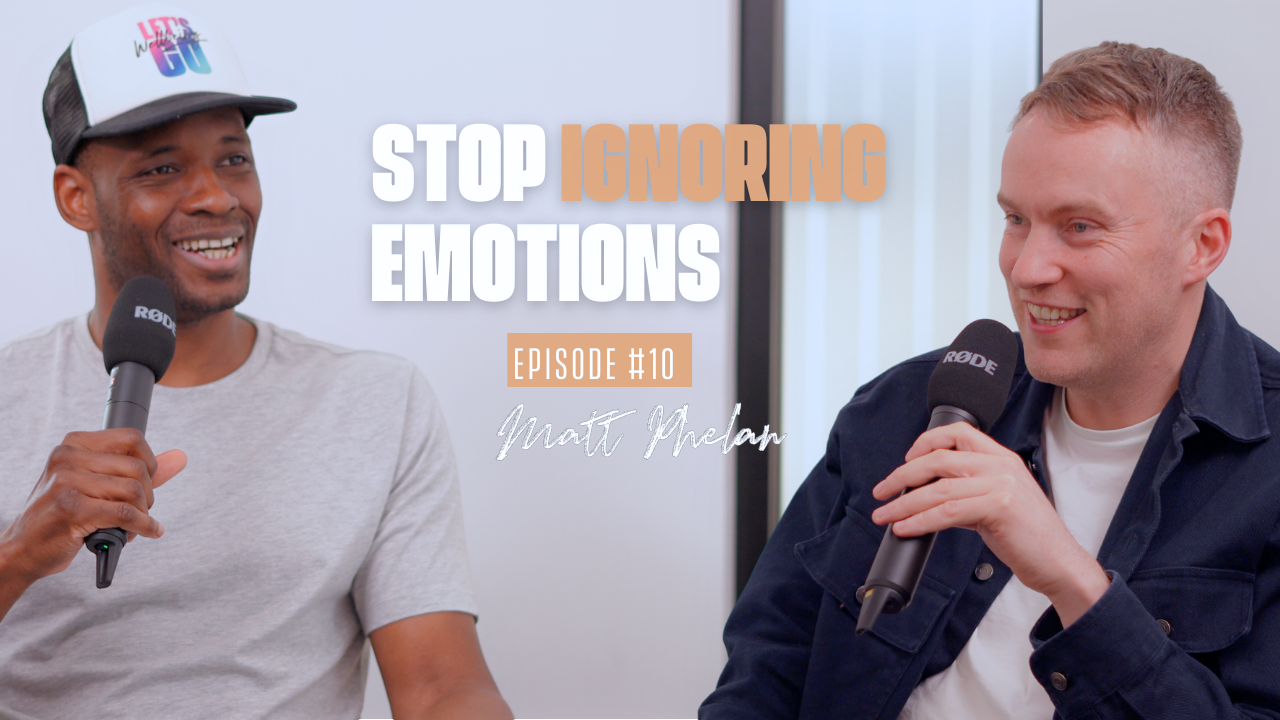
Episode:10
Does Happiness at Work Actually Improve Performance? | Matt Phelan
Despite growing investment in employee engagement and workplace wellbeing initiatives, many organisations still struggle to understand what employees are actually experiencing day-to-day.
So what does happiness at work really look like and how is it different from employee engagement?
In this episode of Wellbeing Talk, I’m joined by Matt Phelan, public speaker, author of The Happiness Index: Why Today’s Employee Emotions Equal Tomorrow’s Business Success, and co-founder of The Happiness Index.
-
Does Happiness at Work Actually Improve Performance? | Matt Phelan
Wellbeing Talk with Matt Balfour
Matt Balfour speaks with Matt Phelan, public speaker and co-founder of the Happiness Index, about workplace happiness, employee emotions, culture, performance and the human needs that shape how people experience work.
Chapters
0:00 The Happiness Myth at Work - Intro
Matt Balfour (voiceover): Research suggests that many people feel they have to suppress or hide their emotions at work to be seen as professional. As a result, emotions are often something we’re encouraged to manage, control or ignore rather than understand.
So what does happiness in the workplace actually look like? Is it different from employee engagement? And how does performance improve when employees are encouraged to work with their emotions rather than pretend they aren’t there?
Matt Phelan (voiceover): The largest ever study of happy employees, by the NHS and the University of Sheffield, showed that if you go into two hospitals that are exactly the same, the one with unhappier employees has a higher death rate.
Some companies believe that removing the people they see as lower performers will incentivise the rest of their employees to work harder. If we make human beings into robots, we’ll be replaced by robots. We have to bring out what makes human beings brilliantly amazing, and that includes our emotions.
Matt Balfour (voiceover): To explore these questions, I’m joined by Matt Phelan, public speaker and co-founder of the Happiness Index. Established in 2014, the Happiness Index helps organisations take engagement and wellbeing seriously. Using data from more than two million employees across over 100 countries, it measures employee experience from onboarding through to the day people leave, and helps leaders see emotions as a source of performance rather than a weakness.
Matt Balfour: Matt, great to see you. Thanks for joining the show.
Matt Phelan: Thanks for having us along, Matt. I’m really looking forward to this.
1:30 Why Workplace Wellbeing Gets Ignored
Matt Balfour: Before we get into the work you’re doing now, I’d like to take a step back. What did you see in organisations that made you realise culture and wellbeing weren’t being taken seriously enough?
Matt Phelan: I think it came from working in organisations where I didn’t feel they looked after or even cared about their people. I didn’t start working on this until ten or twelve years later, but most people can remember a time when work didn’t feel good. You can take it for granted when things are good, but negative emotions can help you recognise that something needs attention.
I remember getting a dream job and arriving to think, “This isn’t for me. I can’t do this culture.”
Matt Balfour: You learn what matters to you once it’s missing.
Matt Phelan: Exactly. We’ve probably all met someone older who seems wise and calm, but you only gain that wisdom by living a life.
2:30 The Role of Emotions at Work
Matt Balfour: Before you started doing this work, what did you personally misunderstand about emotions?
Matt Phelan: Growing up as a boy in the 1990s, we weren’t really allowed to show emotion. If you fell over, you didn’t cry in front of someone. Boys in the UK were taught that emotions weren’t for them. We now have the language to call that toxic masculinity, which is a step forward, but at the time I didn’t even think emotions were a thing.
If I felt sad or unhappy, I buried it. I think many people in my generation grew up doing that, then became teenagers and used alcohol to get rid of those feelings. We didn’t talk much about emotions in the 1990s.
Matt Balfour: So there was no language to describe accurately how you felt, and you were encouraged to suppress those feelings or use unhelpful coping strategies. You mentioned having a dream job. Was there a particular moment when you realised something was wrong?
Matt Phelan: I saw where a workplace could work really well, but didn’t realise that was unusual until I saw a place where it didn’t. I was lucky to work at a company that was acquired by the Guardian News Group, owned by the Scott Trust.
One of the Guardian’s principles was that it didn’t matter who you were in the organisation. If you thought there was something the paper should write about, whether you were a cleaner or the CEO, you were welcome to come to the editorial meeting. I don’t know how many people did, but you knew your voice mattered, whatever your seniority.
After I left, I went to a media agency with glamorous clients and brands I thought I wanted to work for. It was the complete opposite: a huge hierarchy and a very different culture. I immediately felt it wasn’t for me. I’m grateful for both experiences because they helped shape what matters to me and my future businesses.
6:35 Why Leaders Should Measure Workplace Culture
Matt Balfour: Thinking about your experiences and the work you do now, why should a senior leader care about benchmarking culture?
Matt Phelan: There are two words people aren’t always comfortable with: ignorance and incompetence. If you don’t know about something useful, that’s a form of ignorance. You might not know it’s something you should be doing, or you might not have been trained in it.
With wellbeing, happiness and mental health, there’s a level of ignorance where leaders aren’t aware. That’s why awareness work is important. Then we need to ask when it becomes incompetence. Once leaders know about the impact of employee experience on performance and business results, should those topics be part of the competence framework for senior leaders?
Academic research shows that how people feel at work affects an organisation’s financial performance. Those capabilities should be included when interviewing and hiring for senior roles.
Matt Balfour: If someone understands the data and chooses not to make any adjustments, that might be incompetence.
Matt Phelan: It’s not only about individuals; it’s about teams. We say, “Data is the plural of anecdote.” In a 500-person organisation, one or two people may tell you a story that motivates you to change something. The power of data is when you bring those stories together and see a trend: “There’s something serious here, and we need to act.”
That doesn’t mean an individual story isn’t serious or shouldn’t be addressed. A single story may need immediate attention even if 99% of people aren’t experiencing the same thing. Local managers still need to listen and respond to their people. Data helps leaders see trends and prioritise at scale.
Matt Balfour: What goes wrong when organisations only pay attention to rational, visible data and ignore what people are feeling?
10:17 The Problem with Rational Workplace Metrics
Matt Phelan: It happens all the time. Around 90% of well-known surveys are built by psychologists and use rational questions, assuming we’re rational beings.
As we enter the AI era, AI is taking over many rational elements of work. What makes us different — why we return to one bar, choose one law firm over another or resign from a job — isn’t always rational.
Think about any relationship you’ve left. Other people might look at it rationally and say, “Why are you leaving? The salary is great, the location is great, and the brand name is impressive.” But you’re living that relationship every day, and you know it isn’t making you happy.
We shouldn’t push emotions into a corner and say they don’t matter. If we make human beings into robots, we’ll be replaced by robots. We need to bring out what makes us brilliantly human, and emotions are part of that.
Matt Balfour: Rational and visible data can be useful, but it doesn’t always tell us what drives human behaviour.
Matt Phelan: Take a pub in Ireland that sold Guinness. They had machines where you could put in your credit card and pour your own pint without going to the bar. At the time, we thought that was the future and people wouldn’t need bartenders. The technology existed, but it didn’t take off because there’s a social element to going to the bar.
I don’t drink, but I still love going to the bar. There’s something human that we value. Guinness is poured and left to settle before it’s topped up. There isn’t necessarily a technical reason for that pause; it’s about anticipation and the experience. Whether it technically tastes different may not matter, because you think it tastes better. The placebo effect is real.
Matt Balfour: I recently saw a robotic arm making cocktails in a bar in Las Vegas. It did it well, but robots haven’t taken over the bar because there’s something fundamental in human interaction that can’t be expressed through a robot.
Matt Phelan: The bartender who remembers your name, shakes the ice and smiles at you — that’s human. It’s what makes us human beings.
14:30 The 8 Drivers of Workplace Happiness
Matt Balfour: Your 2024 book, The Happiness Index: Why Today’s Employee Emotions Equal Tomorrow’s Business Success, describes eight top drivers of employee engagement and happiness. They’re based on data from more than two million employees across over 100 countries, alongside hundreds of thousands of research studies and expert interviews.
I’ve been listening to the audiobook, and it’s relatively short but full of practical value. Gathering all that data must have taken a long time. What surprised you most as you took the book from idea to publication?
Matt Phelan: This may be a spoiler, because it’s towards the end of the book. When I looked through all the data, the big question that came to me was about meaning. My interpretation — and I’m not saying it’s the only correct one — is that the meaning of life is finding meaning in life.
Most of us spend more time at work than anywhere else, perhaps even more than we sleep or spend with our families. So finding meaning in work is a huge part of finding meaning in life.
18:15 Finding Meaning in Work
Matt Phelan: What gives people meaning is different for everyone. Someone might look at a footballer such as Emmanuel Adebayor and think he’s just motivated by money. But he wanted to earn the highest contract he could because he supported things such as his local church back home. You need to look beneath the surface. Even someone who seems motivated by money may be a single parent, for example.
Matt Phelan: I’d like to ask you, Matt: what gives your work meaning? From listening to your podcasts, I’d like to understand.
Matt Balfour: I think it comes down to purpose-driven work with people-focused outcomes: using my experience for the benefit of others. My experience of a difficult workplace and an acute stress event is well documented. I found out the hard way what it meant to be in an organisation where employers, through ignorance or lack of awareness, weren’t in a position to support employees before, during or after a crisis.
Whether it’s sharing the views of senior leaders on workplace mental health, talking about awareness days or shining a light on mental health in society, I want to use my experience for the benefit of others. If even one person has a better experience or avoids some of what I went through, that feels like a job well done. Not everything of value has a pound sign next to it.
I used to chase money in recruitment and sales, but it didn’t matter how much I earned if I wasn’t supported. If fundamental human needs, emotions and behavioural drivers weren’t understood, I was never going to be happy.
Matt Phelan: That’s why meaning and purpose are so powerful. You’ve identified what gives you meaning. If someone took that away, you’d probably find it difficult to motivate yourself. I wanted to use your story to explain why meaning matters: data has to connect back to people and stories.
Matt Balfour: The book turns the brain data into practical things people can do at work. It maps data to four brain systems — instinct, emotion, reflection and rationale — and then to the eight drivers and more granular human needs. Which drivers do leaders tend to misunderstand or underestimate when thinking about performance or ROI?
22:37 The Most Misunderstood Happiness Drivers
Matt Phelan: The one that gets missed and underestimated is safety, which links to the instinctive part of the brain. When someone is hired as a CEO, they’re often keen to make an impact. But in any relationship, the first thing you need to do is make someone feel safe.
The bigger the organisation, the harder that can be. People may be excited about a new plan, but before they can receive the message, there needs to be safety, trust and empathy for the situation they’re in. When someone is empathetic about a challenge, it can help you trust them more.
Relationships are the number one driver of happiness in every country we’ve studied, but you can’t start establishing a relationship until you trust one another.
Matt Balfour: Safety can include physical safety, trust and psychological safety. It means different things depending on what’s happening in an organisation: a restructure and an IPO create different circumstances.
What other trends have emerged, regardless of sector or seniority?
26:55 Global Workplace Happiness Trends
Matt Phelan: Working from home versus working in the office has become political. Leaders need to look at the data rather than react to political claims. Our data shows that some people prefer working from home, some prefer the office and some prefer hybrid working. What everyone wants is freedom and the ability to choose.
A security guard may not be able to do the job from home, but might need flexibility to swap a shift with another guard to take a child to a dentist appointment without going through layers of approval. How do you design freedom and flexibility into a structure that offers consistency without making employees feel like robots? If you have thousands of people, you need structure, but that’s the challenge.
Matt Balfour: The CIPD’s Health and Wellbeing at Work report identified flexibility, job design and autonomy as key drivers, yet most wellbeing policies don’t directly address them. What do leaders misunderstand about the difference between happiness and engagement, especially when they’re looking at performance or ROI?
30:08 Happiness vs Engagement at Work
Matt Phelan: I remember it as: happiness is what your heart needs, and engagement is what your brain needs. That may sound a bit fluffy, but it helps me remember the difference.
Matt Balfour: You can also map the difference to the different ways the brain processes information: happiness relates more to what you feel, while engagement relates more to what you think.
Matt Phelan: Exactly. Happiness is what you feel; engagement is what you think. They can be different. You can feel you’re in a negative relationship while thinking the relationship is okay. That’s difficult for people who want everything to fit into spreadsheet cells.
When you survey millions of people, you can find people who are engaged at work but unhappy, or unhappy but engaged. Emotions don’t fit neatly into boxes. Engagement has dominated workplace surveys partly because it’s easier to monitor. I blame the saying, “If you can measure it, you can manage it.” It isn’t strictly true. Just because you can measure something doesn’t mean you can manage it.
Matt Balfour: Organisations can get a false sense of security from high engagement scores alongside poor wellbeing. Where have you seen that?
32:33 Why Engagement Scores Can Be Misleading
Matt Phelan: We saw this during the pandemic. Engagement was average, but happiness was low. If organisations only looked at engagement metrics, they might have thought people were doing fine. We published data showing that people were engaged but deeply unhappy, and that was a predictor of what became known as the Great Resignation.
Emotion is a predictor of the future. Sports teams understood that early because how you feel affects whether you can win a race, football match or golf match. Cricket was one of the first sports to look into mental health. Players such as Marcus Trescothick and Jonathan Trott spoke about mental health and being unable to play. Freddie Flintoff also educated me about things I didn’t know about, including eating disorders in men.
Matt Balfour: We were talking about that off camera. The theme of Eating Disorders Awareness Week two years ago was men and eating disorders. It sounds like there’s still work to do in helping organisations understand wellbeing, even when they know it matters. Why do you think that is?
35:00 Why Workplace Wellbeing Still Struggles
Matt Phelan: I think it’s structural. Wellbeing isn’t connected internally, and you don’t see it in most profit and loss statements. We try to rebuild our clients’ P&Ls as “P&L 2.0” so they can see how culture affects the bottom line. It isn’t easy, but it’s possible. Once you see the costs in the P&L, it’s harder to ignore them.
Matt Balfour: I spoke with Chris Cummings, CEO of Wellbeing at Work World, and was surprised to learn that mental health and wellbeing at board level often isn’t a regular conversation. We have reports from Deloitte and CIPD every year showing the cost to the UK economy and to businesses through presenteeism and absenteeism. Why isn’t this discussed at board level?
Matt Phelan: That’s why our work is important: helping organisations connect culture to their profit and loss in a language boards understand.
When I chair a board, I ask people to talk about their work happiness and personal happiness. Some people might think that’s a poor use of time, but leaders’ wellbeing disproportionately affects organisational performance. A CEO who is burnt out, stressed or struggling may not be in the best place to make good decisions.
Boards should be places where that can be discussed, but there are reasons people may hesitate. They may not want something recorded or written down. In sport, a player may not tell a manager they’re struggling because they’re afraid of being left out of the team. Similar fears may exist in companies. It can be done, even if it isn’t easy.
38:19 How Emotional Data Predicts Performance
Matt Balfour: Is there a threshold between someone’s work happiness and personal happiness that could predict problems in the near future?
Matt Phelan: It’s a predictor of the future. Imagine it’s been raining for most of the year and you see a weather forecast. It doesn’t mean it won’t rain or you’ll definitely get wet, but you can bring an umbrella and plan for it. The same is true with emotions: if you can see what’s happening, you can plan and make decisions, and show empathy to a global workforce even when you can’t be in every location.
Matt Balfour: What stops leaders from acting on that information?
Matt Phelan: A minority don’t care. No matter how much data they see, they don’t care. We need to understand why — perhaps they haven’t been trained or aren’t aware. There are also leaders who intuitively understand this. Most people are in the middle. Once they see the data connected and understand the impact, it starts to make sense.
It’s a system issue when emotional data isn’t included in P&Ls. Think about customers: if they’re unhappy, companies know that will affect sales or finances, so they pay attention to net promoter scores and other measures. Bad customer service is like a slap in the face: it hurts immediately, and people may not return unless the company responds.
Bad culture is more like a cancer that kills an organisation over time. Some of the best people leave slowly, while less effective people may stay. The company is gradually weakened, but the CEO may be gone by the time the impact is clear.
42:10 The Most Neglected Human Need at Work
Matt Balfour: You’ve spoken about applying brain science to the workplace. Which human need is most often neglected in day-to-day management, even by well-intentioned leaders?
Matt Phelan: The brain science can put some people off, so it’s helpful to remember that these things aren’t new. They’re human needs that have mattered for thousands of years.
One is acknowledgement: people need to feel that their employer thanks and appreciates what they do in a way that works for them. Strong relationships and acknowledgement aren’t new ideas. On the engagement side, clarity matters too — people need to know what their job is.
Take a salesperson. What is their job? To sell. But how? In what way? People need clarity, though not so much that it becomes micromanagement. It’s like asking whether we’re playing rugby or football: people need to know the game they’re playing.
44:20 One Thing Managers Can Do Today
Matt Balfour: If someone manages people but doesn’t set strategy, what’s one thing they can do to influence and genuinely improve wellbeing?
Matt Phelan: Don’t overcomplicate strategy. People need to know the direction and the rough plan to get there. If you say, “Let’s go to the party,” but don’t say where it is, people don’t know what to do. If you say, “Let’s go to Leeds, and we’ll get there by train,” you’ve given direction and strategy.
Leaders may be frustrated that their teams aren’t doing what they need, but they should ask themselves: “Am I giving people direction and strategy? Have I included them in developing it?” If you decide to go to Leeds by train from London, you may have missed that a colleague lives in Sheffield and could drive. Engaging your team in those conversations is important.
Matt Balfour: It sounds obvious, but common sense isn’t common. If it were, we wouldn’t need these conversations.
Matt Balfour: You’ve talked about leaders checking in with themselves: “Am I giving people strategy, direction, purpose and clarity?” Does the Happiness Index offer a checklist for managers?
Matt Phelan: There’s a technical and a non-technical way. The free technical option is to benchmark your organisation against our data at thehappinessindex.com. Go to the benchmarking tab and you can see where your team sits.
The non-technical option is to take the eight drivers and ask your team, “Which of these is most important to you?”
Matt Phelan: Of the four top happiness drivers — safety, relationships, freedom and acknowledgement — which is most important to you?
Matt Balfour: I’d say freedom.
Matt Phelan: That’s common among entrepreneurs. Most people say relationships when you look at the dataset. If you and I worked together, you’d need a framework but not to be micromanaged. Someone who needs clarity may want a framework and regular check-ins. The same manager can be seen by one person as a micromanager and by another as someone who doesn’t care.
What about the four engagement drivers: meaning and purpose, clarity, enablement and personal growth?
Matt Balfour: I’d choose personal growth. I like being challenged, expanding my horizons and learning things that inform or shift my perspective. That’s useful as a public speaker.
Matt Phelan: That’s my choice too. If I’m not learning, it affects me, but it isn’t the same for everyone. If we worked together, I’d know you need freedom and a decent level of challenge. Everyone else will be different.
For a simple team exercise, write down the eight drivers and ask people to rank them. In a group of more than four, you’re unlikely to find everyone ranking them the same way. It can increase openness and understanding.
Matt Balfour: Rob Stephenson described a similar exercise where a team shared their three non-negotiables. One of yours is doing the school run each morning. As a manager, you can’t assume everyone wants the same thing. Until you know what matters to people, you can’t understand their reasoning or lead them well.
Matt Phelan: My mum always says, “Treat people how you would like to be treated.” I think you can turn that around: treat people how they would like to be treated.
I met someone over Christmas who doesn’t drink. He told me he’d never felt more alone than at his company’s big Christmas party, surrounded by people drinking. He didn’t feel connected because he was the only one not drinking.
At our organisation, our Christmas party is from 10am to 3pm because we value the time together. We asked what the party was for — to connect — and decided to put it in work time rather than from 8pm to 11pm. HR people often spend January dealing with issues that come out of Christmas parties. It’s worth questioning why you do things a certain way and changing them if needed.
54:20 Global Workplace Happiness Data Insights
Matt Balfour: The Global Workplace Happiness Report is due out on 26 March. You’re launching it with a sold-out event and adding extra dates. Is this the 12th year of the report?
Matt Phelan: It’s the 12th year of running the Happiness Index, but the first year we’ve brought the data together as one global workplace happiness report. The World Happiness Report from Oxford’s Wellbeing Research Centre covers life happiness; ours focuses on work.
Matt Balfour: When you chart emotional, instinctive, relational and reflective data globally, what patterns stand out, and what do they say about leadership priorities?
Matt Phelan: The biggest thing in the data is change. Many companies are moving from an old business to a new one and trying to take employees on that journey. People experience a range of emotions, from fear to excitement, from loving the challenge to hating it. You can’t take people through change unless you allow them to feel those emotions.
We’ve adapted the change curve to show different emotional states. When people are scared, such as when they see AI and think it’s the end of their role, they may not be able to receive information. They’re focused on survival — fight, flight or freeze.
The leader’s role is to help people feel safe enough to receive the message. For example: “We’re going to train people through this. If you want to come on the journey and are prepared to change, we’ll support you.” Some people may not be prepared to make that change, and that’s a separate conversation. But unless you make people feel safe first, they may think it’s a trap or that HR is trying to fire them.
56:35 What Organisations Should Stop Ignoring
Matt Balfour: What are some of the early trends in the data that organisations should stop ignoring?
Matt Phelan: If you plot happiness across a lifetime, it looks like a smile. People are often happier around 16 to 25, and happiness dips around the middle of a career, when people may have children, a mortgage, responsibilities at work and ageing parents. The benefits don’t always rise with the responsibilities.
But the 16-to-25 age group, which used to be one of the happiest points, is collapsing. That needs attention because these people are the future workforce. We all have a responsibility for them. There’s a lyric by Manic Street Preachers: “If we tolerate this, our children will be next.” That sums up how I feel.
Our data also suggests that working from home isn’t working well for some younger people. Early career is when people build relationships that matter as they move forward. We need to find ways to facilitate those relationships. That doesn’t necessarily mean the office is the answer, even though offices can have benefits. The issue shouldn’t be politicised into a binary argument about whether people are unhappy and need to be brought back to the office. Offices aren’t always the best place to connect people.
59:38 What Most Affects Employee Happiness
Matt Balfour: Apart from working from home, what else might be contributing to this decline for younger people?
Matt Phelan: There’s fear around AI. Businesses need to show how they’re going to use it. AI is already here and making people more efficient, but employees need to understand how it will fit into their roles. Otherwise, they’ll remain fearful.
We’re also seeing a “middle-manager squeeze”: people in the middle feel squeezed. More broadly, companies feel stuck, while employees feel they’re not part of the future and companies feel employees aren’t moving quickly enough. The answer is in the middle: take people through change, including the emotions involved. If you ignore emotions, you can’t take people through change.
1:00:48 The Biggest Workplace Happiness Myth
Matt Balfour: Despite the evidence, there’s still a lot of noise around workplace wellbeing. What’s the most common belief about workplace happiness you’d like leaders to let go of, especially when it comes to performance?
Matt Phelan: That happy employees are lazy.
Matt Balfour: You’ve heard leaders say that?
Matt Phelan: Yes. There’s a belief among some CEOs that they need to keep people on their toes. Some companies believe removing so-called lower performers will incentivise everyone else to work harder. These are old beliefs that haven’t gone away.
That’s why data and research matter. The Happiness Index is a benchmark, and academic research underpins it. More research needs to come out, and people need to know about the research that already exists. The largest study of happy employees, by the NHS and the University of Sheffield, led by Professor Jeremy Dawson, showed that when you compare two otherwise similar hospitals, the one with unhappier employees has a higher death rate.
Happy employees are more competent, productive and creative, and they contribute to better financial outcomes. In the NHS, happier employees are associated with a lower death rate in a hospital. It may sound extreme to say we need to stop calling happy employees lazy, but I hear the belief often enough to know it’s real.
Matt Balfour: On that bombshell, it’s been an absolute pleasure having you on the show. Thank you for taking the time to sit down with me.
Matt Phelan: Matt squared. Thank you.
Matt Balfour: Cheers.
Matt Phelan: Matt squared.
Matt Balfour: Cheers. Love it.
1:01:07 Outro
Matt Balfour (voiceover): If there’s one thing to take away from this conversation, it’s that emotions aren’t something to work around; they’re something to work with. This has been Wellbeing Talk with me, Matt Balfour, your guide to all things mental health in the workplace. Be sure to subscribe to the Let’s Go Wellbeing YouTube channel, and we’ll connect on the next episode.
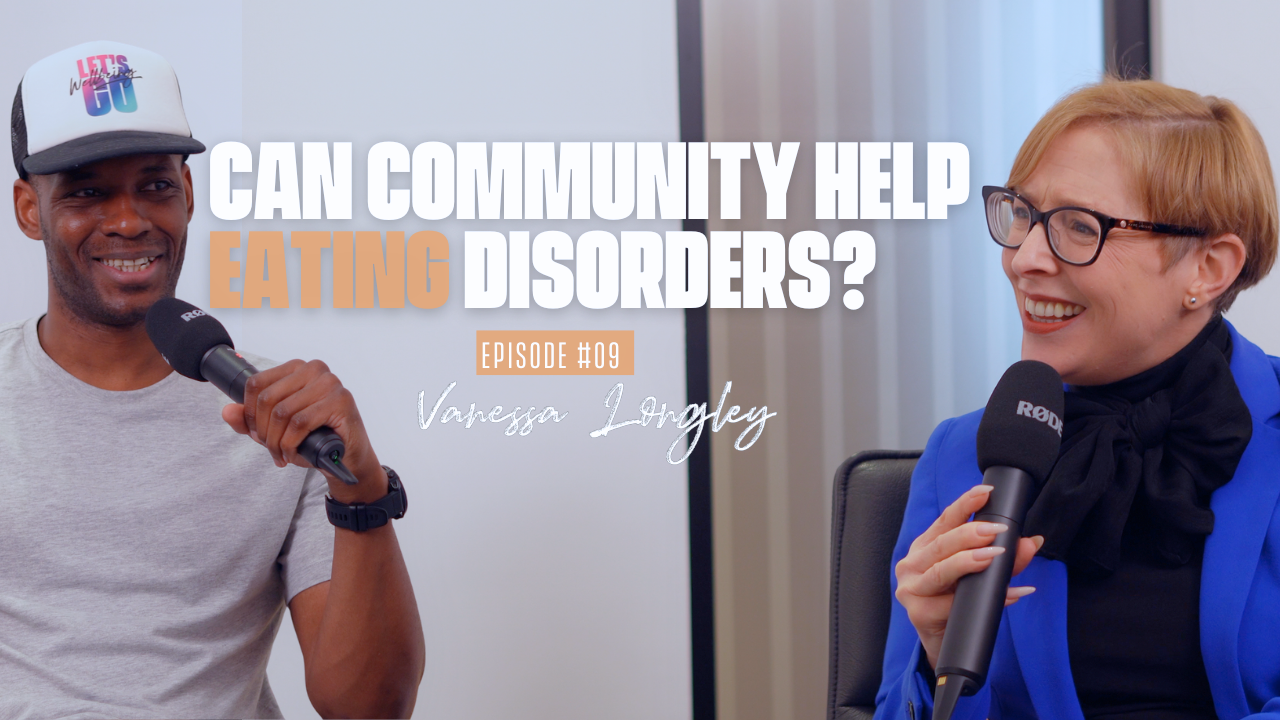
Episode:09
How Can Community Help with Eating Disorders? | Vanessa Longley | EDAW 2026
In this episode of Wellbeing Talk, I’m joined by Vanessa Longley, CEO of Beat Eating Disorders the UK’s eating disorder charity - for a thoughtful conversation about prevention, early intervention, recovery, and the power of community during Eating Disorder Awareness Week 2026.
Eating disorders are often described as some of the most isolating mental health conditions, yet recovery doesn’t happen alone.
Together, we explore what people often misunderstand about eating disorders, why early help matters, the role of families and carers, and how workplaces, online communities, and healthcare systems can better support those affected.
-
How Can Community Help with Eating Disorders? | Vanessa Longley | EDAW 2026
0:00 Intro - Can Community Help Eating Disorders? | Vanessa Longley
Matt Balfour (voiceover): Eating disorders are often described as some of the most challenging mental health conditions. They affect how people see themselves, how they relate to others and whether they feel able to ask for help. Hospital admissions for eating disorders have doubled over the last decade, with most admissions happening in an emergency.
Recovery does not happen in isolation. Family, friends, workplaces and communities all have a role to play, yet many people still feel alone or unsure where to turn. How does community help when someone is struggling with an eating disorder, and what changes when they can access support early?
Vanessa Longley (voiceover): We have known for decades that food insecurity before the age of five is associated with a significantly increased prevalence of eating disorders in adolescence. It is about helping people take a positive next step. If they can take one positive action, the likelihood of getting better increases enormously.
Eating disorders account for around 9% of mental health conditions, but receive less than 1% of research funding.
Matt Balfour (voiceover): To explore these questions, I’m joined by Vanessa Longley, CEO of Beat, the UK’s eating disorder charity. Since joining in 2025, she has led work supporting tens of thousands of people while shaping a longer-term strategy focused on prevention, early intervention and ensuring nobody faces an eating disorder alone.
Matt Balfour: Vanessa, good to see you. Thanks for joining the show.
Vanessa Longley: Really good to see you, Matt. Thank you.
1:44 Why Vanessa Longley Joined Beat & Common Misunderstandings About Eating Disorders
Matt Balfour: You joined Beat in June 2025 after a long career leading organisations in the third sector. What drew you to this work, and what do people misunderstand about eating disorders before they encounter them up close?
Vanessa Longley: Personal experience can make you understand the conditions people face. My daughter was born with an invisible disability and had a long journey managing it. As she reached adolescence, she struggled with her mental health and with not wanting to be different.
One memory that stays with me is my daughter, then about the same height as me, sitting on my lap because she was too tired to chew. I was spooning custard into her mouth because I was her mum and wanted her to be well so desperately. We were fortunate to get help. I tried to do the therapy for her, but you cannot do therapy for your children. We made a pact: she would stick with therapy, and I would use my day job to try to make the world better for her and for friends facing mental health challenges.
That experience drew me into young people’s mental health. It gives me some insight as a parent, although it is only one experience. Eating disorders can be particularly difficult for families because you wake up knowing there are meals ahead of you that day.
Matt Balfour: You have said eating disorders are preventable and recovery is possible with the right help and support. What are the biggest challenges on the road towards a world without eating disorders?
4:21 The Biggest Challenges in Preventing Eating Disorders Today
Vanessa Longley: Let’s start with optimism: prevention and recovery are possible. One of the simplest barriers is knowledge. There is very little research considering the seriousness of eating disorders. They account for around 9% of mental health conditions, yet receive less than 1% of research funding.
Some research is excellent. Genomics may help us understand the genetic elements of eating disorders and transform treatment. But research should also lead to changes in policy and practice. We have known for decades that food insecurity before the age of five is associated with a much higher prevalence of eating disorders in adolescence. After the UK’s cost-of-living crisis, we have an opportunity to plan for a problem that may emerge in five, seven or ten years. We do not yet have the systems to turn those insights into practice.
That challenge affects the sector, the NHS, government and families. Parents, carers and people with eating disorders need to understand the evidence behind the treatment being offered. I once spoke with an angry father whose daughter had been offered family-based therapy. He thought the specialist was saying the eating disorder was his fault. I explained that family-based therapy was the best evidence-based treatment for his daughter’s age and condition. The fact that they wanted him in the room was because he was a good dad, not because he had done something wrong. Understanding the evidence helped him feel more confident about the treatment.
Knowledge cannot stay on a shelf. We need to put it into everyday practice: with GPs, at a political level and within families.
Matt Balfour: You have been in post for nearly a year. Which moments have reaffirmed why this work matters?
7:59 Emotional Moments That Show Why Eating Disorder Support Matters
Vanessa Longley: It is easy, when you do this work every day, to forget how different people’s day-to-day experience can be. One mother contacted us because her daughter had struggled with an eating disorder and was in recovery. The family had done a huge amount of work to get the right treatment, and the girl had managed to return to school.
In a biology lesson, the teacher wanted to demonstrate that bodies naturally differ and selected two girls from the class. One was the young person recovering from an eating disorder, and the teacher discussed her body in front of everyone. It caused trauma that the family then had to work through.
The girl was brave enough to return to school with her mum and ask to speak to the headteacher. She wanted to explain to teachers why it was important not to do this and to talk more about eating disorders. The response was, “We don’t want to talk about eating disorders, otherwise everyone will get it,” as if they were contagious.
That story shows how strong stigma and misunderstanding remain, including confusion about what eating disorders look like. We talk about mental health more than we used to, although it is not perfect, but eating disorders still seem to be a particularly stigmatised area. Society needs to group around and support young people who are already doing so much work themselves.
Matt Balfour: What research gives you hope, and how can we turn it into practice?
11:58 New Research in Eating Disorders That Gives Hope
Vanessa Longley: The UK is doing some cutting-edge genomics research. It is helping us understand that eating disorders are serious mental health conditions with a genetic element. We also know that severe restriction can cause biological changes in the brain, making it even harder to engage with the treatment needed to recover.
Researchers are exploring treatments such as ketamine for anorexia, the effectiveness of psychoeducation that helps young people recognise and name emotions, and possible links between hypermobility and eating disorders. Naming emotions is a skill that has to be learned; it can have a significant positive impact when we help children understand what they are feeling.
Beat’s No Place Like Home campaign brings together more than 1,000 pieces of research on intensive day treatment compared with inpatient care. Evidence suggests that intensive support while someone remains at home can be preferred by patients, lead to better outcomes and cost substantially less. Inpatient care will remain vital, but research can show us more options for delivering care effectively.
International research also matters. Eating disorders have no borders, and insights from different cultural starting points help us understand the experiences of marginalised and minoritised groups.
14:35 What Beat’s Data Reveals About Unmet Eating Disorder Support in the UK
Matt Balfour: Over the last 18 months, Beat has supported people more than 36,000 times by phone, email, web chat and social media, with nearly 6,500 volunteer hours. What does that tell you about unmet need in the UK?
Vanessa Longley: The difficult truth is that it is not enough. We know there are at least 1.25 million people in the UK with an eating disorder. Beat reaches thousands, but most people who develop an eating disorder will need some help along the way.
Our helpline acts as a front door. We may not provide every service someone needs, such as inpatient care, but we can be a starting point and help them take the next step towards the right support. Our commitment should be that wherever someone is on their journey, we help them move forward.
Our helpline staff and volunteers use motivational interviewing. That can sound corporate, but it is really about helping someone take one positive next step. One action can lead to another and increase the likelihood of getting better. People may need help for months or years, and that is okay. You cannot tackle the whole picture in one go. The important thing is to get started, and people can contact us again whenever they need to.
Matt Balfour: What do people say when they first reach out for help?
17:43 What People Really Say When They First Reach Out for Help
Vanessa Longley: We are seeing more people contact us for the first time when they are already in crisis, which is extremely concerning and can mean significant safeguarding work is needed.
We also hear from many people who are unsure whether they have an eating disorder. Stereotypes shape what people think an eating disorder should look like and who can have one. Someone might say, “I haven’t got an eating disorder, but I’m struggling with this and didn’t know if you could help.” Parents, carers and friends also contact us because they have noticed something and wonder whether it could be an eating disorder.
Young men may be training several times a day, using weight-loss drugs or steroids, and dehydrating themselves to look defined. They can become consumed by calories and musculature, yet a personal trainer may praise the behaviour and tell them to push harder. That is not necessarily the trainer’s fault; they may not recognise that what they are seeing is a serious mental health condition that can make someone very ill.
Matt Balfour: Recognising an eating disorder is one thing. Knowing how to open a conversation about something so personal is another. Parents and carers can also feel overlooked. How has Beat’s work evolved to address that?
20:13 Supporting Parents & Carers in Eating Disorder Recovery
Vanessa Longley: It can be incredibly lonely to be a parent, because you carry the daily worry that if you get something wrong, you could lose your child. Feeding can feel fundamental, and parents can feel like failures. Beat needs to make sure parents and carers get support alongside their young person.
We offer a free online platform with short modules about eating disorders, current knowledge and ways to support a young person. It includes peer support and monthly clinical insight groups. Parents and carers can access it and learn from others who have been through similar experiences.
Some natural instincts can be unhelpful. One father told me about visiting his daughter in an inpatient unit. He was terrified and desperate to take her home, thinking he could get her to eat. He tried to sneak her a Mars bar, and the consultant explained that this was not helpful. He later took Beat’s parents’ course and could look back and laugh about it.
He and his daughter are now able to talk about it. She knows he only wanted her to be well, and they have a shorthand: “I don’t need a Mars bar, Dad.” That is why parent support matters. It is a lonely place, and other people who have been through it can help.
23:49 Beat’s 2025–2030 Strategy Explained — Changing the Story on Eating Disorders
Matt Balfour: Beat’s 2025–2030 strategy has three pillars: answering the call, spreading the word and changing the story. What problem are you trying to solve?
Vanessa Longley: Imagine a house on fire. People with eating disorders are in crisis, and Beat has to provide support now through the helpline, web chat, online information and programmes for individuals and parents. But it is not enough to put out a fire; we also need to build a firebreak so fewer people reach crisis in the future.
That means building a community that can recognise and respond. We train teachers, school professionals and health professionals, and we raise awareness. A story in a television drama can reach millions of people and give them tools to respond when they encounter an eating disorder in everyday life.
We also need to fix structural problems in society. That includes working with government on policies such as calories on menus, which can be unhelpful for people with eating disorders, and engaging with industries such as social media and AI to identify problems and improve safety.
Matt Balfour: What would you recommend as an alternative to displaying calories on menus?
26:30 Calories on Menus: What the Evidence Says About Eating Disorders
Vanessa Longley: Follow the evidence. It shows that calorie labelling on menus has almost no impact on food choices among people in larger bodies. It may affect a choice by around 70 to 100 calories, but nothing beyond that. At the same time, it can have a substantial impact on people with an eating disorder.
It is counterintuitive. You might think that putting calories on menus would help people who want to lose weight calculate what they are eating, but that is not what the evidence shows. Scotland has delayed introducing calorie labelling for this reason. Beat is continuing to work on the issue in the rest of the UK.
Matt Balfour: I would have assumed that calorie information on menus could be useful. But you are saying its impact is negligible for the people it is supposed to help and disproportionate for people with an eating disorder.
Vanessa Longley: Exactly. It comes back to turning research and insight into practice. Otherwise, we risk making national laws and policy decisions based on misunderstanding, myth and stereotype.
28:25 Why Early Help Matters & What Stops People Getting Support Sooner
Matt Balfour: Early intervention runs through Beat’s strategy, campaigns and services. What gets in the way of people accessing help early?
Vanessa Longley: Stigma is a major barrier. Many young and older people are too ashamed to come forward. On average, there is a gap of about three years between someone developing a problem and asking for help. During that time, behaviours can become entrenched. If we intervene early, sometimes we can redirect; after three years, someone may need much more intensive help.
People also build courage to ask a doctor for help and are told they are “not ill enough yet.” That can be devastating and potentially life-threatening. Someone may interpret it as a challenge to lose even more weight.
Health professionals want to do the right thing for their patients, but service pressures and restrictive criteria can make it difficult. Earlier treatment can save time, energy, pain and money in the long term. Stigma, restrictive criteria and pressure on the system all prevent people from getting help sooner.
31:00 Social Media, Online Communities & Eating Disorder Recovery
Matt Balfour: More than 107,000 people have accessed Beat’s downloadable resources in the last 18 months, and the website has had over a million unique visitors. Online communities can be supportive but also harmful. How can people navigate digital spaces in a way that protects recovery while preserving connection?
Vanessa Longley: There is no simple answer. Society is still learning about the positives and negatives of social media and other online spaces. Trusted third-sector organisations can make online communities safer because they have credibility and can moderate them. For example, Beat’s peer support groups moderate questions before they appear, with a trained person checking for potentially triggering content.
We also need to recognise that some online spaces are actively dangerous and not be afraid to say so. Vulnerable people of all ages deserve protection. Large technology companies need to design for safety.
Beat tests AI systems each month with prompts to see what information they return. We were concerned when some responses included dangerous tips and techniques related to pro-anorexia content. I contacted the companies. After we reran the prompts recently, we were no longer able to elicit that dangerous content from ChatGPT. It responded with concern, encouraged the person to speak to Beat or someone they trust, and suggested getting help.
Matt Balfour: That is encouraging: working with AI companies, checking the responses and addressing gaps can make a difference. Online spaces can offer connection, but they should not carry the whole responsibility for support.
Vanessa Longley: We all deserve to enter an online space and feel safe, just as we should in a physical space.
Matt Balfour: That leads to formal services designed to step in early and consistently. New NHS guidance for children and young people places emphasis on early intervention, family and carer support, and avoidant restrictive food intake disorder, or ARFID. What feels like the most significant shift?
37:28 New NHS Eating Disorder Guidance for Children & Young People — What’s Changed?
Vanessa Longley: The guidance is significant in many ways. It is the first new guidance since 2015, and NHS England worked openly with Beat and others to gain insight. One important change is the clear instruction that BMI should not be the sole measure of whether someone is ill enough or well enough to receive treatment. Parental concerns and changes in behaviour are also important signs that something may be happening and that intervention is needed.
The guidance does not magically create the services that are needed, but without guidance, it is difficult to ask for them. It also recognises that responsibility for early identification extends beyond medical professionals.
Beat’s free online training for school professionals is signposted in the guidance. It offers short modules and practical advice. One example is for lunchtime supervisors: scan the room. If a child repeatedly cuts their dinner into smaller and smaller pieces, that can be an early warning sign. The supervisor is not expected to intervene alone, but can share the concern with pastoral care so that the school can respond.
Matt Balfour: That makes parents’ and carers’ concerns more visible, and equips people such as lunchtime supervisors to notice signs and pass them on. Can you give a personal example of why listening to those concerns matters?
Vanessa Longley: When I first asked for help for my daughter, we went through the system to a paediatric consultant. Tests for epilepsy and other conditions came back negative, so we reached the end of the pathway and were discharged. But nothing had changed; my daughter was still experiencing the symptoms I had raised.
I went back to our GP, who said they had never known a situation where a parent felt something was wrong and nothing was eventually found. The GP sent us through the system again. On the second pass, my daughter’s disability was discovered and she is now on medication. If you are a parent, employer or friend and feel something is going on, that concern may be a sign that something is not right. You do not need to diagnose it. Ask, “Are you okay?” and then ask again, “Are you really all right?” That can help someone begin to talk.
Matt Balfour: The guidance also recognises voluntary and community organisations more explicitly. What does a good partnership between the NHS and charities such as Beat look like in practice?
43:30 How the NHS and Charities Like Beat Can Work Better Together
Vanessa Longley: In my time at Beat, I have not met a medical practitioner or healthcare worker who does not want the same thing we do: the best outcome for patients. People enter these professions because they care. Structures and systems can be limiting, and that is where the NHS and the third sector can be powerful together.
Charities can research, test and pilot approaches, then share what they learn with the NHS. Beat’s No Place Like Home work, based on analysis of more than 1,000 research papers, looks at intensive day support compared with inpatient care. If patients can practise recovery skills at home, they may prefer the care, achieve better or more lasting outcomes and cost the NHS less. That can allow services to support more people.
Inpatient care remains vital for some people, but there may be better options for others. Beat is bringing together people from Integrated Care Boards to discuss the approach and the steps needed to make it work locally. NHS trusts have complex structures and financial pressures; charities can be practical sounding boards, bringing insight and information rooted in lived experience.
Patient voices need to be heard so that people providing services understand the effects of the decisions they make. Good partnership can help more people access the services that work for them when they need them.
Matt Balfour: Access is still unequal. How do geography, identity, poverty and stigma affect whether people seek help and can stay engaged with recovery?
47:30 Inequality in Eating Disorder Care — Geography, Identity & Stigma
Vanessa Longley: People from minoritised or marginalised groups have an increased likelihood of developing an eating disorder and are less likely to seek treatment. Every organisation working in this space has a responsibility to change that. A core part of Beat’s strategy is to make the front door wider so everyone can find their way in and get help finding the right service.
We should not describe these communities as “hard to reach.” Services have not always been designed with them in mind. I am a white, reasonably well-educated CEO, and even I had to fight to get services for my child, using formal language and researching online.
People need to see themselves represented. Many still think eating disorders mainly affect high-achieving, middle-class white teenage girls. That is only the group some people are used to seeing. Lived experience should shape research from the outset; otherwise, we risk repeating what we already know by only studying the same groups.
Support also needs to be culturally sensitive. Beat has guidance for Ramadan, informed by people with lived experience, including the fact that someone who is unwell is not expected to fast. At the same time, people may want to remain part of their community, and food can be a significant part of that. We also offer guidance for negotiating Christmas meals with extended family.
People need opportunities to meet peers who have navigated similar experiences. The voluntary sector can create communities around shared experience.
52:08 The Role of Employers in Supporting Eating Disorders at Work
Matt Balfour: What role can employers play in reducing inequalities in access to support?
Vanessa Longley: Ten years ago, if you asked an employer what they were doing to support workforce mental health, many would have said it was a personal matter. Today, if an employer cannot describe initiatives to support staff mental health, it would raise questions about whether you would want to work there. It is seen as a necessity, not a perk.
Eating disorders are still different. Many employers look uncomfortable, even though someone in their workplace is likely struggling right now. Employers can access information from Beat and other organisations; Beat’s Help Finder can point people towards regional charities.
Employers are looking after human beings and could be the trusted person who makes a difference. Mental Health First Aid training can help staff, and employers can learn about eating disorders and consider the culture in their workplace. If every social activity centres on ordering pizza or drinking, people may be unintentionally excluded or harmed.
This does not mean workplaces cannot have fun. It means thinking about how food is discussed, how people are invited to join in and how to make everyone feel welcome, whatever stage they are at.
54:35 Eating Disorder Awareness Week 2026 — Why Community Matters
Matt Balfour: Eating Disorder Awareness Week 2026 is focused on community. Eating disorders can be isolating. What does community mean to someone struggling or caring for someone with an eating disorder?
Vanessa Longley: Community is essential. Even one person you can turn to and trust can make a transformative difference to recovery. Community might mean family and friends, but it can also be a football team, theatre or cinema group, or a university society. My daughter found her people through a science-fiction club.
Communities are the people, organisations and spaces where we feel welcome and safe. If you feel alone, there will be people who understand and can support you. Beat can create communities around eating disorders, but people can also turn to someone nearby whom they are beginning to trust. They may help if asked.
57:05 How to Support Someone with an Eating Disorder (Practical Advice)
Matt Balfour: If someone wants to be a better ally to a friend, colleague, family member or partner, what do you wish they understood about how to show up?
Vanessa Longley: People with lived experience who are in recovery often say they wish someone had said something at the time. They might not have welcomed it then and may even have become cross, but they wish someone had started the conversation. For many, that conversation stayed with them and became a step towards getting help.
Beat is launching a conversation guide for Eating Disorder Awareness Week. You do not have to be an expert or a clinical psychologist. You need to be interested, curious and caring. If in doubt, ask. Opening the conversation can make a difference.
58:25 The Future of Eating Disorder Support by 2030
Matt Balfour: Looking towards the end of Beat’s 2025–2030 strategy, what would success look like for the wider system supporting people with eating disorders?
Vanessa Longley: I am a bit of a dreamer, but there is no reason why every one of the more than 1.25 million people living with an eating disorder should not receive support, information and advice that suits them.
If that support arrives early enough, we can make early intervention work. By 2030, I would like to see the firebreak beginning to work: people being identified earlier, receiving the right tools, space and support, and getting well before they reach crisis.
59:30 A Message for Anyone Struggling or Supporting a Loved One
Matt Balfour: What would you want to say to someone listening who may be struggling themselves or supporting someone they love?
Vanessa Longley: Whether you are beginning to wonder if you have a problem or facing a relapse, help is available. You may have tried things before and they have not worked; it is our responsibility to find support that works for you. All we need you to do is reach out and ask.
Beat’s helpline is open every weekday and the website is available 24/7, with a Help Finder and information. There are also many small charities providing one-to-one and face-to-face support; you can search by postcode to find local help. Keep asking. You are not on your own. Beat’s team may be 85 people, but we are working on the case. Challenge us to find the help you need.
Matt Balfour: Vanessa, it has been an absolute pleasure. Thank you for joining the show.
Vanessa Longley: Thank you so much.
1:01:07 Outro
Matt Balfour (voiceover): If there is one thing to take away from this conversation, it is that support does not start with services; it starts with people. This has been Wellbeing Talk with me, Matt Balfour, your guide to all things mental health in the workplace. Be sure to subscribe to the Let’s Go Wellbeing YouTube channel, and we’ll connect on the next episode.
Episode:08
How Can Music Improve Mental Health at Work? | Rob Stephenson
Music is one of the most common ways people manage their emotions - yet it’s rarely treated as a serious wellbeing tool at work.
In this episode, I’m joined by Rob Stephenson, a public speaker, social entrepreneur and mental health campaigner to explore how music can support mental health, reduce stigma and help create more psychologically safe workplaces.
-
How Can Music Improve Mental Health at Work? | Rob Stephenson
Matt Balfour: In this episode of Wellbeing Talk, I speak with Rob Stephenson, public speaker and social entrepreneur, about living with bipolar, sharing personal experiences of mental health, creating psychologically safe workplaces and using music as an intentional wellbeing tool.
0:00 Intro
Matt Balfour (voiceover): Research suggests that around 80% of people use music deliberately to manage their emotions or mood. Music has been shown to support sleep, create a sense of safety, boost connection and even reduce stigma. Yet workplaces rarely use music as a wellbeing tool, despite how naturally we turn to it in our personal lives.
Are we missing a simple way to help people feel grounded, energised and connected? How can music become a bridge to psychologically safe workplaces?
Rob Stephenson (voiceover): Why don’t we have a playlist for when we need motivation or focus? Why not have one to help us wind down for sleep? We can use music more proactively to support sleep, stress management, pain management, motivation and mood. I want people to leave with the idea of using music intentionally to manage wellbeing.
Matt Balfour: To explore these questions, I’m joined by Rob Stephenson, public speaker and social entrepreneur. For the last decade, he has used his personal story, creativity and DJ decks to challenge stigma, encourage inclusion and inspire more honest conversations about mental health at work.
Matt Balfour: Rob, great to meet you. Welcome to the Wellbeing Talk podcast.
Rob Stephenson: Matt, thanks for having me. Delighted to be here, my friend.
1:54 Why Rob Shared His Mental Health Story
Matt Balfour: You are known for your energy, creativity and honesty about living with bipolar for more than 30 years. What first motivated you to share your story publicly after so many years of living quietly?
Rob Stephenson: About nine years ago, I saw that the world was becoming more open about mental health and mental illness, and I questioned why I was hiding it. For years, whenever I went to see a therapist, I wrote “physiotherapy” in my diary. My team must have thought I had the world’s worst physiotherapist because my supposed back injury never improved.
A fellow campaigner, Jeff McDonald, spoke openly about anxiety, suicidal thoughts and losing a friend to suicide. I wondered why I was still hiding my own experience. I was tired of masking it, so I shared an awkward Facebook post. The response changed the direction of my life. People in my immediate network—friends, family, colleagues and business contacts—began sharing their own challenges. It showed me how many people were suffering in silence and made me want to make a difference.
Masking is a heavy weight, especially when you feel low and are trying to hide it at work. When I began telling people, “I’m feeling pretty low today; I’m a five out of ten,” I did not have to explain why or spend energy pretending to be upbeat.
Matt Balfour: So sharing vulnerability creates space for acceptance?
Rob Stephenson: Acceptance is one of the tools that helps me most when I experience depression. In the workplace, it can mean saying, “This is me today. I might not have my usual energy, and this is what I can offer.” If people can communicate that, others can make adjustments. Open team cultures make it easier to manage a struggle and still contribute.
5:53 What Intentional Wellbeing Looks Like
Matt Balfour: You talk about being intentional with wellbeing. What does that look like in everyday practice?
Rob Stephenson: When I was diagnosed with depression and later bipolar, I thought the medical profession could fix me: give me medication and therapy, and I would be well. I was well for a while, but the depression returned, this time with a loss of hope and a sense of futility.
I realised that, for me to stay well and balanced, I had to be proactive. Exercise, daylight and sleep could not just happen when I felt like it. I needed to prioritise and protect the habits that helped me manage my mental health, particularly when I was busy or stretched for time. We are human and will not get it perfect, so kindness towards ourselves matters too.
It took a crisis for me to understand this. Part of my mission now is to help people see the value of intentional wellbeing wherever they are on the wellbeing continuum.
7:47 Rob’s Lowest Point With Depression
Matt Balfour: You said the depression came back and it was not obvious how you would come through it. What was happening in your life at that time?
Rob Stephenson: I was about 31, single, and owned a couple of bars in London with friends. From the outside it looked like I was having a great time: partying and DJing. Inside, I was struggling. I found it difficult to go to my recruitment job and was coming to terms with a diagnosis that explained a lot of my behaviour over the previous years.
I had expected treatment to fix the depression and bipolar. When the depression returned, I had put so much hope in being fixed that I lost hope altogether. I came to understand that medical professionals can help you manage a condition, but management is an ongoing process. At my darkest point, I attempted to end my life.
I remember being with friends on a beautiful summer evening in Clapham. We were drinking, laughing and telling stories. It looked like a group of young men enjoying life. After everyone had left, I attempted suicide. A friend, Johnny, looked after me and made sure I got help, including taking me to see my therapist the next day.
With continuing therapy and medical support, a supportive network, conversations with friends and the realisation that I was not alone, I learned to manage my condition. That is where intentional wellbeing became important. Exercise, sleep, connection with my support network and music all helped me stay well. My non-negotiables at the time were music, exercise, talking to people and prioritising sleep.
11:23 Why Mental Health Stigma Persists
Matt Balfour: You have met many people who have faced their own mental health challenges. What has that taught you about stigma and why it persists?
Rob Stephenson: There has been progress in raising awareness and making it more acceptable to talk about mental health and seek help, but stigma is still there. Surveys often find that only around half of people feel comfortable sharing a mental health challenge with their line manager.
There are two sides to stigma. External stigma is the fear of how other people will perceive you. It is shaped by years of portrayals in media and language that present mental illness as strange or frightening. That is changing, but self-stigma is powerful too: we may hold back because we assume others will judge us.
When I was in recruitment, I worried about how clients would perceive me if I shared my experience. I told one client I was going to speak about my mental health on LinkedIn. He told me another partner was off with depression and that he had experienced some of it himself. I had expected judgement and instead found acceptance and understanding.
I would not tell someone to share without considering the context. If you have a toxic manager who does not understand, it may not feel safe. But in my experience, most people I have been open with have been supportive. Many people I have spoken to wish they had shared their story earlier. The weight of pretending is heavy, whatever part of your identity you are hiding.
16:34 The Deeper Question Behind Rob’s Mission
Matt Balfour: Your work spans activism, creativity and community-building, from cycling the Tour de France route to launching the FormScore platform. What deeper question are you trying to help people ask themselves?
Rob Stephenson: My overall mission is to inspire mentally healthy workplaces where people feel equipped, empowered and permitted to prioritise their wellbeing. The question is: where does wellbeing sit for you, and how might you benefit from managing it more intentionally?
Many people only start thinking about wellbeing when they hit a crisis. I sometimes ask audiences who has brushed their teeth that day. Almost everyone puts up a hand, because we have been taught to care for our teeth. We are not as well trained to look after our wellbeing before something goes wrong.
Matt Balfour: You use a car as an analogy in your book: we may only think about all the systems that make it work when something breaks down. Is that similar to how we treat wellbeing?
Rob Stephenson: We actually do a lot of proactive maintenance on cars: checking the tyres, topping up oil and getting an MOT. With wellbeing, many of us wait until something has gone wrong before we reflect. FormScore encourages a simple check-in: “How am I today?” We can ask what we need to be at our best. Do we need more sleep? Are we stressed by deadlines? Would journaling help? Are our relationships nourishing us?
A useful exercise is to ask people to rate their wellbeing from one to ten, where ten is as well as they can be and one is crisis. They reflect on what is driving that score, then share as much as they feel comfortable with a colleague. I have done this with groups of ten and a thousand, including online. A little vulnerability creates trust and human connection, and the room comes alive.
23:35 Values Driving Activism and Creativity
Matt Balfour: What underlying value drives your activism and creativity?
Rob Stephenson: Authenticity: understanding who you are and what you need, then prioritising it. Vulnerability and openness are connected to that. My aim is to help people understand why wellbeing matters individually and organisationally, and how to build a personal habit or a wellbeing culture in a team.
It starts with asking, “How am I today?” and understanding what may be driving the answer. Then you can choose a few habits to protect, particularly when you are busy or working in a high-performance environment.
24:54 Common Misconceptions About Mental Health Work
Matt Balfour: What is one misconception people have about your mission when they first hear about it?
Rob Stephenson: People hear “mental health” and immediately think of illness: suffering, depression or anxiety. Mental health is also vibrant and beautiful. It is about being human, having energy, connecting, finding purpose and helping others.
People sometimes assume I am a therapist or counsellor who helps people when they are ill. I am trying to show the benefits of prioritising mental wellbeing before people become unwell. Consider elite athletes such as LeBron James. They do not stay at the top by pushing themselves without rest and recovery. Training creates a stimulus for improvement, but recovery is part of the process.
Many “corporate athletes” move from meeting to presentation to pitch without breaks and compromise the things that support their wellbeing. Then we wonder why burnout is widespread. People can feel invincible until they are not. Wellbeing matters to individuals, teams and organisations, not only when someone is struggling.
27:24 Lessons From Giving 1,000 Mental Health Talks
Matt Balfour: You have spoken around the world, including at TEDx, and are approaching 1,000 talks. What have audiences taught you about what people need from mental health conversations?
Rob Stephenson: When people can be open about this topic, positive change can happen. Sharing wellbeing scores with each other can be a positive experience. I have also interviewed senior leaders about their mental health challenges, wellbeing foundations and non-negotiables. When a leader shares, it creates permission and psychological safety. It sends a strong message that team members can prioritise their wellbeing too.
Across the talks and events I have delivered, the pattern is clear: openness and vulnerability help address stigma and the idea that wellbeing only matters when we are already struggling.
28:56 A Key Lesson From Rob’s TEDx Talk
Matt Balfour: What is one lesson from your TEDx experience that has stayed with you?
Rob Stephenson: My TEDx took place during lockdown, without an audience, and was recorded. I wanted the experience of putting myself under pressure. At the time I was doing many webinars, speaking to a camera with slides and notes. I could have used the same approach, but I wanted the performance tension of delivering a live talk.
I memorised it, planned my cue points and spoke to camera without notes in one take. I filmed early one summer morning at a converted farm. My audience was a group of sheep, who wandered off during the talk. I only edited out a neighbour driving back. It felt different from a regular webinar and gave me the experience I wanted.
I love the craft of speaking and get a lot of energy from it. I wanted the TEDx talk to feel like a performance, not a webinar, and I was pleased with how that came across.
33:16 Vulnerability at Work: Risk or Strength?
Matt Balfour: Some people in high-performance workplaces worry that if leaders are vulnerable, employees may overshare or morale may suffer. What would you say to them?
Rob Stephenson: Leaders should share only what they are comfortable sharing. It can be powerful for a leader to talk about a mental health challenge, but sharing two or three wellbeing foundations they practise each week can have an equally positive impact. You do not have to overshare.
Another concern is that openness will lead to more people taking time off for mental health. It might lead to more accurate reporting, and that is useful. People may already be off sick but give another reason. An open culture lets an organisation understand the real picture, put support in place and help people manage their conditions and remain at work where possible.
If there are structural issues—overwork, too little recovery time or insufficient resources—we should not be afraid to uncover them. We may not fix everything immediately, but we need to know what is happening. That is the difference between organisations that simply tick a box and leaders who genuinely care.
37:09 Managing the “Vulnerability Hangover”
Matt Balfour: Speaking publicly about mental health can be empowering but emotionally demanding. How do you manage the “vulnerability hangover” after sharing personal stories?
Rob Stephenson: I do not tend to get one. Sharing my story now feels cathartic, like real-time therapy, and it is uplifting. My talks have evolved: I am still grounded in my personal story, but it might take five minutes rather than 35. I find sharing energising and reaffirming because I am no longer carrying the weight of hiding it.
I do get a performance comedown after my music and mental health shows. I am a one-man band: I set up the sound system and DJ equipment, then speak and perform. There is pressure in the setup and the performance, and when it goes well there is a high. Afterwards I still need to pack up and drive home.
I have learned to manage that comedown intentionally with music. Sometimes I need something uplifting; more often I listen to a chilled “Power Down” playlist on the drive home. The drop from a performance high can feel like depression, even when it is not.
If you are sharing your story for the first time, make sure you have support around you and know where to turn if it is triggering. That might mean therapy, an EAP or another trusted source of help. It can be difficult even if you have done it before. I have learned to be kind to myself and leave space after demanding talks. The nervous system needs time to reset; going from one high-pressure situation to another has an impact.
Before a keynote or a new performance, simple techniques such as box breathing, closing your eyes and visualisation can help. I imagine the event going well and how the room might respond. Relaxing music before a stressful event can also reduce how stressful it feels.
46:00 Why the InsideOut LeaderBoard Was Created
Matt Balfour: You created the InsideOut LeaderBoard to spotlight senior leaders with lived experience of mental health challenges. What were you hoping to change in leadership culture?
Rob Stephenson: I remember a mental health conference hosted by Legal & General. Around 200 people took part in a round-table discussion about workplace mental health. The CEO, Nigel Wilson, summed up the day by saying the number one issue was that not enough senior leaders shared their stories of mental illness.
I kept hearing the same thing. There was good work happening on awareness and training, but fewer leaders were speaking openly. I had worked with Suki Sandhu, who created published power lists recognising people in business and other communities. I wondered if we could create a similar list of leaders who were open about mental ill health.
People told me it would never work because the stigma was too strong and no senior leaders would put their names to it. I wanted to find out. With my recruitment background, I began a large networking effort to find leaders who had experienced mental health challenges. It was easier than I expected. The first LeaderBoard included around 60 or 70 people, many of whom were ready to be more open rather than continue hiding their experiences.
49:42 What Courageous Leaders Taught Rob
Matt Balfour: What did you learn from the leaders who were brave enough to step forward?
Rob Stephenson: Mental ill health does not necessarily hold people back. For some leaders, their experience motivated them to prove themselves and helped drive them towards leadership. When leaders share their story, it can also change the culture at work.
Mark Twigg, a founding partner of the financial PR firm Cicero, shared his experience of clinical depression with about 100 employees. Two or three people then said they were facing challenges too, and they were able to get support. One person went on to have a long career with the firm; Mark felt they might not have stayed otherwise.
The firm introduced “Take 2”: two hours in the working week when people could do something of their choice to support their wellbeing. Some went to the gym, others took a longer lunch or spent time with colleagues. The idea created flexibility and permission.
Mark’s openness also influenced the firm’s reputation. One person with bipolar felt comfortable sharing that during the interview process. With Rob’s permission, Mark spoke with his therapist to understand how best to support him. Rob did not experience an episode of hypomania while they worked together. Leaders being open can make a real difference.
One broader gap is the persistence of fear-based leadership. Psychological safety means people feel able to speak up, admit mistakes, contribute and do the things that keep them well. It also means feeling safe enough to seek help and talk to a line manager. A more collaborative approach trusts employees with autonomy and treats mistakes as opportunities to learn.
53:14 How Leaders Can Start Mental Health Conversations
Matt Balfour: What would you say to leaders who want to be more open about mental health but are not sure where to start?
Rob Stephenson: If you are comfortable talking about a mental health challenge, that is great. But leaders do not have to start there. They can share a time when work felt challenging and they needed to prioritise their wellbeing. Perhaps it was a relocation, a busy period, a transaction, a change or a new role. Explain what you did to manage your wellbeing through it.
That can tell direct reports and the wider business that it is acceptable and encouraged to prioritise wellbeing. The focus can be practical: share two or three foundations or non-negotiables that help you stay well, then invite the team to share theirs.
A leader at PwC used this approach in a demanding transactions business. The team shared their wellbeing foundations, creating permission and social proof. When work became particularly busy, colleagues helped each other protect those habits—whether that meant going to five-a-side football or getting home to put children to bed. It created accountability and collective resilience.
In high-performance workplaces, wellbeing can still be treated as a soft benefit or something to consider only when people are struggling. But research links wellbeing with sustainable performance, productivity, company performance and talent attraction. It is an essential part of work.
58:25 Harmonising the Mind: Music and Wellbeing
Matt Balfour: Research suggests around 80% of people deliberately use music to manage their emotions or mood. Music can support sleep, create a sense of safety, boost connection and reduce stigma. Yet workplaces rarely use it as a wellbeing tool. How do you describe Harmonising the Mind?
Rob Stephenson: Imagine combining my two passions—public speaking and DJing—and seeing what comes out. I bring sound equipment and DJ decks into a workplace and use music to illustrate wellbeing concepts.
For example, I can build a track from scratch to show how wellbeing habits can be layered. A kick drum might represent going for a walk, a clap walking with a friend, and a hi-hat focusing on sleep. You try things, make adjustments and add different elements.
I can slow down and distort a track to represent how depression can feel like walking through thick mud, with everything becoming overwhelmingly difficult. I use two versions of the same song at different tempos and keys to demonstrate the unsettled feeling of anxiety. I also combine around 30 classic house samples to illustrate hypermania and ADHD. Sometimes it goes wrong, which is part of the fun.
The wider message is that music can support sleep, stress management, pain management, motivation and mood. We already use music organically when we feel sad or need energy. I am suggesting that we make it more intentional: build playlists for motivation, focus or sleep, and use them as a practical wellbeing resource.
1:02:48 Powerful Moments From Music Workshops
Matt Balfour: What moments or insights stand out for people in the workshops?
Rob Stephenson: The first light-bulb moment is that music can be used more proactively to manage different aspects of wellbeing. The second is how music connects people. We all have different tastes, but sharing what helps us sleep or focus can bring a group together and introduce people to music from different cultures.
Some workplaces have created Friday afternoon playlists that everyone can contribute to. Music can also help a group transition into a talk. People may be coming from other meetings, unsure whether to work, sit quietly or speak to colleagues. A few minutes of music can reset the room and help people move into a different headspace.
Matt Balfour: I sometimes play James Brown or Al Green before a talk. It relaxes the room and takes the pressure off those few minutes when people arrive. Music creates a transition instead of a sudden switch from one activity to another.
Rob Stephenson: Exactly. In a busy workplace, people move from meeting to meeting as if they are machines that can keep going indefinitely. Music can give people a moment to reset.
1:07:05 How Music Shaped Rob’s Bipolar Journey
Matt Balfour: Your upcoming book explores music and wellbeing. How has music shaped your sense of self at different stages of living with bipolar?
Rob Stephenson: Music has always been important to me. When I was coming to terms with my diagnosis, I listened intentionally. I have always enjoyed sitting with headphones and really listening to the instruments, phrasing and vocals, rather than leaving music in the background.
Exercise and cycling were also important to my wellbeing. After having COVID, I developed long COVID and could no longer exercise intensely. If I pushed myself, symptoms such as chronic fatigue, headaches, flu-like feelings and nausea returned. I can still walk and have found a balance, but I cannot exercise at the intensity I once did as a racing cyclist.
As a result, I began DJing and doing mixes again, first through livestreams and then at gigs. I now DJ regularly and bring music shows into workplaces. Music and DJing have helped replace some of what I got from racing and cycling, alongside the other things I do to manage my wellbeing.
1:10:17 The Science That Changed How Rob Listens
Matt Balfour: Has any research genuinely changed how you listen to music?
Rob Stephenson: A large study compared people who listened to music organically with people who listened with the specific intention of boosting their mood. Intentional listening had a greater effect on mood. That was a revelation and has influenced both how I use music and how I am structuring the book.
The book will cover topics such as sleep, stress, focus and motivation, with my playlists as examples. Readers can use them as a starting point and build their own playlists to suit their tastes.
Recently, I had a repetitive design task: the copy and template were ready, but I needed to repeat the same process across a deck of wellbeing cards. I put on a focus playlist of classical music, ambient tracks and lo-fi hip-hop. It shifted my attention enough to reduce frustration and helped me finish more efficiently in a better mental state.
The point is to understand your own relationship with music: what effect it has on you, when it is useful and why you might choose it.
1:13:22 What Rob Hopes Readers Take From His Book
Matt Balfour: What is one thing you hope readers will do differently after reading the book?
Rob Stephenson: Use music intentionally to manage different aspects of wellbeing and add it to their toolkit. The book will explain the science accessibly, with practical prompts at the end of each chapter, such as building a playlist for stress or sleep. Streaming services already make this accessible; it takes some effort and self-discovery to find what works for you.
The manuscript is due at the end of January, with publication planned for the end of summer 2026 through Wiley in the UK, US and internationally. There will also be launch events.
1:14:54 The Future of Mental Health at Work
Matt Balfour: When you imagine the next decade of mental health at work, what does good look like?
Rob Stephenson: Good workplaces will understand that mental health is essential to sustainable human and corporate performance. Shareholder value will remain a purpose for companies, but I hope the health, prosperity and ability of people to thrive—and the impact on the planet—will carry greater importance too.
Leaders need to understand that if they want people to perform at their best, they cannot ignore wellbeing. That requires psychological safety, a different style of leadership and an understanding that wellbeing is not a soft benefits issue. The next question is how to implement it in high-performance environments where people may feel there is no time.
We need personalised approaches because one size does not fit all. Gym memberships and yoga classes are valuable for people who enjoy them, but someone else may need help structuring work, managing perfectionism or addressing financial wellbeing. Solutions should be tailored and help people build wellbeing into their routines, especially when they are busy.
1:17:33 Outro
Matt Balfour: Rob, this has been insightful, inspirational and truly engaging. Thank you so much for joining the show.
Rob Stephenson: Thanks, Matt. Thanks for having me.
Matt Balfour (voiceover): This has been Wellbeing Talk with me, Matt Balfour, your guide to more accessible conversations about mental health in the workplace. Be sure to subscribe to the Let’s Go Wellbeing YouTube channel, and we’ll connect on the next episode.
Episode:07
How Does Relationship Health Impact Work? | Verity Glasgow Explains
How does relationship health really impact our wellbeing, performance and working lives?
In this episode, I’m joined by Verity Glasgow, Chief Executive of OnePlusOne, to explore why the quality of our relationships is one of the strongest predictors of long-term health and happiness and why relationship health is still overlooked in most workplaces.
Drawing on over 50 years of relationship science, Verity explains how concepts like relationship health and social fitness affect productivity, leadership, and employee wellbeing, especially during major life events such as separation, conflict at home, or increased caring responsibilities.
-
How Does Relationship Health Impact Work? Verity Glasgow Explains
Matt Balfour: In this episode of Wellbeing Talk, I speak with Verity Glasgow, chief executive of OnePlusOne, about the connection between relationship health and workplace wellbeing. We discuss social fitness, support during separation, the Separating Better app and how leaders can build healthier relationships at work.
0:00 Intro
Matt Balfour (voiceover): The results of an 85-year Harvard study of adult development show that the quality of our relationships is one of the strongest predictors of long-term health and happiness. More than 100,000 divorces took place across England and Wales in 2023. Major life events, such as conflict at home or increased caring responsibilities, can affect wellbeing and performance at work.
Despite this, relationship health and social fitness rarely receive the same attention or investment as physical health and mental wellbeing. What does good workplace support look like during a major life event such as separation? How important is it for organisations to treat relationship health as part of employee wellbeing rather than as a private issue?
Verity Glasgow (voiceover): If our relationships at home are not good, or are breaking down, we take that into work. We may feel less connected with colleagues, more stressed and less resilient, or less able to manage our workload. We are trying to get in early, build the foundations and see relationships as a protective factor in whatever else is happening in life.
Good-quality relationships can buffer us when we are exhausted, stressed or worried. The same is true at work: good working relationships provide a buffer, so we need to engage with them rather than just letting them happen.
Matt Balfour (voiceover): To explore these questions, I’m joined by Verity Glasgow, chief executive of OnePlusOne. For more than 50 years, the organisation has helped people understand relationships, navigate change and develop the social fitness skills that support wellbeing at work and at home.
Matt Balfour: Verity, thank you so much for joining Wellbeing Talk. It’s great to have you here. How are you doing?
Verity Glasgow: I’m good, thank you. Really good. Thanks so much for having me.
2:04 Verity Glasgow’s Journey Into Relationship Health Leadership
Matt Balfour: You have spent 12 years leading a national charity, shaping relational capability programmes and influencing policy. What first drew you to this field, and what motivates you in your work as CEO of OnePlusOne?
Verity Glasgow: I find relationships fascinating. They happen to all of us, whether with a partner, parent, teacher or someone else. What drew me to this work was the idea that we can do things to help ourselves.
We know we can improve our physical and mental health, but relationships can sometimes seem like an area where we need to see a counsellor or get outside help. In fact, we can develop skills that help our relationships too. Helping people help themselves, and putting the power of self-improvement in their hands, has always motivated me.
3:38 The Moment That Shaped Verity’s Approach to Relationship Support
Matt Balfour: Was there a moment in your personal journey that shaped how you think about relationship support?
Verity Glasgow: When I first started at OnePlusOne, I became interested in the science of relationships and the evidence the organisation had built up over more than 50 years. I was fortunate to meet George Vaillant, who was then director of the Harvard Study of Adult Development, at a OnePlusOne event.
I asked him what the study’s findings came down to. He said, “It’s all about your relationships. It’s all about your social connections and your relationships.” The penny dropped. The Harvard research and OnePlusOne’s work were pointing in the same direction: we can do things ourselves to improve our relationships, and that can improve our health and wellbeing.
Matt Balfour: It sounds like a moment of synchronicity: you were already working in the field, and that conversation confirmed you were in the right place.
6:13 What Is OnePlusOne? Mission, Impact & Relationship Science
Matt Balfour: For someone new to OnePlusOne, how would you describe the charity’s mission and work?
Verity Glasgow: We focus on relational capability for all. In everyday language, that means helping people get on better. We help people build skills that make them better at communicating and relating to others. Those skills include empathy, putting yourself in someone else’s shoes and listening well.
Matt Balfour: You have trained more than 12,000 practitioners since 2021, and your online resources have reached tens of thousands of parents and families. What does that reach tell you about the need for relationship support?
7:04 Why Relationship Support Is in High Demand Today
Verity Glasgow: OnePlusOne works in early intervention: helping people earlier in their relationships, before a breakdown. The challenge is that people may not realise they need support at that stage. They might be arguing frequently or feel that a relationship is unsatisfactory, but carry on with life without seeing the impact on their health, their partner, their children or their work.
The need is there, but awareness needs to grow. We need to treat relationship quality as a public health issue. People should understand that improving relationships can support health and wellbeing, rather than waiting until a relationship reaches crisis.
Matt Balfour: That gradual build-up of stress at home reminds me of the film The Roses, where a couple joke about having a three-hour circular argument that goes nowhere. The pattern can feel familiar and become normal over time.
Verity Glasgow: Yes. If arguments become more frequent, people can become desensitised to the stress. Good-quality relationships matter to health and life expectancy, and the evidence gives us a reason to say that relationship support is not a luxury.
11:44 What Is Social Fitness? Building Relationship Skills for Life & Work
Matt Balfour: You talk about social fitness. What does it mean, and why is it a useful way to describe relationship skills?
Verity Glasgow: “Social fitness” is a phrase coined by the Harvard study. It creates a deliberate link with physical fitness, which we already understand: exercise and healthy eating help us stay well and live longer. Social fitness means working on our relationships.
We do not get into a relationship and then never need to work on it again. We may initially use curiosity, patience and empathy to connect, but once the relationship is established, we can let those skills go. Life changes too. We may lose a job, have children or face other transitions and challenges. Relationships need attention throughout those changes.
Social fitness includes relationships with colleagues as well as partners, family and friends. We spend a lot of time at work, so the quality of our working relationships affects our health and productivity—and can also affect how we feel at home.
14:17 What the 85-Year Harvard Study Reveals About Relationships
Matt Balfour: The Harvard Study of Adult Development has followed people across generations for 85 years. What does it tell us about relationships?
Verity Glasgow: One of its clearest findings is that the quality of our relationships is one of the strongest predictors of long-term health and happiness. The study has continued across two generations, allowing its learning to develop alongside changes in society.
Matt Balfour: In The Good Life, I came across a study about people’s expectations of talking to a stranger on a train. Most assumed they would prefer to keep to themselves, but when they were asked to make a connection, they reported that the journey was better—or at least no worse. We can be poor at predicting how social experiences will feel.
Verity Glasgow: There is a lot to learn from the Harvard research about how we operate at work, what matters in life and how families develop. The central point is that relationships matter enormously.
17:27 Divorce & Separation: What People Get Wrong About Parents
Matt Balfour: Separation is one of the most emotionally and practically challenging life events people face. There were more than 100,000 divorces in England and Wales in 2023. What do people often misunderstand about parents going through separation?
Verity Glasgow: The biggest misunderstanding is that you are starting a new relationship. You may be ending a marriage or partnership, but if you have children, you will need a relationship with the other parent to co-parent successfully.
People often want the old relationship to end quickly, especially after everything that has led up to the separation. But the process can be protracted, emotionally difficult and complicated by the systems people have to navigate.
Matt Balfour: As a runner, I find it easier to manage a long run when I know the route. Recognising a hill, a tree or a bend helps me break the journey into sections and understand how much is left. Separation can feel especially difficult when you do not know what the route will look like or when it will end.
Verity Glasgow: That is a brilliant analogy. It can be hard to know what the journey will be like. Reframing the process as the beginning of a new co-parenting relationship helps people understand that the other parent will still be part of their life, although the relationship will be different.
It is also difficult to talk about the middle ground of relationships: the arguments and questions before a relationship is completely over. If someone confides in a friend, that friend may bring their own relationship experiences and emotions to the conversation. They may project their own fears or opinions onto the person who is separating.
Support from friends and family can matter, but people also need reliable advice they can trust. There is a lot of misinformation, including on social media. Good advice can help someone understand the options and navigate the journey.
When children are involved, the goal is not necessarily to stay together. What matters is the quality of the relationship between the parents, whether they live together or co-parent separately. A poor-quality relationship can negatively affect children. It is important to think about the quality of the new co-parenting relationship and the support and skills needed to build it.
27:24 The Biggest Gaps in Support for Separating Families
Matt Balfour: Where are the biggest gaps in support for people going through separation?
Verity Glasgow: One gap is a free, accessible service for people who are separating. Support may be available if you can afford to pay for it, or if you are in a critical situation and need urgent input. For the many people in the middle, the process can feel like a minefield.
Matt Balfour: Separating Better is OnePlusOne’s digital behaviour-change app for parents navigating separation. What inspired you to create it, and what problems were you trying to solve?
28:58 Why OnePlusOne Created the Separating Better App
Verity Glasgow: Separating Better had been in development at OnePlusOne for more than ten years. Our research showed that many separations were becoming protracted, and that some people were going to court when they might not need to. Children could be left waiting in uncertainty for too long.
One of the key difficulties is emotional readiness. Separation brings many emotions: guilt, anger, grief and continued attachment to the relationship. If people are not emotionally ready, something can hold them back at each stage of the process.
The UK system can also be protracted, and parents may lack clear information or support. Moving forward requires people to be able to communicate, regulate their emotions, consider the other person’s perspective and recognise the impact on their children.
We developed Separating Better as a test-and-learn approach. The immediate question was whether we could improve parents’ emotional readiness. The longer-term aim is to understand whether that can reduce the number of people going to court unnecessarily. That longer-term goal needs more time and funding, but it remains part of our theory of change.
33:19 How Separating Better Changes Communication & Emotional Readiness
Matt Balfour: Which parts of the app have been most useful to parents, practically and emotionally?
Verity Glasgow: Bringing the practical and emotional sides together has helped people engage. When you are separating, you may want to get divorced and have it over with. But engaging with the emotional journey can help you reach that practical goal.
The app includes evidence-based advice and a digital behaviour-change intervention. We developed scripted videos in collaboration with separating parents, drawing on research and the skills we want people to develop. The videos show common arguments between separating parents, then show the interaction again using a skill such as listening or trying to see the other person’s point of view.
The change is not perfect or dramatic; it may be a small shift in how someone listens or responds. But people can see how that changes the interaction and what the children experience. Parents who used this part of the app improved their emotional readiness.
We have developed and validated a measure of emotional readiness based on a psychological framework and research. It uses ten questions, tested with thousands of parents, to understand whether someone is emotionally ready, somewhere in the middle or not ready yet. We want to learn which content and skills help people become more ready, while recognising that not every scenario will apply to everyone.
37:57 Surprising Results From the Separating Better Evaluation
Matt Balfour: What stood out or surprised you in the evaluation?
Verity Glasgow: The app was funded by government as a short test-and-learn project, so we had a limited time to develop and evaluate it. As a small charity, we were surprised by how quickly we were able to reach thousands of people and see an impact.
The evaluation helped show that there is a gap for evidence-based advice, clear information and support to improve emotional readiness and communication with an ex-partner.
People told us the app helped them feel less alone. They could see that others were dealing with similar challenges, and they valued having something available in a private moment when they needed it. Parents related to the scenarios in the videos and said the content helped them see another point of view, understand their children’s perspectives and communicate better with their ex-partner.
Some parents described being better able to regulate themselves before conversations they knew might trigger them. That helped them step back and see the bigger picture.
41:52 What’s Next for the Separating Better App?
Matt Balfour: How do you see Separating Better evolving?
Verity Glasgow: First, we need funding to keep the service free at the point of access. There is a real gap for people who need good advice and support.
Next, we want to help parents map their journey through emotional readiness. The aim is to understand where someone is when they start using the app and direct them to the content most likely to help them move forward.
If parents are emotionally ready, they are more able to use out-of-court solutions. They may be able to reach an agreement themselves or use mediation successfully. Helping people use those resources is part of reducing unnecessary court proceedings.
44:45 Relational Leadership: Supporting Employees Through Divorce
Matt Balfour: Acute stressors such as divorce, conflict at home or increased caring responsibilities can affect wellbeing and productivity at work. OnePlusOne has developed resources including the ten behaviours of a relational leader. What does relational leadership look like in everyday management, and what does good support look like during a major life event?
Verity Glasgow: Relationships at work are important because we spend so much time there. Good-quality work relationships help people get on better and make progress. They can also affect relationships at home: supportive work experiences can mean we are less likely to carry stress home.
The relationship goes both ways. If relationships at home are breaking down, that can affect work. Someone may feel less connected with colleagues, more stressed, less resilient or less able to manage their workload. There may also be absence. Relational leadership is about building good relationships at work in a way that also benefits relationships elsewhere.
Matt Balfour: How can leaders support an employee compassionately while still meeting organisational needs?
47:04 Compassion vs Performance: What Leaders Get Wrong
Verity Glasgow: It is difficult, but it needs to start from a relational culture. Because relationships are personal, workplaces can shy away from talking about them. If someone says they are going through a separation, colleagues may back away because they do not know what to say. But being able to talk can help someone manage what they are going through.
Leaders can provide space to talk, flexibility or time off where appropriate, and signpost to a service where the employee can speak to someone else. Being open-minded and curious matters. Get to know what stress looks like in your team. If someone is acting differently, ask how they are doing or invite them for a coffee.
Compassion does not mean ignoring organisational needs. It means having the confidence to have a human conversation and understanding what support could help the person manage the situation.
49:17 How Organisations Can Build a Culture of Relationship Health
Matt Balfour: If a senior leader asks where to begin in building a culture of relationship health and social fitness, what would you say?
Verity Glasgow: Start by reflecting on your own relationships. To model good relationships at work, understand how you relate to others and what skills you use. Recognise that we are all human and will not always get relationships right.
If there has been a rupture—perhaps an email came across differently than intended, or someone has withdrawn or reacted—acknowledge it and try to repair it. You might say, “I don’t think the way I worded that came across as I meant it to.” If you feel able, you might also explain that something difficult is happening at home and affecting you at work.
Showing that you are human can help build a relational culture. It is not about being vulnerable for its own sake; it is about reflecting, making changes and adjusting how you relate to people.
Every interaction can be an opportunity to practise. You can listen, tune in, try to understand another person’s perspective and consider how they might be experiencing you. Self-knowledge also matters. I am an introvert and do not naturally enjoy large crowds, but I recognise that engaging with people can benefit both them and me.
55:01 How Verity Glasgow Protects Her Own Relationship Health
Matt Balfour: What is one practice that helps you look after your own relationship health?
Verity Glasgow: I try to be human. It can be difficult when you are a leader whose work is about relationships, because you may feel you have to be good at them all the time. But I do not always get things right at work or at home. It is okay to be human, and that is why we need to practise social fitness.
I try to use interactions that go wrong as opportunities to learn, and other interactions as chances to practise listening and putting myself in someone else’s shoes. It can also help to think about people you do not naturally get on with: how might they see you, and what might they be experiencing?
Knowing what stress looks like in someone close to you can help you understand what is happening before it escalates. But these skills take energy. When my partner and I are both tired, we are more likely to argue because neither of us has the capacity to stay calm and see the other person’s point of view. Sometimes an argument happens, and then you have to repair the relationship and learn from it.
58:51 The Future of Relationship Health in the UK
Matt Balfour: What excites you most about the future of relationship health in the UK?
Verity Glasgow: More people are talking about relationships and recognising that they are an important part of health and longevity. I am excited that OnePlusOne can contribute to people’s skills and help them improve their relationships early, before a crisis.
Good relationships can act as a protective factor in whatever else is happening in someone’s life. Seeing people’s relationships improve, and seeing what they are then able to do, motivates me.
1:00:30 One Relationship Insight Every Leader & Parent Should Know
Matt Balfour: What is one thing you wish every parent, leader or partner understood about relationships?
Verity Glasgow: Engage with your relationships. They do not simply happen around us. If you are becoming a parent, having a baby is a major change, but you are also starting a new relationship with the baby’s other parent. It is worth preparing for that transition and protecting the quality of the relationship.
You need good-quality relationships when you are exhausted, stressed or worried. They buffer and protect you. The same is true at work: good relationships with colleagues provide a buffer, so invest in them rather than leaving them to chance.
Matt Balfour: That is a powerful insight: be proactive about relationships at work, at home and wherever you find them, and recognise them as a protective factor for health.
1:02:12 Outro
Matt Balfour: Verity, it has been an absolute pleasure. Thank you for joining the Wellbeing Talk podcast.
Verity Glasgow: Thank you. Thanks so much for having me.
Matt Balfour (voiceover): This has been another episode of Wellbeing Talk with me, Matt Balfour, your guide to more accessible conversations about mental health in the workplace. Be sure to subscribe to the Let’s Go Wellbeing YouTube channel, and we’ll connect on the next episode.
Episode:06
Should MHFA Be Mandatory at Work? | Sarah McIntosh Shares Her View
In this episode of Wellbeing Talk, I sat down with with Sarah McIntosh, Chief Executive of Mental Health First Aid England (MHFA) England, about the future of workplace wellbeing, prevention, and the growing impact of MHFA across the UK.
Since 2007, MHFA England has trained more than 1.1 million people across 20,000 + organisations to build inclusive, mentally healthy cultures. Yet only 29% of employers currently train managers to support mental health, contributing to a £212 billion annual loss in productivity and economic inactivity.
Sarah shares how MHFA England’s Mandate the Change campaign, new Workplace MHFA Standards, and the first-ever MHFAider Day aim to close this gap - equipping people with the skills, confidence, and structure to offer help before crisis hits.
-
Should MHFA Be Mandatory at Work? | Sarah McIntosh Shares Her View
Matt Balfour: In this episode of Wellbeing Talk, I speak with Sarah McIntosh, Chief Executive of Mental Health First Aid England, about whether mental health first aid should be mandatory in every workplace. We discuss what the training does, how employers can embed it well, why prevention matters, and the role of MHFAiders in shaping workplace culture and policy.
0:00 Intro
Matt Balfour (voiceover): Since 2007, Mental Health First Aid England has trained more than 1.1 million people across 20,000 workplaces to help build more inclusive, mentally healthy cultures. While 90% of people trained believe mental health first aid should be a legal requirement in every workplace, only 29% of organisations train their managers to support mental health.
The cost of that gap is concerning. The UK loses nearly £212 billion each year through health-related economic inactivity—around 7% of GDP and nearly 70% of income tax revenue. Where does mental health first aid fit in a preventative approach to workplace wellbeing? Should it be mandatory, and what responsibilities do employers have to make adjustments and offer early support?
Sarah McIntosh (voiceover): There is an assumption that if an organisation has mental health first aiders and a list of names on a wall, everyone will pick up the phone, send an email or knock on a door to ask for help. That is not usually how it works.
Matt Balfour (voiceover): To explore these questions, I’m joined by Sarah McIntosh, Chief Executive of Mental Health First Aid England, an organisation that plays a central role in shaping how the UK approaches mental health skills, support and culture change at work.
Matt Balfour: Sarah, good to see you. Thank you for joining the show. How are you doing?
Sarah McIntosh: I’m good, thank you. How are you?
Matt Balfour: Good, thanks. I’m excited and grateful to get into this conversation, including the question I’m particularly interested in: should mental health first aid be mandatory in the workplace?
Sarah McIntosh: Absolutely. It is a huge topic, and we have been talking about it for a long time. In the 1970s and 1980s, workplaces faced many health and safety issues and accidents. Employers were expected to help prevent accidents and have physical first aiders on site, so people could receive help and treatment quickly.
Decades later, mental health is also a major workplace issue. Mental health first aid is as crucial as knowing CPR. It can support early intervention, help people access treatment sooner and support recovery. In many cases, it can save lives. Why would we not make it available in every workplace?
3:18 Sarah McIntosh on what first inspired her to work in mental health
Matt Balfour: Before we get into the policy questions, I’d like to understand more about you. Your career has included leadership roles focused on people, wellbeing and organisational change. What first motivated you to work in mental health?
Sarah McIntosh: Mental health has always been part of my life. I grew up with my mum, who has severe mental health issues, and I was effectively a young carer. It was normal for me to support someone experiencing mental ill health, although I realised at school that this was not everyone’s experience.
In my late teens, I experienced mental ill health myself and reached a very dark place where I needed a lot of support. Helping people understand mental health and making sure the right support is available at the right time have always mattered to me.
I did not begin my working life in mental health. Across different roles, the consistent principle was improving people’s experience: removing barriers and helping people thrive. I have worked in not-for-profit social enterprises focused on providing a service and creating wider social impact, which has shaped who I am and what I do.
My work in diversity, equity, inclusion, accessibility and HR eventually led me to take a Mental Health First Aid course about 12 years ago. The two-day course changed my life. It helped me understand my own mental health experiences with better language and knowledge. It also gave me the confidence to start a difficult conversation with a family member I had been worried about, and to help them access their GP and mental health services.
We still talk about how that support may have saved their life. I often wonder what might have happened if I had not taken the course. When the opportunity to work at MHFA England came up, I knew I wanted to be part of its future. The training can be life-changing and life-saving.
7:57 How Sarah McIntosh’s personal wellbeing journey shapes her leadership at MHFA England
Matt Balfour: Growing up as a carer and experiencing mental ill health yourself must have shaped how you lead MHFA England. Is there one moment that informs your leadership today?
Sarah McIntosh: I do not think there is just one moment. Life is a series of good and bad experiences, and they create our frame of reference for what good support, leadership and management look like.
I have worked in organisations that were thriving and did amazing things to celebrate impact and engage people. I have also experienced workplaces that did not get things right. I have learned from both. I continually ask what a person needs in a particular moment and context, and which groups might struggle with a decision or approach.
For me, leadership is about seeing things from different people’s perspectives, understanding what works and what does not, and making things better so that people can thrive. It is about understanding needs, but also helping people see what good support can look like when they have not experienced it before.
9:53 Biggest misconceptions about Mental Health First Aid explained
Matt Balfour: What is one misconception people often have about MHFA England or Mental Health First Aid?
Sarah McIntosh: There are two. First, Mental Health First Aid has similarities to physical first aid, but it is also different. Physical first aid teaches clinical skills to preserve life and support someone who has been injured. Mental Health First Aid is not clinical training. It does not teach you to diagnose a condition. It teaches you to have an open, safe conversation about mental health and signpost someone to the appropriate level of support.
Because of that distinction, it is a workplace-based course about supportive conversations and signposting, not a clinical course whose purpose is to measure clinical outcomes. People understand this more clearly once they have taken the training and practised the skills.
The second misconception is that MHFA England is a private company with shareholders making money from training. We are a not-for-profit social enterprise. Our mission is to train one in ten adults in mental health knowledge and skills. We are currently at around one in 32, and if we continue at the current rate, it may take another six or seven years to reach one in ten.
Any profit is reinvested to support people who otherwise could not access or afford the training. The focus is impact and reaching as many people as possible.
We are also looking beyond the MHFAider role. Managers, people who influence culture, employee network chairs, trade union representatives, wellbeing champions and volunteers all shape people’s experience of work. We need a whole-organisation approach, with the right skills for different roles, rather than training a group of individuals and leaving them to solve workplace mental health on their own.
The one-in-ten goal comes from the idea of a tipping point: if one in ten people change their behaviour, that can help shift culture. In this case, the aim is for enough people to start conversations about mental health that openness and support become more normal.
14:54 How the CEO of MHFA England practices self-care and balance
Matt Balfour: As the CEO of an organisation dedicated to workplace mental health, how do you practise self-care?
Sarah McIntosh: I am still learning what works for me. Comedy and laughter are important. If I am struggling or approaching a busy period, I need to plan comedy into my life, whether that means watching it at home or going to see a comedian. I have not been out to see one recently, but Micky Flanagan was probably the last.
I also plan moments of joy: things to look forward to that let me recharge, release some pressure, have fun and connect with friends or family. Quality time with my family matters too, whether that is walking the dogs or spending time with my youngest talking about Roblox, FIFA or another game. That connection is priceless, so I try to build it into my working week and schedule.
16:45 Why the 2019 attempt to include mental health in first-aid law failed – and what’s different now
Matt Balfour: MHFA England’s Mandate the Change campaign calls for Mental Health First Aid in every organisation, alongside physical first aid. An attempt was made in 2019 to amend first-aid regulations to include mental health. What is different this time?
Sarah McIntosh: In 2019, a ten-minute bill was presented in Parliament and reached its second reading. There was strong support from MPs, but the process ran out of time as a general election approached and the world was changing. The pandemic was coming, and the government simply ran out of time.
We are now in a post-pandemic world with a different government and different MPs, so we need to explain the impact and benefits again: for individuals, workplaces, the health service and the economy.
The landscape is more open to the conversation than it was in 2019. More people have had personal experiences of mental health during and since the pandemic, and they are more willing to talk about it. There is also greater recognition of workplace mental health and suicide prevention. The British Standards Institution has launched Workplace Suicide Prevention Standards, which MHFA England helped shape. The Keep Britain Working review has also recognised the workplace’s role in mental health and the economic effects of ill health.
That review considers how to keep people in work by providing appropriate support, and how to help people who want to work return to employment. It recognises that there are benefits not only to individuals but also to the health service and the economy. Employers and government are looking at the issue through a broader, more strategic lens.
20:41 Inside MHFA England’s decision to create national Workplace MHFA Standards
Matt Balfour: As part of the campaign, MHFA England has released draft Workplace Standards to show what good implementation looks like. How did you recognise the need for a formal set of standards?
Sarah McIntosh: There has always been a need. For the last 18 years, we have worked directly with workplace leaders, sharing what to consider when introducing Mental Health First Aid, embedding it, supporting MHFAiders and making the training effective for colleagues.
Two things have changed. First, other providers have created versions of Mental Health First Aid training. Some workplaces train people through providers that may not offer the same rigour or level of support. If an organisation wants to train people but has not thought about how to launch and support the role, we encourage it to pause and make a plan first.
Second, about four years ago, organisations that had already embedded Mental Health First Aid told us they wanted to go further. Workplaces were looking for best practice. It was the right time to refresh our guidance and make public standards that would help every employer make the training as effective as possible, support MHFAiders to thrive and improve the experience of the people they support.
Training people and leaving them to it is not enough. It can be a poor experience for the MHFAiders and have little impact for the organisation.
23:31 Which MHFA Standards will make the biggest difference for employers?
Matt Balfour: The standards cover governance, protected time, safe spaces, escalation processes and continuing professional development. Which parts do you think will make the biggest difference?
Sarah McIntosh: Every standard is there for a reason. The thing we hear most from MHFAiders is that they do not have the infrastructure to be effective. An organisation might say, “Here are your Mental Health First Aiders. Go and talk to them if you want to,” but people need to know who the MHFAiders are, what the role involves, what it does not involve and how to access them.
When people first start using their skills, they can feel like they are learning to ride a bike with the stabilisers still on. It takes a few months and a few conversations to build confidence. Employers need to think through the scenarios MHFAiders may face, including suicide crisis, confidentiality and when confidentiality might need to be broken. They also need a process for MHFAiders who are struggling with their own mental health and need to step back.
There is no single standard that makes all the difference. It is the complete infrastructure that supports MHFAiders, helps them thrive and makes their work effective, so people receiving support have a good experience.
25:41 Advice for organisations that support MHFA but haven’t embedded it yet
Matt Balfour: Only 29% of organisations train managers to support mental health. What would you say to employers that support MHFA in principle but have not embedded it yet?
Sarah McIntosh: If a leader is considering Mental Health First Aid, they should experience the training first. They need to understand the role and what the course covers. Then they can think about how it will work in their sector and organisation, taking account of the culture, work patterns, locations, remote working and the type of work people do.
Employers need to consider how Mental Health First Aid fits with wider policies and strategy. Once someone has experienced the course and done that thinking, the organisation is ready to train a wider group and put its plans into practice. The planning takes time, but it does not have to cost money. Without it, implementation is unlikely to be as effective.
Managers have a pivotal influence on people’s experience of work and mental health. Research cited in the conversation suggests that a manager can affect mental health as much as a partner, and more than a doctor or therapist. It is concerning that so few managers have the skills to understand mental health, have supportive conversations and support wellbeing.
The Keep Britain Working review includes physical health and disability too. Managers can make or break someone’s experience of work and the support they receive. Investing in managers’ skills and training could be a fundamental game-changer for employers.
29:24 Beyond cost: The real barriers employers face to implementing MHFA
Matt Balfour: Outside of cost, what tends to be the main barrier when employers consider Mental Health First Aid?
Sarah McIntosh: Time. Employers may not know how much time the training takes or how much time MHFAiders need to carry out the role. One difference between physical and mental health first aid is how frequently the skills are used. On average, a physical first aider uses their skills once a year. An MHFAider may use their skills two or three times a week.
There is also a common myth that, once MHFAiders are listed on a wall, people will call or email to ask for help. More than 90% of MHFA conversations happen naturally, in the moment. Someone notices that something is not quite right and knows how to open a conversation. People may not even realise they are using their MHFAider skills until they apply the ALGEE framework they learned in training.
Some organisations train every manager because these conversations are already part of everyday working relationships. That makes it easier to apply the skills naturally, rather than expecting people to approach a designated first aider in a formal way.
32:08 The Keep Britain Working Review – why prevention is key to keeping people in work
Matt Balfour: The Keep Britain Working review, led by Sir Charlie Mayfield, says more than one in five working-age people in Britain are out of work. Around 800,000 more people are out of work because of health problems than in 2019, and current trends could add another 600,000 by 2030. Health-related economic inactivity costs about £212 billion a year. What are your thoughts on those figures?
Sarah McIntosh: It is good that the figures exist because they have created a catalyst for conversations among people who would not usually discuss workplace mental health. But I dislike statistics that disregard individuals and the personal impact of ill health.
The evidence is useful, and it is positive that government is paying attention. At the same time, individuals, teams and workplaces have always benefited from taking action. It is sad that it has taken an economic case—GDP and the benefits bill—to get more people engaged.
Still, this is an opportunity to engage stakeholders who might not otherwise join the conversation. If the figures help improve people’s lives, health outcomes and suicide prevention, we should use them. They open a door at a national level and are a step in the right direction.
35:10 How MHFA fits into a preventative approach to workplace wellbeing
Matt Balfour: How does Mental Health First Aid fit into the shift from a reactive to a preventative model?
Sarah McIntosh: Mental Health First Aid is designed as an early-intervention tool. People often think of it as support for someone already in crisis, and it can help in a crisis, but its purpose is also to open a conversation early. Asking someone if they are okay can help them reflect on what is happening. The earlier they are signposted to the right support, the faster and more successful their recovery is likely to be, and the less likely they are to reach crisis.
Adults who work full time spend a large part of their waking lives at work. Colleagues may see more of them than some family members and can be well placed to notice when something is not right. Early intervention in workplaces can therefore contribute to public health.
The effects also ripple beyond the workplace. When I took the course, I was able to use the skills immediately with a family member. MHFAiders can use what they learn with friends, family and people in their local communities. Workplace training can support community health and wider society, not only the organisation that provides it.
Matt Balfour: There is a risk that a focus on economic figures makes us lose sight of individual stories. How can we bring those human experiences into the conversation?
Sarah McIntosh: We have trained around 800,000 MHFAiders, and they tell us about the conversations they have, the support they provide and where people are signposted. They also share trends in the issues people raise. The Keep Britain Working review recommends creating a data centre where workplaces can contribute information about the impact of health interventions, helping build evidence about what works and inform future government strategy.
MHFA England has committed to sharing top-line information about the impact of Mental Health First Aid, the trends and outcomes, and real-life stories. It must be about saving and changing lives. We cannot lose sight of the human aspect.
40:12 What MHFAider Day means for Sarah McIntosh and the wider MHFA community
Matt Balfour: The inaugural MHFAider Day is about to take place. MHFA England and the Association of MHFAiders have also published The MHFAider Effect, drawing on more than 4,000 MHFAiders. What does the day represent for you and the wider community?
Sarah McIntosh: It is incredibly exciting. We have been talking about this for around two years. The Association of MHFAiders was set up about 18 months ago to create a home and peer community for people who use their skills every day, and to give them a national voice in shaping what good workplace mental health looks like.
The first national day is an opportunity to celebrate people who volunteer their time and have life-changing, sometimes life-saving conversations. It also helps raise their visibility and gives workplaces the chance to say thank you and recognise their impact. We have already seen brilliant posts from employers celebrating their MHFAiders, MHFAiders sharing stories and people describing how the support changed their lives.
I hope MHFAider Day becomes an annual event that continues to highlight the great work MHFAiders do.
42:50 Key findings and trends from The MHFAider Effect report
Matt Balfour: Which finding or trend stood out to you most in the report?
Sarah McIntosh: The sheer number of conversations taking place. Compared with physical first aid, where an average first aider may use their skills once a year, MHFAiders are having conversations two or three times a week. It brings the impact of the training to life: people use it regularly at work, at home and in their communities.
43:29 Powerful MHFAider stories that show the impact of mental health first aid
Matt Balfour: MHFAiders support people in many situations, including suicidal crisis, bereavement and financial strain. Is there a story that stays with you?
Sarah McIntosh: Every story is unique, so it is difficult to choose one. I am always struck by parents and carers who use the training to have life-changing conversations with their children. The earlier a young person receives support for their mental health, the better their future may be.
I also hear from emergency service professionals, such as paramedics, who say the training gave them more skills to support a patient experiencing mental health issues or crisis than their original professional training did. It shows how much difference the course can make in day-to-day work.
Matt Balfour: I have heard a story from an organisation I have worked with for years. An employee noticed a change in a colleague after MHFA training and felt confident enough to ask a question. The colleague was close to a suicidal crisis. The MHFAider was able to connect them with important support outside the workplace. They attributed their confidence and ability to act to the training. I felt overwhelmed and grateful hearing the difference it made.
Sarah McIntosh: We hear powerful stories from male-dominated sectors such as farming and veterinary work, where people may face additional stigma or barriers to talking about mental health. The training can open conversations that might not otherwise happen and help shift culture.
We have also worked with hairdressers and barbers, who are already having conversations with people in their communities every day. Giving them mental health skills can help create more opportunities for people to talk. It is worth asking where people are already well placed to connect with others, and how extra skills could support those conversations.
49:17 Why MHFAiders’ voices matter in shaping national mental health policy
Matt Balfour: How central is the MHFAider community and its voice to shaping the future of the movement?
Sarah McIntosh: It is crucial. MHFAiders are the people on the ground having conversations. They see what people are experiencing and the issues that come up. Their insights can help employers understand what is happening and take a more proactive role.
Employers could ask MHFAiders about themes and trends in the conversations they are having. They might hear about line-manager conflict, sick pay that is creating stress, or people who need time away from work but feel unable to take it. These insights can help employers co-design better policies and processes.
The Association of MHFAiders can also represent a national picture. MHFA England has used insights from this community in its work with the Keep Britain Working review and the British Standards Institution’s Workplace Suicide Prevention Standard. The lived experience and real examples make those contributions much richer than policy discussions based on training knowledge alone.
The Association is not only a place to share best practice and connect with peers. It gives MHFAiders an opportunity to influence national conversations about mental health skills, support and training in the workplace.
52:50 Sarah McIntosh’s hopes for the future of MHFAider Day and the movement
Matt Balfour: What are your hopes for MHFAider Day and the wider movement in the years ahead?
Sarah McIntosh: First and foremost, MHFAider Day will always be about saying thank you and celebrating people who volunteer their time to help others. I also want workplaces to recognise their impact and make them visible. There is little point in having a network of trained MHFAiders if nobody knows who they are, how to approach them or how to start a conversation.
There are many opportunities for awareness-raising in the future, and the Association of MHFAiders should help shape the day. The community should be able to say what matters to them, and have a platform to amplify their voices and champion their work.
54:17 What gives Sarah McIntosh hope about the future of workplace mental health
Matt Balfour: What gives you hope when you look at the direction of workplace mental health in the UK?
Sarah McIntosh: The number of conversations happening in every part of society: government, employers, trade bodies and trade unions. A few years ago, people were not talking about it as much. The desire and passion are there, and the evidence is starting to come through.
The economic case from government creates a different platform to build on. If we combine it with the existing commitment and evidence, the conversation can become more powerful and influential and lead to meaningful change.
55:00 One action every employer can take to improve mental health at work
Matt Balfour: If every listener or viewer could take one action to improve mental health at work, what would you want them to do?
Sarah McIntosh: Of course, I would encourage everyone to become a Mental Health First Aider. The training gives people skills to support themselves, colleagues, friends, family and their community.
Beyond that, I would encourage more connection. We may have become less connected over the last few years because of the pandemic, remote working and other changes. The more moments of connection we create, the more conversations we have about how people are doing. That builds empathy, makes it easier to notice when someone is struggling and increases the chance that we will ask if they are okay.
We need to find more ways to connect with friends, family, neighbours and colleagues. Connection has many benefits, and mental health is one of them.
56:52 Outro
Matt Balfour: Sarah, it has been an absolute pleasure catching up. Thank you for joining the show.
Sarah McIntosh: Thank you. It has been really enjoyable.
Matt Balfour (voiceover): This has been Wellbeing Talk with me, Matt Balfour, your guide to more accessible conversations about mental health in the workplace. Be sure to subscribe to the Let’s Go Wellbeing YouTube channel, and we’ll connect on the next episode.
Episode:05
How Menopause Affects Mental Health at Work | Deborah Garlick Henpicked
In this episode of Wellbeing Talk, I sat down with Deborah Garlick, founder and CEO of Henpicked Menopause in the Workplace to discuss how menopause impacts women’s mental health, confidence, and performance at work.
Deborah shares her own experience, explores cultural stigma, and explains how organisations can build menopause-friendly policies that boost engagement, retention, and wellbeing.
-
How Menopause Affects Mental Health at Work | Deborah Garlick Henpicked
Matt Balfour: In this episode of Wellbeing Talk, I speak with Deborah Garlick, founder and CEO of Henpicked, about the effect menopause can have on mental health and working life. We discuss cultural change, employee engagement, brain fog and confidence, the business case for support, and what employers need to know about legislation and leadership.
0:00 Intro
Matt Balfour (voiceover): Women over 50 are one of the fastest-growing groups in the workforce. Many are highly skilled and at the peak of their careers, yet some feel forced to leave work because of menopausal symptoms. In one survey of nearly 2,000 women, 67% said they had experienced psychological challenges—including anxiety, depression or panic attacks—and that menopause symptoms had negatively affected them at work.
How can employers make the case for investing in support for employees’ mental health and menopause?
Deborah Garlick (voiceover): Supporting people experiencing menopause can save costs. It does not necessarily require significant change. Sometimes it is simply being able to say, “Bear with me, I’m having a day. Normal service will be resumed very shortly,” without feeling embarrassed.
Matt Balfour (voiceover): Maybe employers can start by asking two powerful questions: “What is getting in the way of you being at your best at work?” and “What can we do to help?”
To explore these questions, I’m joined by Deborah Garlick, author, founder and CEO of Henpicked, a leading organisation in menopause support at work.
Matt Balfour: Deborah, thanks for joining me. How are you?
Deborah Garlick: I’m very well, thank you, Matt. How are you?
Matt Balfour: So far, so good. Great company, a great view and hopefully a great conversation about mental health, menopause and what employers should be doing.
1:30 Deborah Garlick: Her Journey and Why She Founded Henpicked
Matt Balfour: Before we get into the subject, I’d like to hear more about your own story and what shaped your passion for this work before you founded Henpicked.
Deborah Garlick: Henpicked launched in 2013, but my interest started earlier. When I was about 45, I was working for a large organisation in a job I loved. I began experiencing menopause symptoms without knowing that was what they were. I felt I had lost my “mojo” and no longer loved my job, which was unlike me. I did not understand why, so I left and became a communications and engagement consultant.
I set up Henpicked as a concept because there were communities and resources for mums and teenagers, but very little for women in midlife. I wanted to create a community around happiness, health and wealth. Whenever we talked about menopause, people sent in questions and described how difficult it was to find help.
It became the first thing I thought about in the morning and the last thing I thought about at night. I brought our authors together and asked about their hopes, fears and questions. The conversation was so engaging that it continued into the hotel bar. We ended up with a very long document of questions: “What is going on? What is going on?”
I took responsibility for finding the answers. That became the book Menopause: The Change for the Better, first published in 2015 and republished in 2018.
Matt Balfour: What were some of those early questions, at a time when workplace support and information were limited?
Deborah Garlick: Many were very basic. We did not know what we did not know. I did not know the word “perimenopause” until I began researching. At 45, I was struggling to hold on at work, and it was likely that menopause symptoms were contributing.
People often ask about symptoms. Today, we understand that the range is much broader than the stereotypical hot flush. If someone had asked me then whether it could be menopause, I would have been horrified and wondered how old they thought I was. The transition can happen younger than people expect.
Matt Balfour: Have the questions moved on now that more people know the basic terminology and stages?
Deborah Garlick: We have made progress, but we are not there yet. I still hear some of the same questions. Menopause is less taboo, but many workplaces have not started the journey. I recently asked a room of about 50 people, each representing a different employer, how many had a menopause policy. Not one did. Some were speaking to senior leaders but had not yet got anywhere.
Some organisations were ahead of the curve in 2017, including E.ON, the University of Leicester and Severn Trent. Eight years later, there are still employers that have not started.
9:48 The M Factor - Shredding the Silence on Menopause at Work and Cultural Change
Matt Balfour: We were discussing The M Factor, which highlights the need for menopause support to be studied through an intersectional lens, with lived experience at the centre. One line in the film quoted a 1969 book that described a postmenopausal woman as no longer a “functioning woman.” It was shocking. What does that kind of cultural history tell us about the barriers people still face?
Deborah Garlick: We need menopause to become a normal conversation. When someone experiences it, support should be available. For that to happen, people need enough knowledge to recognise possible symptoms and know where to get support.
In the past, stigma was strong. In a society that reveres youth and beauty, menopause was associated with being much older than it really is. Who would want to identify with stereotypes that say they are old, past it or no longer a woman? Some medical texts used words such as “decrepitation.” Those are harmful stereotypes, not a reflection of the reality that people can be thriving in midlife and at work.
Education and awareness are essential to breaking down cultural barriers. We should also recognise the progress: menopause now appears on television, celebrities talk about it and it is discussed in Parliament. In the UK, we have made significant progress, but there is more to do.
The oldest millennials are now entering perimenopause, if they are not already there. The work we do today should support people now and help the next generation. I hope that by the time my daughter reaches menopause, we will have made support proactive and straightforward.
Matt Balfour: The M Factor focuses on the United States. How does the conversation compare across countries?
Deborah Garlick: The film was powerful and, at times, shocking, but the stories were real and not new to us. Henpicked works internationally, including in the US and Australia, and delivers training in 33 languages. Each country has different employment laws, routes to support and cultural attitudes, but people share many of the same questions about ages, stages, symptoms and what they can do.
We once delivered training in Shanghai and found that the questions and feedback were almost identical to those from a session in Bolton. We are all human and each person’s experience is unique, but there are common themes in what people want to understand.
17:00 World Menopause Day - Key Themes and Global Progress
Matt Balfour: What have been some of the more memorable World Menopause Day themes, and where would you like the focus to go next?
Deborah Garlick: Last year’s theme focused on HRT. If you are new to menopause, the conversation does not necessarily start with HRT; it is one possible treatment for symptoms, and not everyone wants to take it.
A theme that made me think was cognition and mood in 2022. Hot flushes are the stereotypical symptom, but research with the TUC asked thousands of women which symptoms affected them most. Hot flushes did not come top. Difficulty sleeping, fatigue, difficulty concentrating, anxiety and worry were among the symptoms women said affected them most.
Psychological symptoms can be less visible and people may not realise they are connected to menopause. Someone might say, “I get hot flushes, but I know how to handle them,” while not recognising that anxiety, worry or brain fog could also be part of the transition. These symptoms can chip away at confidence.
People may be in their forties, with children at home, caring responsibilities and significant work demands. They may begin to feel that something has to give. Often, they dial down their career ambitions. A focus on cognition and mood helped people see that menopause is not only about hot flushes and that support is available.
Matt Balfour: Should future awareness focus more on psychological symptoms and mental health?
Deborah Garlick: World Menopause Day themes are set by the International Menopause Society, but I would like to see more attention to the different phases of menopause. Perimenopause can be confusing, so focusing on it may help people recognise symptoms and understand hormonal changes earlier. Menstrual health and the transition into perimenopause could be useful areas for future awareness, particularly for younger generations.
22:49 How to Boost Employee Engagement Around Menopause Initiatives
Matt Balfour: What does best practice look like when employers want to increase engagement with menopause initiatives, including World Menopause Day?
Deborah Garlick: Thank you for using the word “engagement,” because it is different from communication. Some organisations think they have addressed menopause because they posted something on the intranet or issued a policy. That is passive communication; it does not necessarily mean people feel involved.
With Henpicked’s menopause-friendly accreditation, an independent panel looks at how organisations support people. The best practice we see begins with engagement before the communications plan. Listening is powerful. People engage when they feel heard and know they are not alone.
Before writing a project plan or launching a policy, ask employees two questions: “What is getting in the way of you being at your best at work?” and “What can we do to help?” Some organisations start with an employee resource group or network. They often discover that the biggest issues are different from what they assumed, and some solutions are simple adjustments.
For many people, support is not a major change. It may be having the freedom to say, “Bear with me, I’m having a day. Normal service will be resumed very shortly,” without embarrassment.
A launch event can also encourage people to come forward and share their experiences. Those stories can be powerful because people realise they are not the only one struggling. The people sharing do not all have to be experiencing menopause themselves; line managers and men can talk about why support matters and what they want to learn.
Involve employees in shaping the initiative and keep checking in. Ask whether the support is working and what should happen next. Menopause affects people at different times, so employers need to keep communicating and engaging rather than treating it as a one-off campaign.
27:45 Menopause and Mental Health - Confidence, Brain Fog & Real Stories
Matt Balfour: Let’s bring your own experience into the discussion. What have you observed about the impact of menopause on mental health, in or outside the workplace?
Deborah Garlick: I remember doing a large event that was being filmed. I experienced a full-on brain fog moment in front of hundreds of people, with the camera on me. I had prepared slides with big images rather than bullet points, so I had no cue to help me start. I could not find the words and was horrified.
I was able to pick up a copy of my book from a table and start talking. Then it was as if my personal “Wi-Fi” came back on and I was fine. Afterwards, I sobbed all the way home and thought, “I will never speak in public again.” A woman came up to me and thanked me for showing what brain fog can feel like. She said she experienced it all the time and found it horrible. That helped me realise the moment had been real, not a performance.
The experience affected my confidence for a long time. I had to understand what had happened and develop coping strategies. I now make sure I have notes or a book with me, pay attention to situations that may trigger brain fog, and recognise that it is more likely when I have not slept enough or am stressed.
At that event, my father had been taken into hospital, so I had additional stress in the background. I acknowledge that these things can happen and use strategies to manage them rather than letting them stop me. My commitment to this work eventually became stronger than the fear, although the experience still affects my confidence.
Matt Balfour: That helps explain how psychological symptoms can affect confidence and performance at work, and why some people may feel they would rather leave than risk being caught out again.
33:30 The Business Case for Investing in Menopause Support and Employee Wellbeing
Matt Balfour: In a survey of nearly 2,000 women, 67% said they had experienced psychological challenges such as anxiety, depression or panic attacks, and that menopause symptoms had negatively affected them at work. How can employers make the business case for investing in support?
Deborah Garlick: Supporting people experiencing menopause can save money. If we look at it as a business case, it can pay back faster than many other projects.
We know the workforce is ageing and more people are experiencing menopause at work than at any other time in history. You mentioned the number of people who may leave work. Research from Oxford Economics estimated that replacing an employee can cost around £30,000. That includes more than advertising the role; it includes induction and getting a new person to the skill level of the person who left.
If support prevents even one person from leaving, the employer may avoid a significant cost. But the benefit is not only retention. It is also helping people thrive and perform at their best, and becoming known as a great place to work. Some organisations use the Menopause Friendly Accreditation to demonstrate that they support employees and attract talent.
Employers should ask what it costs not to act. If people’s wellbeing is ignored, they may leave for an organisation that is more supportive.
36:09 Menopause Legislation & Leadership - Equality Act, Discrimination and Best Practice
Matt Balfour: What should business leaders pay attention to in legislation relating to menopause at work?
Deborah Garlick: It depends on where you are. In the UK, menopause has been covered under the Equality Act since 2010, including through protections relating to age, sex and disability discrimination. Menopause itself is not a disability, but symptoms can be disabling.
We have seen an increase in employment tribunals where menopause is mentioned. In cases where employers have lost, recurring themes include managers not understanding menopause and failing to make appropriate reasonable adjustments. Many cases are settled before reaching a tribunal.
Employers need to create a supportive environment and train managers. A person may tell a manager, “I’m experiencing menopause. These are the symptoms and this is how they are affecting me at work. While I get them under control, it would help if I could…” The manager needs to be able to have a supportive conversation and consider reasonable adjustments.
Managers have a job to do too, and they may lack knowledge or be focused on their own workload. That makes training and good workplace practice important. The UK government’s “Make Work Pay” plans have also highlighted menopause. The Employment Rights Bill included a requirement for organisations with more than 250 employees to have an equality action plan. Employers should not wait for legislation to tell them to support their people; it is the right thing to do.
Matt Balfour: What does the rest of 2025, 2026 and beyond hold for Henpicked?
Deborah Garlick: Our mantra is “accelerating action.” We know what good looks like and want to help as many organisations and people as possible access best practice. I am not very patient: I can see the end goal and want us to keep moving towards it. We want people to know about menopause, recognise symptoms and understand what to do.
41:11 Outro
Matt Balfour: Deborah, it has been a pleasure. Thank you for your time and energy today.
Deborah Garlick: Thank you very much, Matt. It has been a pleasure too.
Matt Balfour (voiceover): Until the next time, this has been Wellbeing Talk with me, Matt Balfour, your guide to more accessible conversations about mental health and wellbeing in the workplace. Be sure to subscribe to the Let’s Go Wellbeing YouTube channel, and we’ll connect on the next episode.

Episode:04
Workplace Mental Health Strategy: What Works & How to Measure It | Chris Cummings
What makes a workplace mental health strategy truly effective and how do you measure its impact? In this episode of Wellbeing Talk, I’m joined by Chris Cummings, CEO of Wellbeing at Work World, to explore the future of workplace wellbeing.
Since 2014, Chris and his team have been brining together senior leaders from over 113 countries across global summits and round tables, helping organisations embed wellbeing as a strategic priority.
-
Workplace Mental Health Strategy: What Works & How to Measure It
Intro: Workplace Mental Health & Wellbeing Strategy
Matt Balfour (Narration): Job satisfaction can be up to 20% lower in organisations where leaders are not visibly committed to mental health and wellbeing. While many organisations offer work-related benefits, fewer address workload, autonomy and job design—factors closely connected to employee wellbeing. What does authentic leadership for employee wellbeing look like, and how can organisations measure whether their strategy is delivering value for both people and the business?
Chris Cummings: CEOs and boards are under pressure to perform every quarter. We need to take a longer-term view of wellbeing. If you judge an investment over a short period, you may be disappointed. Look at it as part of the long-term health of the business and you can see the value of looking after people.
Matt Balfour (Narration): I’m joined by Chris Cummings, CEO of Wellbeing@Work World. The organisation brings senior wellbeing leaders together from more than 100 countries through global round tables and events. Since 2014, its work has focused on making mental health and wellbeing at work a strategic priority.
Chris Cummings’ Background & Mission
Matt Balfour: Chris, welcome to The Wellbeing Talk podcast. You’ve spent more than a decade building Wellbeing@Work World. What first connected you personally to mental health and wellbeing at work, and how did that shape the organisation’s approach?
Chris Cummings: In the early 2010s I was working in the corporate world when my partner experienced depression and anxiety, followed by poor treatment at work. Seeing what he went through at work and at home stopped me in my tracks. I left the corporate world because I wanted to help make a positive change in workplaces.
Chris Cummings: I started Wellbeing@Work to bring leaders together and change the conversation about mental health at work. There were many public conversations led by celebrities, but the workplace remained stigmatised. Thankfully, that conversation has moved on since then.
Matt Balfour: What was happening in the workplace that made the experience so difficult?
Chris Cummings: It was a technology environment, and there was a lot happening in my partner Mark’s personal life, including addiction issues in his family. The toxic workplace culture compounded that stress. Job design, workload, lack of trust and bullying behaviour all contributed. There were signs beforehand. The organisation was operating in a very stressful period after the 2008 financial crisis, and those workplace conditions were seen as normal at the time.
Chris Cummings: What I saw at home and in the wider world made me think that work was making people sick and, in some cases, contributing to people taking their own lives. I felt we had to be able to do better.
Matt Balfour: If you could go back to the beginning and start again with what you know now, what would you change?
Chris Cummings: I haven’t always been the best boss. Growing a company globally is tiring and challenging, and nobody cares about it as much as the founder. My passion and drive can sometimes make me difficult to work with. But the people who joined the journey share that passion, and it is their commitment that has brought the organisation to where it is today.
Chris Cummings: People are central to the growth of any business. Wellbeing has been at the heart of our organisation, and we try to support people and do the right thing. But I had never been a CEO or founder before. I did not have the training; I had the passion and drive, and I have made plenty of mistakes along the way. I hope the team know I am trying to do my best for them.
Matt Balfour: It takes reflection to acknowledge those mistakes. In a conversation with another guest, we discussed how a focus on metrics can go wrong if it causes leaders to lose sight of people’s personal stories. Do you agree?
Chris Cummings: Yes. Business culture is often focused on quarterly results. CEOs and boards are under pressure to perform every quarter, but wellbeing needs a longer-term view. Organisations that have focused on a long-term wellbeing strategy have seen improvements in share price, profits and retention. If you assess a wellbeing investment over a short period, you may be disappointed. Consider it as part of the long-term business strategy and you can see the value of looking after people.
Authentic Leadership in Employee Wellbeing
Matt Balfour: A recent CIPD Good Work Index found that job satisfaction can be substantially lower when leaders are not visibly committed to mental health and wellbeing. What does authentic leadership for employee wellbeing look like?
Chris Cummings: Leaders are under enormous pressure, and I understand that they are juggling many demands. It may be more challenging to lead now than at any other time. At the same time, leadership teams are responsible for growing the business, delivering its purpose and remaining profitable. To get the best performance from people, wellbeing has to be at the heart of the organisation’s strategy, culture and direction.
Chris Cummings: Authentic leadership needs trust, authenticity and compassion. It also means having the right people in leadership roles and developing their emotional intelligence. Many people become managers because they have been in a role long enough or have performed well, but they have not necessarily been taught how to look after people or coach them. I believe team leaders should have coaching skills, rather than being promoted solely because they performed well for a few months.
Matt Balfour: There is no single leadership manual that will fit every organisation. How do you make those principles sustainable and connect them to business strategy and financial responsibilities?
Chris Cummings: For us, wellbeing is discussed at board level and is part of our growth strategy. Operations, marketing, sales and finance all contribute to performance, and wellbeing does too. It is woven into what we do, from onboarding through the employee journey. It is part of our DNA, and I believe it should be part of every company’s DNA because it helps deliver what the board needs.
Embedding Mental Health Into Business Strategy
Matt Balfour: What does it look like in practice to put wellbeing on the board agenda? Some organisations use small, regular check-ins to help people reflect on how they are feeling. What are the practical mechanics at Wellbeing@Work World?
Chris Cummings: The wellbeing of our people is an item on the board agenda. When I review financial results across regions and teams, we can sometimes spot a problem earlier. There may be market conditions at play, or there may be an issue within a particular team. Looking back over five years of financial reports, I can identify why certain dips happened: a personal situation, market conditions or something the organisation did wrong.
Chris Cummings: When I lost my father, my performance dipped. That was clear, and the organisation supported me through it. Other dips can be harder to recognise, but if we identify them early, we can try to address what is happening.
Matt Balfour: If the signs are there in the numbers, why do you think more business leaders do not take this approach?
Chris Cummings: Short-termism is part of the problem. In a corporate environment, people often work quarter to quarter, so wellbeing initiatives are judged by short-term gains. They might solve something temporarily, but not change the organisation over the long term. Usage of a particular solution may rise at first and then fade.
Chris Cummings: The wellbeing and mental health sector has also sometimes become stuck in tactical initiatives. For example, training a few mental health first aiders can be valuable, but it is not the whole strategy. We need to talk more strategically and over a longer period, using language that boards understand. That is how the sector can demonstrate results over the medium and long term.
Moving Beyond Tick-Box Wellbeing Initiatives
Matt Balfour: How can organisations help leaders move from token gestures and tick-box exercises towards structural change?
Chris Cummings: Share long-term examples and success stories. There is research, including work with Oxford University, that has looked at share price over a longer period. I have also seen large FTSE 100 companies take a long-term view of employee wellbeing and see their share price and EBITDA increase. Those results are not simply accidental; the companies took a strategic view over time.
Matt Balfour: That sounds like an investment portfolio: different initiatives may have different time horizons and impacts, but each needs to have a clear purpose and place in the overall strategy.
Chris Cummings: Exactly. Each wellbeing solution has its place. Organisations need to understand what that place is and how it contributes to the long-term impact on the business.
Matt Balfour: Cultural change can take decades. We still see racism and homophobia, despite the progress that has been made. What does that tell us about workplace wellbeing?
Chris Cummings: These things take time, and there will be setbacks, but we have to stand up for what is right. We should challenge leaders and provide evidence. In the United States, I still speak with employers who continue their diversity and inclusion strategies because they know those strategies make business sense and are the right thing to do. They may not make a public confrontation, but they keep doing the work within their organisations.
Chris Cummings: There is a lot of noise and many short-term bumps in the road. If the industry keeps a long-term vision, works together and provides leaders with evidence, we can keep making progress. We have moved forward over the past decade, although there is still a lot to do.
Measuring the Impact of Workplace Wellbeing
Matt Balfour: What are meaningful ways to measure whether a wellbeing strategy is delivering value for employees and the business?
Chris Cummings: Businesses have a lot of data. We can measure employee retention, sickness absence and performance, and we will have more health data in the future. Wearables, virtual calls and workplace technology could help organisations identify issues within teams and among individuals. Over the longer term, financial performance can also show whether a wellbeing strategy is having an impact.
Matt Balfour: Metrics such as presenteeism, absenteeism and sickness absence matter, but they only help leaders make good decisions if they understand the human story behind the numbers. If we pursue the numbers and lose sight of people’s experiences, there is a hole in the strategy. Could combining business data, segmented trends, AI and wearable data help?
Chris Cummings: Yes. We can already get a picture of how a working day is going by looking at activity. Has someone been on Teams or Zoom all day? Are they working late at night and again early in the morning? Is that affecting their performance, and can we intervene to reduce fatigue or pressure?
Chris Cummings: I am not a fan of blanket rules that switch off email after a set time or block access at weekends. Some people have caring responsibilities and need to work at a different time because they were unable to work earlier. We need flexibility and trust. Data can help show whether working patterns are having an impact, and wellbeing strategies can respond to what is actually happening.
Matt Balfour: So the opportunity is to bring different data points together and understand them over time, without losing the individual story.
Chris Cummings: Yes. We have so much data, and AI is going to transform how quickly we can make sense of it. That can help organisations identify where support is needed.
Cultural Foundations of a Successful Wellbeing Strategy
Matt Balfour: What are the non-negotiable cultural foundations of a long-term wellbeing strategy?
Chris Cummings: Good governance. If there are problems at the top of an organisation, they filter down and can lead to failure. For me, good governance is the foundation. Trust matters too, as does having human leaders with emotional intelligence who understand that people are three-dimensional and have many things happening in their lives. Organisations need to provide flexibility so people can manage those realities.
Matt Balfour: And leaders need to model the behaviour they want to see?
Chris Cummings: Absolutely. I am an early riser and go to a spin class first thing. If someone else needs time for the gym, sport or meditation during the day, they should put it in their diary so that time does not get taken over. Leaders should be authentic and compassionate and lead by example.
How Managers Can Lead Inclusion & Build Confidence
Matt Balfour: How can managers create a culture where people feel able to speak up, including when they need to challenge a leader?
Chris Cummings: We should not always point the finger at leaders. We need a culture where people can call leaders out when they get something wrong. My team have challenged me in the past, and I am glad they feel comfortable doing that. I want to be challenged and to improve. I have made mistakes, and I want people to tell me when I get something wrong.
Matt Balfour: People will make mistakes. The important thing is having good intentions and making it safe to say, “This could be done better.”
Chris Cummings: Yes. Leaders need to ask questions even when the answers may be uncomfortable, and leave their ego at the door. Too many leaders have large egos; a little humility is useful. I am an introvert and sometimes need to step away from crowded environments to think. I want people to tell me what I could do better so I can reflect and improve.
Matt Balfour: You are an introverted event manager, which is an interesting combination. How do you look after yourself during demanding periods?
Chris Cummings: I can be exhausted after an event and may disappear for 24 hours. That does not mean I do not enjoy being with people; it is about how much time I can spend in that environment. After a deadline-driven event or major project, we do something relaxing and encourage the team to take time to recover. They can rest, spend time with loved ones, reconnect with nature and come back refreshed for the next project.
Practical Steps to Boost Psychological Safety at Work
Matt Balfour: A recent Great Place to Work Europe study looked at employee experiences across 19 countries, including workplace culture, leadership, ESG, AI and hybrid working. What practical steps can leaders take to improve psychological safety, wherever their employees work?
Chris Cummings: It comes back to trust. If people are trusted to work in a hybrid way, they are more likely to feel psychologically safe. They understand their workload, how the work needs to be delivered and where they can deliver it. Requiring people to be in the office for a set number of days can erode trust when there is no clear reason for it.
Chris Cummings: We have a fully remote workforce, with people in Australia, America and different time zones, so building culture can be difficult. We try to come together regularly, virtually and in person, including at events where people can build relationships. Trust, emotional intelligence and authenticity matter. When flexibility is restricted without good reason, trust and psychological safety can suffer.
Closing the Leadership Perception Gap in Wellbeing
Matt Balfour: The same study found that leaders often rated their organisations as better places to work than employees did. In the UK, the satisfaction ratio was 0.7. What is missing from workplace wellbeing strategies when leaders and employees see the organisation so differently?
Chris Cummings: There is a disconnect between leaders and employees in many organisations. Leaders like to tell the world how much they value their people, but employee surveys can show a different reality. There needs to be more listening at the top and more employee survey information shared with boards, so they understand what is happening.
Chris Cummings: No workforce will be 100% happy, and organisations cannot do everything employees request. But they can identify trends. We recently surveyed our team and saw issues connected with being a fully remote workforce. We are trying to respond. When employees see that the organisation is working on the issues they raised, trust can grow. If people complete a survey and nothing happens, trust erodes.
Matt Balfour: Is it usual for survey results to reach the board?
Chris Cummings: I do not think boards are always aware of the results unless something particularly serious comes up. The information can remain within the people function. I am the first to look at the data when we survey our team. We identify trends, try to fix what we can and explain why we cannot do certain things. We cannot afford or deliver everything, but we should be transparent.
Matt Balfour: What is one significant finding that has changed your approach to leading a remote-first team?
Chris Cummings: Many people value remote-first work and the flexibility to go to the gym or pick up their children without clocking in and out. But remote work can be lonely. One team member had recently separated from their partner and was living alone; that isolation affected their mental health. We can help by arranging more time with colleagues in their region or providing access to shared office space such as a WeWork membership.
Chris Cummings: That person is an extrovert and gains energy from being around people, so we are adapting support to their needs. Overall, the team values the flexibility and trust of remote-first work. The point is to understand individual needs, be honest about what is feasible and focus on doing a few useful things well rather than promising everything and going quiet.
AI, ESG & Hybrid Work: The Future of Workplace Wellbeing
Matt Balfour: The study found that a minority of organisations were investing in AI tools, and fewer than half of employees believed their organisation’s decisions benefited society. Based on your work with wellbeing leaders around the world, how might AI, ESG and hybrid working change wellbeing priorities?
Chris Cummings: AI is a huge opportunity in the wellbeing space, and I expect investment to increase significantly as organisations work out how to use it. There is a reasonable caution about whether AI is good for society. We have seen previous transformations, such as the internet, change industries quickly. The pace of change with AI may be even faster, so we need to get its introduction into work and daily life right. There are already major potential benefits in healthcare.
Matt Balfour: What are the risks if we get it wrong?
Chris Cummings: Social media is one example. It has brought many good things, but it has also created mental health challenges, particularly for children who gained access at a young age. We allowed social media to develop with too little oversight and are now trying to catch up. AI is a new scale of change, with potential effects on mental health, jobs and whole industries. We need to think carefully about how it develops.
Matt Balfour: Could concern about getting it right leave organisations paralysed and unable to make decisions?
Chris Cummings: We will not all be replaced by AI. The human side of work will remain critical. The challenge is to work hand-in-hand with technology. There are things people bring to the workplace that AI and robotics cannot yet provide.
Hope for the Future of Work & Employee Wellbeing
Matt Balfour: What gives you hope that we can create workplaces where people can truly thrive?
Chris Cummings: I see great examples around the world every day, in large, medium and small organisations. They have good leadership, focus on wellbeing and see results over the medium and long term. I am very hopeful and optimistic about the future.
Chris Cummings: I also think work will become more purpose-driven. Younger people want their values and purpose to align with their work. If we work towards a better life and a better world through purpose-driven organisations, the world can become a better place.
Matt Balfour: Chris, it has been a pleasure talking with you. Thank you for joining me.
Chris Cummings: Thank you very much. It has been great.
Matt Balfour (Narration): This has been Wellbeing Talk with me, Matt Balfour, your guide to more accessible conversations about mental health in the workplace. Subscribe to the Let’s Go Wellbeing YouTube channel, and we’ll connect on the next episode.
Episode:03
How Does Inclusion Impact Mental Health at Work? Insights from Stonewall CEO Simon Blake
n this episode of the Wellbeing Talk Podcast, I’m joined by Simon Blake, CEO of Stonewall, to explore the powerful connection between inclusion and mental health in the workplace.
We discuss how inclusive environments impact LGBTQ+ employees’ mental health, the practical data that move senior leaders to act and how to support LGBTQ+ employees when public discourse turns hostile.
-
How Does Inclusion Impact Mental Health at Work? Insights from Stonewall CEO Simon Blake
Matt Balfour speaks with Simon Blake OBE, CEO of Stonewall, about how LGBTQ+ inclusion shapes mental health, belonging and performance at work.
They discuss Simon’s career in social justice, his time at Mental Health First Aid England, psychological safety, inclusive workplace policies, employee data, legal protections and practical actions employers can take.
Matt Balfour (Narration): 66% of UK workers actively value inclusion when choosing where to work. Yet inclusion is still avoided in many workplaces, often because people are afraid of making mistakes or saying the wrong thing. Intersectionality, trust in leadership and legislation all matter in a conversation that has both a moral argument and a business case. How do inclusive environments affect mental health? What inclusion data is most likely to influence senior leaders? And how can employers support LGBTQ+ employees when public discourse becomes hostile?
Simon Blake: Equity, mental health and performance go together. The question is how they can fuel one another to drive positive business outcomes. If businesses do not recognise that they work with human beings, not robots, people will not be able to do their best. When people can do their best, businesses thrive.
Matt Balfour (Narration): I’m joined by Simon Blake OBE, CEO of Stonewall. Founded in 1989, Stonewall has played a defining role in changing the law to improve the lives of LGBTQ+ people. Its vision is a world where everyone, everywhere has equal rights.
Matt Balfour: Simon, welcome to The Wellbeing Talk podcast. You describe yourself as a compassionate leader driven by social justice, tackling stigma and inequality. You have worked across areas including bereavement, healthcare and higher education, from the Headspace app to Mental Health First Aid England and now Stonewall. What experiences shaped your commitment to this work?
Simon Blake: Most of my career happened by accident. I went to university to study psychology because I thought I would become an educational psychologist. I was a young person from Cornwall who did not know much about the wider world. University and the experiences that followed showed me how much more complex it was than I had understood.
Simon Blake: I fell in love, went to America, and it all went wrong. When I came back, I had missed the deadline to become an educational psychologist, so I took a job delivering sex education to young men in the South Wales Valleys. That led to opportunities at the National Children’s Bureau, where we focused on inequality and inclusion. I first encountered Stonewall more than 25 years ago, around the repeal of Section 28 and equalising the age of consent.
Simon Blake: Over time, I became increasingly aware of the inequalities that exist globally, nationally, in workplaces and in communities. Everybody deserves the opportunity to thrive and get on. That is what drives me. I am in the last decade of my working life, but I feel even more passionately about making progress now than I did in my twenties.
Matt Balfour: You received an OBE in 2011, which many people might see as a career pinnacle. How do you stay motivated to keep pushing for change?
Simon Blake: I want to acknowledge the title: an Order of the British Empire. The idea of awards being given in the name of empire is not something we should necessarily celebrate. I am part of a campaign to change it to “Excellence”, keeping the E. At the same time, recognition from an institution can matter to charities and the causes they work on, not just to the individual. There needs to be a third way between accepting an award in silence and refusing it.
Simon Blake: The award did not create the change we want to see. Section 28 was repealed in 2003 and the age of consent was equalised in 2000, but lesbian, gay, bisexual, trans and non-binary people are still bullied at school, hurt in their communities and unable to be themselves at work. My husband and I have been together for 21 years and married for 15, but there are parts of London where holding hands in the street does not feel safe. The risk does not feel worth the reward.
Simon Blake: That is in the UK, which is further ahead than many places. I recently spoke with a human rights defender who had to cancel a conversation at the last minute because they were not somewhere safe. Nobody should be unable to speak because of who they love. I may be in the last decade of my working life, but I do not expect it to be the last decade of my campaigning. I do not want to leave a world where people are not free to be themselves without having tried hard to improve it.
Matt Balfour: Did you consider declining the OBE?
Simon Blake: I did not. My mum would have been very disappointed! I was chief executive of Brook, a young people’s sexual health charity, campaigning for young people’s rights to free, confidential sexual health services, abortion rights, better sex education and support for people with HIV. The recognition helped bring attention to issues people often did not want to discuss. For me, it was about the cause and the people I worked for as much as personal recognition. You have to use the opportunities and platforms that are created.
Parallels Between MHFA and Stonewall
Matt Balfour: You spent six years leading Mental Health First Aid England before becoming CEO of Stonewall. What similarities do you see between the two organisations and their work to drive cultural change?
Simon Blake: There are many similarities. Mental Health First Aid England had an important workplace strand, and Stonewall has its Proud Employers programme. People do not leave parts of themselves at the door when they come to work. If someone is worried about people finding out they are LGBTQ+ or that they have a mental health condition, they are unlikely to do their best work. We need people to feel seen, valued and heard.
Simon Blake: The pandemic made it clearer that people bring their lives into work. I managed people with children and caring responsibilities, and my mum developed terminal cancer, so I went to look after her. We were all managing different parts of our lives. The challenge is to make the culture we want deliberate: to name it, articulate it and help people believe that the workplace is inclusive.
Simon Blake: Equity, mental health and performance work together. There is a human case for valuing everybody, and a business case too. If businesses remember they are working with human beings rather than robots, people can do their best—and businesses thrive when they do.
Matt Balfour: So, whether the focus is mental health or LGBTQ+ inclusion, the underlying question is how to create an environment where people feel safe enough to bring their whole selves to work?
Simon Blake: Yes, and it is important to be explicit about psychological safety. A chief executive can say, “Everyone is welcome here,” but if people do not feel safe or do not have equal access because of disability, beliefs or other factors, it is difficult for them to participate fully. We connect when we feel we belong.
Simon Blake: Relationships are critical to psychological safety, belonging, performance, asking for help, offering help and finding joy at work. Flexible working can be positive, but organisations still need to find ways to build relationships collaboratively with their teams. Culture change is everybody’s job. If employees wait for the chief executive or manager to do everything, they may wait a long time; we all have a part in creating the environment we want for ourselves and others.
How Inclusive Environments Affect Mental Health
Matt Balfour: A CIPD report, Resetting EDI and Reaffirming Inclusion, found that 66% of UK workers actively value inclusion when choosing where to work. How do inclusive—or exclusionary—environments affect mental health?
Simon Blake: Sometimes inclusion is seen as something that is about other people. But everybody wants a great place to work, and inclusion needs to be for everyone. That will often mean doing different things for different people so that they can all feel included. Workplaces are microcosms of wider society, so the inequalities found in society will exist there too.
Simon Blake: At the simplest level, not feeling that you belong is difficult. It can lead to disconnection, anxiety, isolation or despair. Those may start as lower-level experiences, but stress is cumulative and can become a serious problem if it is not managed. At its worst, if you are constantly hypervigilant or hiding parts of yourself, your brain is on high alert. Worrying that people do not want you there, that you are excluded or that you will not get the same opportunities takes a toll.
Matt Balfour: That connects with the theme of community and Maslow’s hierarchy of needs: belonging and connection help people move towards growth and self-actualisation. If inclusion is missing, people may struggle to thrive.
Simon Blake: Exactly. Mental health is often understood as mental illness, but we are also talking about positive mental health. We all have brains and mental health, and we spend a great deal of time at work. Work needs to be a place where people feel they belong and are valued.
Workplace Policies That Support Inclusion and Mental Health
Matt Balfour: Are there particular workplace policies or behaviours that are especially unhelpful for LGBTQ+ employees’ mental health?
Simon Blake: I would turn the question around and ask what is helpful. Look at every policy and ask what it means for LGBTQ+ people. Does a parenting policy recognise different routes to parenthood and parental leave? Does private healthcare address the needs of someone who is transitioning? Some policies may simply need to say “all people”; others may need to name particular issues so that they are understood.
Simon Blake: It is important to name homophobia, biphobia, transphobia and lesbophobia in harassment policies and explain how a zero-tolerance approach works. Employee resource groups or affinity groups can give people a place where they feel they can breathe, find others like them and raise issues that need to be fed back into the organisation. They are not just for organising a Pride event; they can help improve policies and practice.
Matt Balfour: So employers should look at policies and protocols as well as the culture people experience when nobody is watching.
Simon Blake: Yes. Think about what happens in practice and whether anything is difficult or harmful. We have five generations in the workplace, and people may have different expectations because of when and how they grew up. Employers should also ask: if I were applying for a job, how would I know this is an inclusive organisation? The signals need to be visible to LGBTQ+ people and allies, and inclusion needs to carry through the whole employee lifecycle.
Culture Shifts That Improve Mental Health at Work
Matt Balfour: What examples of best practice have you seen where a focus on inclusion has improved wellbeing or retention?
Simon Blake: Culture is the beating heart of an organisation, and it can be hard to isolate one action and say, “We did this and it improved that.” But employee resource groups can help people feel they have somewhere to go. Seeing people like you in senior leadership is important. So are opportunities for training, development, projects and progression, and policies that recognise people’s personal circumstances. The impact comes from the combination of these things.
Simon Blake: Employers also need to understand the wider context people are living in. Workplace stress is not always caused by work. For example, after George Floyd was killed, Black colleagues could be affected by what was happening in the world, even if a manager’s immediate conversation was not about race. Managers need to understand that context to make sense of how people respond at work.
Matt Balfour: So inclusion is both a moral case and a business case. Employers need meaningful evidence that can help senior leaders make informed decisions.
Trust and Transparency in Workplace Wellbeing
Matt Balfour: How can organisations use employee experience data to understand whether inclusion is working across different groups?
Simon Blake: At Mental Health First Aid England, we used the Great Place to Work survey, which benchmarked us against similar organisations. We also asked for the data to be disaggregated so we could look at the overall score and then see results for LGBTQ+ employees, Black employees and people of colour, women, and employees with disabilities.
Simon Blake: Sometimes there were differences between groups, and sometimes there were not. Even a small difference could be a reason to ask a question and follow up. We were a small organisation, so we often knew one another well enough to ask informally, but it is also important to have formal ways of following up. In a larger organisation, the data can show where the experience is not working for everyone and where something needs to change.
Matt Balfour: LGBTQ+ employees may not feel psychologically safe enough to share information about their experience. How can employers reassure people about collecting inclusion data?
Simon Blake: Be clear about why you want the data, what will happen to it and what safeguards will be in place. People need to know it is intended to improve their experience and make the organisation more inclusive, and that their information will not be used against them at an individual level. Concerns about how data is used in the wider world can also affect whether people feel safe sharing it at work.
Simon Blake: I find the word “disclosing” interesting because it can make it sound as though someone is giving away something they should have to reveal. People are sharing their experience. The process needs to be a shared endeavour. Employees should understand what is being done, why it is being done and what success looks like. When people understand the purpose and the process, they are more likely to buy in and work together.
How Managers Can Lead on Inclusion with Confidence
Matt Balfour: The CIPD report also found that many managers avoid discussing inclusion because they are afraid of saying the wrong thing or making a mistake. How can organisations move past that barrier?
Simon Blake: Many managers are accidental managers. Chartered Management Institute research repeatedly shows that people often become managers without training or support. Even when they get training, they may not have time. Good management takes time and depends on relationships: understanding one another, asking what helps people do their best and learning how each person prefers to give and receive feedback.
Simon Blake: Without that relationship, a manager may fear getting something wrong. When trust is there, people can recognise good intentions and work through mistakes. If a manager is doing something only because they have been told to, there may be less understanding when they get it wrong.
Matt Balfour: I would rather someone approach a conversation with good intentions, be willing to learn and make a mistake than avoid the conversation altogether. Half of nothing is nothing.
Simon Blake: Exactly. People can navigate mistakes when there is a relationship and a willingness to learn.
What Should Organisations Do When Public Discourse Turns Hostile?
Matt Balfour: What can organisations do to support LGBTQ+ employees when public discourse becomes hostile?
Simon Blake: Recognise what is happening, talk about it and ask people how they are. Also recognise that people will want different kinds of support. Some will want to talk; others will not. Some may want to speak with their manager, a mental health first aider or someone in HR. Create a workplace where people know they are welcome to have those conversations and can choose whom they speak to.
Matt Balfour: Your 2025–2028 strategic priorities include a passage describing concerns about a hostile political climate. It was written by 280 people around the time of a House of Lords discussion on repealing Section 28 in 1989, but it could have been written today.
Simon Blake: That is why it is included. There has been progress, but we are nowhere near where we want to be on LGBTQ+ inclusion. People need to be able to speak up and say that we will not stand by while discrimination happens. It is sad to read something from that time and feel it could have been written today.
Simon Blake: That connects to what drives me. I do not want to wait another 40 years. When I worked at the Sex Education Forum, I used to say that we cannot allow another generation of children and young people to grow up with the shame, fear and humiliation that many people of my generation experienced. Sadly, that is still happening. There is progress, but not nearly enough.
What Legal Shifts Are Needed for Inclusive Workplaces?
Matt Balfour: What changes to policy or legislation would most improve mental health outcomes for LGBTQ+ employees?
Simon Blake: At Mental Health First Aid England, we argued that mental health at work needed a legislative basis. There has been a lot of encouragement and some progress, but employers also need a framework they are required to deliver against. I still support that as a baseline.
Simon Blake: For LGBTQ+ employees, the evidence points to belonging, psychological safety and understanding the specific context people work in. There are foundational things such as leadership visibility, connection and belonging, but the experience will differ between industries. Employers need to understand those differences. We have seen positive collaboration in mental health, because organisations recognise this is not an area to compete over; it is an area where we need to make progress quickly.
How Do Overlapping Identities Impact Mental Health?
Matt Balfour: Your strategy also emphasises intersectionality and underrepresented voices. How can employers address mental health challenges when LGBTQ+ identity intersects with other marginalised characteristics?
Simon Blake: The LGBTQ+ community is connected, but people’s lived experiences are different. At UK Black Pride, I was reminded of Lady Phyll, one of its founders, talking about being a woman, lesbian and Black. Each of those identities can bring its own marginalisation, discrimination and prejudice. Together, they create a particular experience, with similarities to and differences from other people’s experiences.
Simon Blake: That is why inclusion is about creating a culture, not writing five rules that everyone must follow. The culture should show each person that they are valued, belong and are seen as an individual. Employers need to recognise that multiple layers of oppression can affect someone’s experience and find ways to navigate them so everyone can feel included.
What Data Most Influences Senior Leaders on Inclusion?
Matt Balfour: What kinds of evidence are most likely to influence senior leaders to invest in inclusion?
Simon Blake: Stories and lived experience have an impact, and we should not underestimate their power while looking for numbers. Storytelling can influence change from the ground up and from the top down. Data about people’s experience matters too: progression, who is coming into an organisation, and where differences appear. The relevant measures depend on the organisation, its size and its priorities.
Simon Blake: The strongest case brings together the business imperative, the human imperative and the moral imperative. Businesses need to perform, and organisations are increasingly expected to have social responsibility. If we only measure GDP, we only measure monetary value. We need wider conversations about wellbeing and the value people experience.
Matt Balfour: We value what we can measure, and measure what we value. Not everything that matters has a pound sign next to it, but we should find meaningful ways to measure it.
Simon Blake: Exactly. What gets measured gets improved.
Low-Cost Actions to Improve Inclusion and Mental Health at Work
Matt Balfour: If an organisation could do three things tomorrow to improve LGBTQ+ employees’ mental health, what would you recommend—especially if the actions need to be low-cost and high-impact?
Simon Blake: First, talk to your employees. The act of speaking with staff is itself an act of engagement and inclusion; it signals that you care. We sometimes forget that the process is as important as the outcome.
Simon Blake: Second, recognise that every performance conversation is also a mental health conversation, and every mental health conversation is also a performance conversation. Mental health, wellbeing, equity and performance are connected.
Simon Blake: Third, make sure people have time and resource to do the work. Saying you are committed but leaving the work to be done badly on the side of someone’s desk can create a gap between what you say and what you do. It is better to choose one or two things that your employees say will make a difference, do them well and build from there. Visibility, connection and belonging are good places to start.
What’s the Future of Inclusion and Wellbeing at Work?
Matt Balfour: Your current strategy runs through to 2028. What do you hope workplaces will look like for LGBTQ+ employees by 2030?
Simon Blake: I want everyone who is LGBTQ+ to feel they belong at work. I also want employers to recognise the value that people with diverse lived experiences, viewpoints and perspectives bring to organisational culture, creativity, innovation and business performance.
Simon Blake: When people feel good at work, that can positively affect wider society. It can create a virtuous circle: people feel good at work, feel good in their communities and then feel better at work. Work is fundamental to social change.
Matt Balfour: Simon, it has been an absolute pleasure talking this through. Thank you for your time.
Simon Blake: Thank you very much for inviting me.
Matt Balfour (Narration): This has been Wellbeing Talk with me, Matt Balfour, your guide to more accessible conversations about mental health in the workplace. Subscribe to the Let’s Go Wellbeing YouTube channel, and we’ll connect on the next episode.
Episode:02
The Real Cost of Suicide in the Workplace | Wellbeing Talk with Julie Bentley
What can business leaders do to ensure people get the support they need before they reach crisis point?
And how can organisations use lived experience to make conversations about suicide and self-harm at work more open, more human, and more accessible?
To help us answer these questions, I’m joined by Julie Bentley, CEO of Samaritans.
They are dedicated to providing a safe space in uncertain times and to achieving a vision that less people die by suicide.
-
The Real Cost of Suicide in the Workplace | Wellbeing Talk with Julie Bentley
Matt Balfour speaks with Julie Bentley, CEO of Samaritans, about suicide prevention, workplace responsibility and the support people need before they reach crisis point.
This conversation explores digital and human support, socioeconomic inequality, men’s mental health, lived experience, online safety, artificial intelligence, financial wellbeing and the role of training in suicide prevention.
Chapters
8:15 – Expanding Digital Support Without Losing Human Connection
22:47 – How Can We Improve Men’s Mental Health in the Workplace?
28:03 – How Can Lived Experience Make Workplace Conversations About Suicide More Accessible?
31:15 – What Are the Biggest Challenges to Creating a Suicide-Safer Internet?
34:48 – What Role Does Artificial Intelligence Play in Suicide Prevention?
37:40 – How Can Employers Help People Understand the Link Between Money and Mental Health?
41:08 – What’s the Most Urgent Challenge Businesses Face in Suicide Prevention?
Matt Balfour (Narration): When emotional pain is acute and resources are low, people can be left feeling there is no way out. Every 90 minutes, somebody dies by suicide in the UK and the Republic of Ireland. The impact reaches families, healthcare and legal systems, emergency services and workplaces. It is estimated that up to 135 people are affected when somebody dies by suicide, at a cost of up to £10 billion. What can business leaders do to ensure people get support before they reach crisis point? And how can lived experience make conversations about suicide and self-harm more open, human and accessible?
Julie Bentley: There is a misconception that asking somebody whether they are feeling suicidal might encourage them to act on those feelings. The reality is that one in five people will have suicidal thoughts in their life. The other four in five may not understand the experience or have encountered it themselves. Sharing stories can be educational. One human being listening to another at a time of crisis is a simple idea, but it is powerful.
Matt Balfour (Narration): I’m joined by Julie Bentley, CEO of Samaritans. Nearly 22,000 volunteers across 200 branches give close to one million hours each year answering calls for help. Samaritans provides a safe space in uncertain times and works towards a vision of fewer people dying by suicide.
Matt Balfour: Julie, welcome to The Wellbeing Talk podcast. You have spent around 20 years in senior leadership roles across causes including sexual health, homelessness and children’s welfare. Where did your passion for this work begin?
Julie Bentley: It began in my late teens. I was not very academic and was quite shy, but I became head girl in sixth form. That role involved organising charity activities for local organisations. I enjoyed it, found it worthwhile and became interested in the work charities do. I volunteered with Oxfam and in an HIV support group, where I was a buddy to a woman who was HIV positive.
Julie Bentley: I realised the charity sector was rich in work about people, communities and society, and about contributing something back. If you are going to spend so many hours each week at work, the charity sector felt like a good place to do it. I trained as a youth worker and started there.
Matt Balfour: We have something in common: we were both head girl or head boy at school. My headmaster told me he was disappointed I had been elected and did not think I would amount to much. Did your teachers think your election was a fluke?
Julie Bentley: It was a bit of a fluke. They were probably hoping for one of the more studious students to get the role, and I was not that person.
Matt Balfour: How did you move from volunteering and frontline work to leading Samaritans?
Julie Bentley: In my twenties I moved from frontline work into leadership roles in the charity sector. I became chief executive of a small organisation at 29. I have been fortunate to work for causes I cared about personally, including sexual health and reproductive rights, young people, Girlguiding and Action for Children, which supports children living at the margins of society.
Julie Bentley: I had supported Samaritans long before I became its CEO. My life had been touched by people close to me who had struggled with suicidal thoughts. I first applied to lead the organisation 18 years before I was appointed, but I did not have the experience then. When the opportunity came around again, it felt like where I wanted to be. Samaritans is built on a simple but powerful idea: one person listening to another at a time of crisis. Our volunteers are extraordinary, and they really do save lives.
Matt Balfour: What has been the biggest lesson in your leadership journey so far?
Julie Bentley: The responsibility of leadership. It is hard to be a good leader, and self-awareness is essential. In my early years, I did not like the idea of having power. I thought, “I’m just Julie,” and it did not fit with my working-class background. I eventually realised that not acknowledging the power of being a CEO was irresponsible. Whether or not you like it, leadership is a position of power, and you have to hold that responsibility thoughtfully.
Expanding Digital Support Without Losing Human Connection
Matt Balfour: Samaritans’ 2022–2027 strategic priorities include access: making sure people can reach support when they need it and in a way that works for them. The plan includes digital services such as online chat and self-help resources. At the same time, we live in an always-connected world. Social media reaches billions of people, while millions in England report feeling lonely or lacking companionship. How do you expand digital support and still promote human connection?
Julie Bentley: Technology is here and it is not going away. Much of it is helpful. For Samaritans, the key is giving people choice in how they access support. At the heart of the service is human-to-human contact: people can speak with a volunteer by telephone, email or web chat. There is a real person at the other end, and that will not change.
Julie Bentley: People also search for information online before they contact us. Reaching out can take courage, and learning about the organisation first can help them feel ready. We need a balance of options, so people in crisis can find information and support in the way that suits them. Some people may find a virtual therapy or AI service useful, but technology will never be the one answer for everybody.
Julie Bentley: Different things work at different points in a person’s journey. During the COVID lockdowns, we saw a decline in phone calls and an increase in emails. People were stuck at home together, so it could be harder to make a private phone call; sending an email could offer more privacy.
Julie Bentley: Since we piloted web chat, the people contacting us through it have been different from those who call. A high proportion had never contacted us before because they did not want to use the phone or email. Creating a new channel has enabled more people who need us to access support. That is the point of the access strand of our strategy.
Matt Balfour: Samaritans’ reach strategy aims to be more visible and relevant to a wider range of people, especially communities at higher risk of suicide, including people experiencing deprivation or marginalisation. Research shows a higher suicide risk among people living in the most deprived parts of society. What role can employers play in reducing the effect of socioeconomic background on mental health?
Julie Bentley: Suicide is an equality issue. The data shows a much higher risk among people experiencing deprivation. People facing other disadvantages, including disability or autism, may also have a greater risk of poor mental health and suicidal thoughts. Those disadvantages can overlap: someone may be living with economic hardship and a disability, for example.
Julie Bentley: Suicide is complex. There is no single factor that causes suicidal thoughts, and people with more privileged lives can have them too. But statistically, there is an additional disadvantage for many people already living with unacceptable levels of disadvantage.
Julie Bentley: Employers need to understand the world their organisation operates in and the world their people are experiencing. We are seeing more anxiety and burnout at work than we did 20 years ago. Some of that reflects how tough life is for people, and expectations of the relationship with an employer have changed.
Julie Bentley: Employees are whole human beings. They do not leave important parts of themselves at the door. Employers need to create a culture where people can be comfortable, feel at ease and be their authentic selves, while still understanding the work expectations. Put support in place for people who are struggling, whether that is internal or external. At Samaritans, we have mental health first aiders, an employee assistance programme and access to external therapeutic support for colleagues in particular roles, because some of the content they encounter can be difficult.
Julie Bentley: Open communication and honesty matter too. Organisations may be struggling, and leaders can become so focused on keeping the business running that wellbeing, staff forums and bringing people together start to seem like optional extras. But people need to be at their best for the organisation to do well. At Samaritans, we hold a monthly virtual meeting for staff across the UK and Ireland, with updates on business plans and finances, including difficult news. We treat colleagues as adults and communicate openly about what is going well and what is challenging.
How Can We Improve Men’s Mental Health in the Workplace?
Matt Balfour: Since 2010, men aged 45 to 64 have had the highest suicide rates. If you could make one cultural or workplace shift to improve men’s mental health, what would it be?
Julie Bentley: Shift what society sees as acceptable for men to think, feel and say. The figures show that many men still feel unable to say, “I’m not doing so well.” Some may not even let themselves think it. It is not good for anyone to push down difficult feelings or the sense that they cannot cope. People need to be able to express those feelings and talk about suicide.
Julie Bentley: Asking someone whether they are feeling suicidal does not encourage them to act. Creating a safe, normal space to talk about suicide can be protective. We need more men to feel able to say they are not all right and talk to one another. Samaritans works with traditionally male workplaces, including construction, and has partnered with Norwich City Football Club on campaigns encouraging men to open up.
Julie Bentley: Real stories are powerful, especially when colleagues share them with each other. Men are just as capable of talking about feelings as women. They need permission to do it. It is not weak to talk about difficult feelings; it is brave.
How Can Lived Experience Make Workplace Conversations About Suicide More Accessible?
Matt Balfour: It can be easier to connect with vulnerability in ourselves when we hear another person’s story. Can you share an example of how lived experience can open a conversation?
Julie Bentley: We use storytelling at Samaritans. One case study is about a firefighter who was experiencing suicidal thoughts and actively considering taking his life. Something made him call Samaritans, and for the first time he was able to say everything he was feeling.
Julie Bentley: People sometimes stay silent because they are worried about hurting or upsetting the people they love. When they call Samaritans, they are speaking to someone who is not personally invested in the situation and is there to listen. That can create an extraordinary space to talk about feelings that have never been spoken aloud. After that call, the firefighter felt able to go back to his family and friends and tell them he was in a difficult place and needed help.
Matt Balfour: How can employers make conversations about suicide more accessible in a similar way?
Julie Bentley: Bring lived experience into the organisation. Our lived experience research panel now has around 650 people. We work to include lived experience on committees, advisory groups and our board of trustees, so it is part of how we operate.
Julie Bentley: Employers should not be afraid of people talking about these issues. One in five people will have suicidal thoughts in their life. The other four in five may not understand that experience or have encountered it. Sharing stories can help educate people, but the main thing is to create a culture of openness and permission to be vulnerable.
Matt Balfour: Is there a risk that someone might overshare at work, and how should employers make sure conversations are handled appropriately?
Julie Bentley: There need to be boundaries. People come to work to do a job, but employers can provide a framework for support: mental health first aiders, peer support or an employee assistance programme. An EAP is independent and confidential, even though it is accessed through work. The open culture matters because without it, people may not feel able to say they need help. Employers do not have to provide every service themselves, but they should have tools and systems in place and be ready to signpost people appropriately.
What Are the Biggest Challenges to Creating a Suicide-Safer Internet?
Matt Balfour: You had a role in the Online Safety Act 2023. What has it changed, and what challenges remain in making the internet safer?
Julie Bentley: The Online Safety Bill aimed to make online environments safer across a range of issues, including access to suicide-related information. We worked hard to influence it and welcomed the protections for children. But we believe an important opportunity was missed because adults do not receive the same protections. A person does not automatically stop being vulnerable when they turn 18.
Julie Bentley: There is still harmful content online. Some material may not meet the legal definition in the Act but can still be very harmful. At the same time, online spaces can be helpful and supportive for people experiencing suicidal thoughts, and we would not want that support to disappear. The challenge is that many unsafe sites are hosted overseas, and when one is closed, another can appear elsewhere.
Julie Bentley: Some sites present themselves as supportive but actually encourage people to act on suicidal thoughts. People have to navigate an enormous amount of information and influence online. It is important to highlight good sources of support and draw attention to unsafe sites carefully, without giving them more visibility.
What Role Does Artificial Intelligence Play in Suicide Prevention?
Matt Balfour: With so much information and so many ways to access it online, what role could AI play in creating a safer internet?
Julie Bentley: AI is here to stay, and it brings both risks and opportunities. We are exploring what it could mean for Samaritans, but the service itself will always be delivered by people. AI might help in the background with moderation or identifying correspondence that suggests someone may be in crisis and need help sooner.
Julie Bentley: It is too early to understand the full implications, so we need to be cautious while remaining willing to explore it. AI chatbots and therapeutic support tools are already developing, and some countries are looking at AI robots to support people experiencing loneliness. That is both mind-bending and concerning. If a solution can be shown to help people who are lonely or isolated, that could be positive, provided the right safeguards are in place.
Julie Bentley: I hope this does not lead to a world where we stop valuing human contact. Two people being able to talk to one another will always have something AI cannot provide.
Matt Balfour: I agree. AI should enhance human connection and add value, rather than lead us to question whether human connection is needed. We need safeguards and ways to make the technology work for people.
How Can Employers Help People Understand the Link Between Money and Mental Health?
Matt Balfour: Samaritans volunteers answer more than 400 calls a day on average from people worried about money or work. In June 2023, almost one in ten first-time calls were about financial or unemployment concerns. What can employers do to help people understand the link between money and mental health?
Julie Bentley: There is a link. Financial worries and hardship can contribute to suicidal feelings. Employers may think their responsibility is limited to how much they pay people, but there is more they can do.
Julie Bentley: Last year, Samaritans was experiencing financial challenges like many charities. We wanted staff to understand how the organisation was funded, so we first gave them information about the budget. We realised people did not necessarily understand what it meant, so we offered drop-in sessions with a colleague who leads our finance work. Staff could ask how budgets work, how the organisation raises money and where it has to be spent.
Julie Bentley: That understanding can help people make sense of the organisation’s context and their own benefits and rewards. Employers should not assume that the only support people value is pay. Advice, guidance and accessible information can help too.
Matt Balfour: Money and suicidal thoughts can both be difficult subjects to talk about. Employers can help by keeping the conversation open and making information accessible, so people can reflect on their own circumstances and understand what support and benefits are available.
What’s the Most Urgent Challenge Businesses Face in Suicide Prevention?
Matt Balfour: Samaritans worked with the London School of Economics to estimate the cost of suicide to society. The research estimated that 135 people are affected by every death, and that nearly 900,000 people a year could be affected across the UK. The total cost was estimated at £9.58 billion, including nearly £2.5 billion in employment productivity losses. What is the most urgent challenge for businesses?
Julie Bentley: Employers often think of suicide as a personal issue that sits outside work. But employees do not leave suicidal feelings or emotional crisis at the door. They bring those experiences to work. Employers do not have to solve people’s problems, but they need a culture, processes, systems and support that people can access if they want to.
Julie Bentley: It can be extraordinarily powerful when leaders share something about their own experience. I am dyslexic, and I told colleagues how I process information and what I find difficult. If someone gives me 25 detailed PowerPoint slides and asks me for an immediate opinion, they will not get one; I need time to process. I also talk about not doing well academically at school. People have told me that hearing that made it easier for them to say they struggle too. It creates permission.
Julie Bentley: Suicide affects far more than the person who dies. The people around them can be affected irreparably and may be unable to work. Being bereaved by suicide can also increase someone’s risk of suicidal thoughts. This is a major societal issue, and it needs a societal response. We need to support individuals and address the wider ripple effects.
How Important Is Suicide Prevention and Mental Health First Aid Training for Managers and HR?
Matt Balfour: With that in mind, how important are mental health first aid and suicide prevention training for managers and HR teams?
Julie Bentley: It is very important. Mental health first aiders in the workplace are essential. We need to equip people to recognise signs of distress and to have conversations. Our campaign, Small Talk Saves Lives, is based on the idea that it does not take a lot to reach out to someone. If you sense that someone may not be all right, how often do you notice and pass by rather than say something?
Julie Bentley: You do not have to begin with, “You look down; are you all right?” You can say something simple that reconnects someone with another human being. Samaritans has worked with Network Rail for many years, training thousands of staff to recognise signs and have those small conversations on platforms and trains. Railway staff have helped people who were at risk at stations.
Julie Bentley: Anyone can talk about suicide. People need the courage, confidence, knowledge and skill to know what to say, but the first step can be simple.
Matt Balfour: Training can provide knowledge and skill, and anyone can start a conversation. Small moments of connection can make a big difference, regardless of an organisation’s budget.
Matt Balfour: What would success look like for Samaritans by the end of the decade?
Julie Bentley: Success would mean considerably fewer people dying by suicide—ideally, the lowest number ever. Samaritans cannot achieve that alone, and it will not happen by the end of the decade without a concerted effort. The public, private and not-for-profit sectors need to work together to understand and address the root causes of suicidality.
Julie Bentley: Society often reaches for sticking-plaster solutions. But disadvantage, prejudice and poverty are among the root causes we have discussed, and they will not disappear overnight. We need system change led by government and joined-up work across sectors. People currently fall through gaps because they encounter different parts of the system without being supported as whole people.
Matt Balfour: How can people get involved if listening on the phones is not for them?
Julie Bentley: There are many ways to volunteer with Samaritans beyond being a listening volunteer. People help with promotion, outreach, policy and influencing. Those roles matter because changing the system requires us to keep talking to people. People with lived experience can join the Lived Experience Panel, contribute to a particular campaign or offer advice on a one-off basis. Find out more through the Samaritans website; we would love to have you involved.
Matt Balfour: Julie, it has been an absolute pleasure talking with you. Thank you for taking the time.
Julie Bentley: It has been a real pleasure talking to you as well.
Matt Balfour (Narration): This has been Wellbeing Talk with me, Matt Balfour, your guide to more accessible conversations about mental health in the workplace. Be sure to subscribe to the Let’s Go Wellbeing YouTube channel, and we’ll connect on the next episode.

Episode:01
How to Support Mental Health in the Workplace | Build Stronger Communities - Bertrand Stern-Gillet
How do we create better mental health outcomes, no matter what kind of community we’re part of, or who we work for?
To answer this question, I’m joined by Bertrand Stern-Gillet, CEO of HA Wisdom Wellbeing- the UK and Ireland’s leading EAP provider.
As we discuss what it means to support mental health at work and how leaders can build stronger communities.
-
How to Support Mental Health in the Workplace | Build Stronger Communities - Bertrand Stern-Gillet
Wellbeing Talk with Matt Balfour
Matt Balfour speaks with Bertrand Stern-Gillet of HA Wisdom Wellbeing about employee assistance programmes (EAPs), access to workplace mental health support, the role of managers, and how organisations can build stronger, more supportive communities.
Chapters
09:09 Why Should Companies Invest in an EAP (Employee Assistance Programme)
17:24 How EAPs Help Reduce Pressure on Public Healthcare and the NHS
21:33 How the Use and Perception of EAPs Changed Before, During & After the Pandemic
25:08 How AI and ChatGPT Could Shape the Future of Employee Assistance Programs (EAPs)
27:47 How EAPs Help Companies Build Scalable Mental Health Support and Connection
32:35 The One Mindset Shift Business Leaders Need Around Workplace Mental Health
0:00 Intro
Matt Balfour (voiceover): When workplace communities don’t feel supportive, people struggling with their mental health can face barriers instead of finding help. Those barriers can stop people from getting support early, making it more likely that a preventable issue becomes a serious problem. The human, healthcare and economic costs are estimated to exceed £300 billion a year in the UK alone.
So, how do we create better mental health outcomes, whatever kind of community we’re part of or whoever we work for? Good mental health and wellbeing in the workplace starts in the workplace. Some people, because of the size of their organisation, their sector, the type of work they do, their working hours or their location, have fewer access points to support than others.
To explore this, Matt is joined by Bertrand Stern-Gillet, CEO of HA Wisdom Wellbeing, to discuss what it means to support mental health at work and how leaders can build stronger communities.
Matt Balfour: Bertrand, great to see you. Thanks for joining me today.
Bertrand Stern-Gillet: You too, Matt. My pleasure. I really appreciate you inviting me on, so thank you.
01:22 Bertrand's Background
Matt Balfour: I’m excited to dive into our conversation. Firstly, I’d like to hear a bit about your background and what drew you into the world of wellbeing. You’ve been with HA Wisdom Wellbeing for around three and a half years and part of the Peninsula Group for much longer. Before that, you started out as a criminal defence lawyer. What was the journey from law into employee wellbeing?
Bertrand Stern-Gillet: It’s certainly an unusual journey. This is the role and discipline that has taken me the longest to understand and appreciate in all its detail, nuance and importance. I’ve worked in a number of sectors, but this one is unique.
As you say, I’m a lawyer by background. Once I qualified, I started doing criminal defence work, which was fascinating. I loved it. I’d probably grown up watching too many American TV shows and was really interested in it. The law, the cases and the clients were all fascinating, and I met some really interesting people along the way.
I’d also always had a real interest in business, commerce and industry. That wasn’t fully satisfied by criminal defence work, but I wanted to retain a strong human interest. A friend from law school asked whether I’d considered employment law, because it brings together the individual and the person with business, industry and commerce, while still being legally interesting.
I looked into it and the more I did, the more fascinating it seemed. I joined the Peninsula Group 17 years ago. For around nine or ten years, I focused on employment law, HR and some health and safety. Unsurprisingly, a lot of that work involved mental health and wellbeing.
I was fortunate to spend a couple of years working in Canada, supporting small businesses there. When I came back, I was given the opportunity to work with the team at HA Wisdom Wellbeing. I’ve been doing that for about three and a half years, and it has been the best experience of my life so far.
Matt Balfour: You mentioned American films shaping your initial interest in law. Which ones? And was there a defining moment that shaped your passion for employee wellbeing?
Bertrand Stern-Gillet: It’s probably a bit of a cop-out, but I’ll turn to a film rather than a TV show: The Firm. It features a very young Tom Cruise as a law student from an underprivileged background who ends up at an unusual law firm in Memphis. The firm turns out to specialise in laundering money for gangsters, and the FBI get involved. It’s a thriller, not really a film about the law, but I loved it as a kid. I showed it to my boys a few months ago, although I’m not sure they were as excited about it as I was. It probably shows its age now.
I remember films like that, A Few Good Men, and reading books. They got me interested in the law.
Self-care and setting an example as a leader
Matt Balfour: How do you lead by example when it comes to self-care?
Bertrand Stern-Gillet: I’m a big advocate of a digital detox. I try not to interact with my mobile phone after about 6pm, unless someone calls me. Conversely, I wake up early. I get up at 5am and do a bit of work first thing in the morning. Other people have different routines; some get up early but don’t touch their phone until later. However you do it, having some digital detox time is important.
My wife is the complete opposite. She’ll be scrolling through Facebook before she goes to sleep, while I go to bed quite early. I’ve tried to talk to her about it many times. Her father is a doctor and she’s much brighter than I am, so she should know better!
I’m also a big advocate of doing something outdoors or some kind of physical activity. That means different things to different people. I like to run, we have a Peloton at home, I play golf, and I have a dog who needs walking. Between those things, I get out a couple of times a day. That’s important to me.
The last thing is finding ways to compartmentalise work and separate it from home. It isn’t always easy and I don’t always succeed. For people in certain lines of work, at certain career stages, or trying to build their own organisation, it can seem practically impossible. I’m fortunate to have a great team at HA Wisdom Wellbeing, which allows me to have time when my mind is pretty much clear of work.
Matt Balfour: It sounds as though you’ve developed some strong protective factors and self-care strategies, which I think is really important as a leader.
Bertrand Stern-Gillet: I think I’m quite disciplined about it, and perhaps a bit too structured and ordered, but that’s what works for me.
09:09 Why Should Companies Invest in an EAP (Employee Assistance Programme)
Matt Balfour: HA Wisdom Wellbeing is trusted by 88,000 organisations and provides support for 13.5 million people. Given the human, economic and healthcare costs of mental illness, estimated to exceed £300 billion a year in the UK, what is the business case for an organisation to invest in an EAP?
Bertrand Stern-Gillet: You’d expect me to say this, but I genuinely think it’s a no-brainer. Organisations decide what benefits, perks and features to provide to attract people, encourage them to stay and show support for their workforce. There are all kinds of perks, discounts and fully featured medical solutions, including private medical insurance.
But most micro and small businesses, with two, five, ten or twenty people, couldn’t possibly afford many of the benefits we naturally think about. Private medical insurance remains out of reach for most employers. An EAP, by comparison, is very affordable, and the level of support an organisation gets for its investment is substantial. That’s why I think all organisations should at least seriously consider introducing one.
Matt Balfour: I have some figures from the Labour Force Survey on self-reported work-related stress, depression and anxiety per 100,000 workers. The figure is 1,620 for small organisations with fewer than 50 employees, 2,330 for medium-sized organisations with 50 to 249 employees, and 2,720 for large employers with 250 or more. How should the business case shift according to organisation size, sector and workforce demographics?
Bertrand Stern-Gillet: I’m not sure this entirely answers your question, so do pick me up on it. What I find interesting is that I don’t believe people in larger organisations necessarily have more of these challenges than people in small organisations. As organisation size increases, people are more likely to have fully featured support, resources, benefits and access to mental health and wellbeing solutions. Those things can make people more aware of what they’re experiencing and help them feel supported and braver about self-reporting.
The numbers are worrying, although I think they may be low because people have to self-report. But the bigger concern is that smaller organisations struggle to find solutions for their people, even though most people in work in this country are employed by small and medium-sized organisations.
Access equity for different workforces
Matt Balfour: It sounds as though the problem may be magnified in smaller organisations, while larger organisations have more support and more reporting channels. I want to introduce a term: “access equity”. How important is it that people have access to the same level of support regardless of business size, sector or whether they are frontline, remote or shift-based workers?
Bertrand Stern-Gillet: Like any other area of equity, it isn’t right or fair that some people have fewer access points because of the size of their organisation, the sector, the type of work, the hours they work or their location.
I think it can be harder for remote workers to access features, tools and solutions that support their work-related mental health. It can also be more challenging to maintain workplace wellbeing remotely because people may not have the community support they get in a more collaborative, in-person environment. Remote workers are a group we need to look out for when we think about wellbeing solutions.
Matt Balfour: That reinforces the business case for ensuring that, as a minimum, people have access to an EAP, whatever the size or sector of the business or the type of workforce.
17:24 How EAPs Help Reduce Pressure on Public Healthcare and the NHS
Matt Balfour: There may also be a wider case around reducing pressure on the NHS and traditional healthcare. Could you explain how EAPs can help?
Bertrand Stern-Gillet: We’ve been trying to speak to government about this for a couple of years. Changes in government haven’t helped, because you have to re-engage new people and start the conversation again.
Every week, people call our EAP helpline and tell us their GP recommended they contact us first because they may get support more quickly than through an NHS mental health pathway. EAPs were designed to help with lower-level issues such as anxiety, depression and low mood.
Sometimes people contact us about more complex and serious matters that EAPs are not designed or necessarily equipped to support. That can be a challenge for the EAP and for the person who has called. But having solutions like EAPs reduces some pressure on the NHS. The issues an EAP can help with may free up NHS time to deal with more complex matters.
I think whichever government is in charge needs to recognise that and consider investing in these solutions, particularly to help SMEs put them in place.
Matt Balfour: So that could mean looking at a subsidised EAP system for small businesses, alongside a recommendation or even a minimum level of support employers are expected to provide. How close are we to that becoming a serious conversation?
Bertrand Stern-Gillet: It has to be balanced against the fact that more regulation is also a challenge for small businesses. It isn’t an easy conversation or analysis, but from an economic perspective, and in terms of balancing government finances and ever-increasing NHS waiting lists, it’s a conversation we need to have.
21:33 How the Use and Perception of EAPs Changed Before, During & After the Pandemic
Matt Balfour: How have the perception and use of EAPs changed before, during and after the pandemic?
Bertrand Stern-Gillet: EAP usage has increased massively. I don’t think the increased awareness and use of mental health services is entirely the result of mental health worsening since the pandemic. That is part of it, and the pandemic had a generally negative effect for a period, affecting some people more than others.
But I think a large part of the increase is due to greater awareness, openness, transparency and acceptance of talking about, recognising and understanding mental health issues. I don’t think March 2020 suddenly caused the nation’s mental health to take a nosedive. One of the main drivers is that we’ve become more confident about talking about mental health, and that is an amazing thing.
We’re lucky to be working in this space while that change is happening. I meet colleagues who have been raising awareness for ten, twenty or thirty years. For them, there is finally some light at the end of the tunnel because of wider public acceptance. High-profile people, including celebrities, actors and sportspeople, have also put their personal struggles in the public eye, giving many others confidence.
25:08 How AI and ChatGPT Could Shape the Future of Employee Assistance Programs (EAPs)
Matt Balfour: What role could large language models such as ChatGPT and other AI-based digital platforms play in shaping the future of EAPs?
Bertrand Stern-Gillet: The ultimate goal at HA Wisdom Wellbeing is to get a service user talking to a trained and qualified counsellor as quickly as possible, so they can open up about their challenges, concerns and worries.
If AI can encourage people to make contact earlier and more quickly, then that’s great. But I don’t think AI should replace the human interaction an EAP provides. The ability to connect someone to a counsellor within seconds of them calling is the crowning jewel of an EAP. Ideas about AI replacing that are misguided.
Some people need encouragement to make contact. They may want to do some research before they feel ready to reach out. If AI can help in that way, then all well and good.
Matt Balfour: So there’s room for AI to act as an adjunct to the core purpose of an EAP: facilitating human connection.
27:47 How EAPs Help Companies Build Scalable Mental Health Support and Connection
Matt Balfour: The theme for this year’s Mental Health Awareness Week is community. What role can EAPs play in helping organisations build connection and support at scale?
Bertrand Stern-Gillet: When people think about EAPs, they traditionally think of a service the organisation provides so people can help themselves. What is often overlooked or underused is the support EAPs can provide to management teams: how to be a better supporter, leader or line manager, and how to create a workplace community that improves people’s work-related mental health.
There are things managers and leaders can’t deal with, but there are many things they can draw out, talk about and bring to the fore before they get worse.
Matt Balfour: So it isn’t simply, “Here’s the EAP. It’s available. Best of luck.” Managers and leaders can use it as another layer of support, alongside their own actions, to help employees thrive.
Bertrand Stern-Gillet: Exactly. I think leaders and managers should make a personal check-in part of their regular check-ins with colleagues. I also think in-person working and collaboration are important. When you walk past someone, you can often tell whether they’re having a good day or a not-so-good day. It’s much harder when your team is dispersed and you’re in video meetings, sometimes with cameras off.
Asking “How are you?”, remembering what someone told you last week about their family or friends, and having a conversation about it are important. Good mental health and wellbeing in the workplace starts in the workplace, not just by implementing an EAP or another wellbeing solution.
Matt Balfour: Is leadership’s role in building mentally healthy communities about how the EAP is positioned?
Bertrand Stern-Gillet: I think it comes before that. Your role with a team is to check that people are doing all right, and, if they aren’t, think about what you can do to help. Sometimes that means having a conversation. Sometimes it means referring someone to the EAP. Sometimes it might be something completely different. You have to ask the question to see whether you can help.
32:35 The One Mindset Shift Business Leaders Need Around Workplace Mental Health
Matt Balfour: In workshops, when I ask managers about their biggest concern when helping people with mental health challenges, seven or eight out of ten often say they’re worried about saying or doing the wrong thing. That’s understandable. But as you say, supporting people is part of the role, not an addition. Managers also need to know what tools are available so they can respond with confidence when it matters.
I have another statistic from Deloitte’s 2024 report on supporting working parents. It surveyed 3,156 working adults across the UK. Sixty per cent of employees expected support from senior leaders and managers, but 70 per cent said support was coming from peers and managers. That suggests there’s room for leadership itself to step up. If there were one shift in mindset you’d like to see from business leaders around mental health, what would it be?
Bertrand Stern-Gillet: The bravery to ask the questions that might result in answers that make you uncomfortable, and at least offer to continue the conversation.
There will be people you check in with who, for lots of good reasons, may not want to interact with you. That’s okay. You need the emotional intelligence to read that. This isn’t a checkbox on a management toolkit where you must get to the end of a conversation or you’ve failed in your duties. Sometimes you’ll sense quickly that now isn’t the right time, or that the person doesn’t want to talk to you at all.
But you won’t know until you try, and I think it’s a duty to try. If someone does want to talk, listen, support them and think about what you can do to help. That might be something you do personally, or it might be helping them access support such as an EAP referral.
It could be something as simple as asking whether a long weekend might help, or whether someone else could be brought onto a project to share the workload. There are many possible solutions, but you need to ask to find them.
Matt Balfour: Asking, and knowing what options are available, gives managers a kind of toolbox to help people feel psychologically safe and make an informed choice about the challenges affecting them. Some people may benefit from planning a few long weekends through the year. Managers can also lead by example with technology, for instance by blocking time in their diary and making clear when they’re available for Teams calls.
Bertrand Stern-Gillet: That’s so important. People are much more likely to follow what we do than what we say. It needs to be followed up in action.
Getting comfortable with uncomfortable conversations
Matt Balfour: How do leaders and managers get comfortable being uncomfortable?
Bertrand Stern-Gillet: I don’t think all of us enjoy waiting in the queue for a big roller coaster. We get jitters and our stomach starts to churn. I’m fortunate that I’m not afraid of heights, but even when I go up a really tall building and look over the edge, my legs feel a bit wobbly.
I put myself in those situations because I’d like to see the view. I’ve come all the way up the building, so I want to make the most of it. We need to accept that doing the right thing may feel uncomfortable, but good can come of it.
Matt Balfour: So, as a leader, it’s about putting yourself in a position to get a wider field of view and see the bigger picture, even if you’re nervous about the height.
The future of HA Wisdom Wellbeing
Matt Balfour: What does the future hold for Health Assured and HA Wisdom Wellbeing?
Bertrand Stern-Gillet: Across our group, we now support SMEs in five countries: the UK, Ireland, Australia, New Zealand and Canada. A year ago, our EAP and mental health and wellbeing services were available in the UK and Ireland. We’ve now been able to make them accessible to organisations in Australia and New Zealand as well. We’re still at a very early stage in those countries, but those are exciting times.
We’re also making a lot of improvements. Around 18 months ago, we had one colleague focused on risk and safeguarding. We now have a team of five. We’re expanding the range of services so we can support more people with the more complex matters they’re presenting with.
Matt Balfour: It sounds like you’re strengthening your capabilities to provide support at scale, so businesses can continue to build and sustain mentally healthy communities.
39:35 Outro
Matt Balfour: Bertrand, it’s been a pleasure catching up. Thank you for joining me today.
Bertrand Stern-Gillet: I really appreciate it, Matt. Thanks for having me.
Matt Balfour (voiceover): This has been Wellbeing Talk with Matt Balfour, your guide to more accessible conversations about mental health in the workplace. Subscribe to the Let’s Go Wellbeing YouTube channel, and we’ll connect on the next episode.